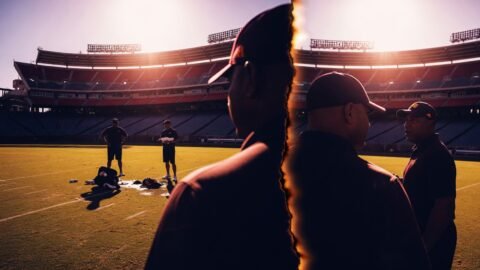
Seven Arizona State hockey players just handed President Michael Crow a 26-page letter that reads like a locker-room mutiny written under fluorescent lights. They stayed anonymous on purpose. That choice is the entire story. Matthew Mayich, a 21-year-old sophomore defenseman and former sixth-round Blues pick, collapsed during an August 20 outdoor workout at Sun Angel Stadium and remains on life support at Barrow Neurological Institute with no chance of meaningful recovery. The people who ran that session still decide who plays, who keeps a scholarship, and who stays on the roster. The players said so themselves.
“That fear is not directed at one person,” they wrote. It is aimed at the whole power structure still sitting in the coaches’ offices. Head coach Greg Powers and his assistants were on the field when Mayich went down. They remain in place. Seven guys — roughly a quarter of the roster — and their attorney Timothy Casey put it in writing Monday: put the staff responsible on administrative leave, hand the investigation to an outside agency, and give a written guarantee nobody gets punished for telling the truth. Other teammates share the concerns and stayed quiet for the same reason. I read that section twice. Fear of retaliation is not a side note. It is the operating condition of the room.
ASU’s preliminary internal review last week already admitted the coaching staff never vetted the training plan led by former Green Beret Tim Ziesel, who had no contract with the school. The report assigned no blame, recommended a blue-ribbon panel, and left everyone in their jobs. The players’ letter calls that version incomplete on almost every material point.
The Workout They Actually Lived Through
According to the athletes, the session ran more than 75 minutes, from about 7:05 a.m. until Mayich collapsed around 8:23 a.m. ASU’s timeline had the main work shorter. The players say athletes who finished behind a cutoff line got extra exercise as punishment, which sits against NCAA recommendations. “Those of us who finished behind a cutoff line did additional work,” they wrote. They say there was one brief water break 35 to 45 minutes in, and only the guys who finished first got to drink. Mayich, they allege, received none.
“Matthew showed signs of distress earlier, in the bear crawl and the buddy carry, well before the medicine ball task during which he collapsed. At the talk before the final event he was struggling to stand and leaning on a teammate, in front of Ziesel, the coaches, and the trainer,” the letter states. “No one at ASU properly monitored him during the workout and no one intervened.” They add that Ziesel told them he did not get water in combat and that his 8-year-old son could do the workout. After the collapse, the players say no core temperature was taken, Mayich stayed in direct sun for several minutes, and there was no cold-water immersion tub or ice chest on the field despite ASU policy. Nothing effectively cooled him in the 17 minutes before EMS arrived.
Ziesel’s attorney, Buddy Rake, told ESPN a different story: players were never denied water, the school’s hydration policy controlled breaks, no one vomited, and Mayich showed no distress until after Ziesel left. “The workout was not punishing unless you consider flutter kicks, pushups planks, and sprints punishing,” Rake said. Two versions of the same morning cannot both be true. One of them is protecting a kid who will never play again. The other is protecting a process.
The players allege Powers told them afterward that Mayich’s condition was “just a little heat stroke” and “heat exhaustion,” that he had “seen this a million times,” and that Matthew “just needs an IV.” That framing is what sticks with me. A 21-year-old from Stoney Creek, Ontario, eight days into the Arizona heat after three short voluntary outdoor sessions totaling about 45 minutes, is reduced to a routine recovery story while he is still on the ground.
Leave Is the Minimum, Not a Concession
The Arizona House and Senate education chairs already called on the Board of Regents for an independent investigator by October 9, with anti-retaliation protections and public findings. Family attorney Rob Carey has called the Rund report a whitewash that fails to hold anyone accountable. ASU Police are investigating separately for the Maricopa County Attorney. The season still opens October 2-3 at Lindenwood with the same staff in place.
I keep circling the power map. Powers and the assistants control ice time, scholarships, and roster spots while the university’s own review found the plan was never properly vetted and its heat-illness policy was not fully followed. The players who lived the workout had to hide their names to describe it. That is the institutional failure sitting underneath the medical one. An outside investigation is the only path that does not leave the people under scrutiny grading their own homework. Administrative leave is the bare floor that lets the truth come out without a kid calculating whether honesty costs him a year of eligibility.
Mayich transferred in after a freshman year at Clarkson and four OHL seasons. He arrived August 12. Eight days later he was down. The program keeps moving toward opening night as if the roster math is the urgent question. The urgent question is whether a university that lost a player to exertional heatstroke on the first legal day of team activity can still look those seven letter-signers in the eye and tell them the people who ran the session get to keep deciding their futures. The letter already answered that. Crow and the Board of Regents have not.