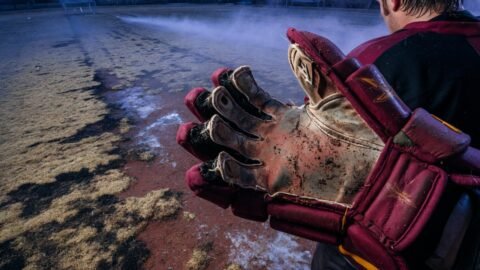
Matthew Mayich has zero chance of recovery. That is not rumor or online noise. That is the family’s attorney, Robert Carey, stating the medical reality after a 21-year-old St. Louis Blues draft pick collapsed during an Arizona State hockey workout on August 20 and never came back.
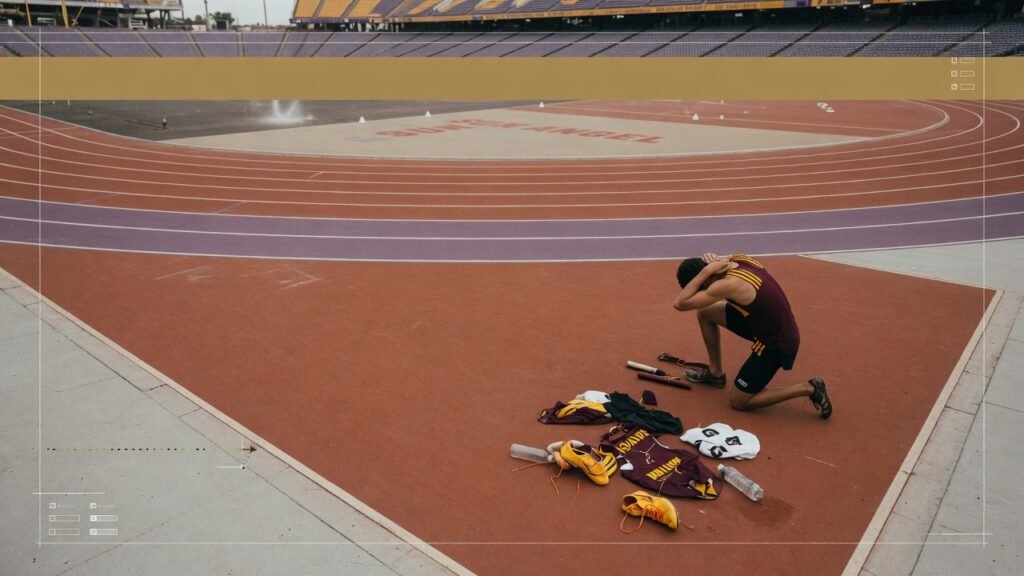
Carey put it without cushion: “A coma indicates deep unconsciousness and recovery is possible. His body ceased functioning in a fundamental way, and this condition is irreversible.” A healthy defenseman, six-foot-two and nearly 200 pounds, four years of OHL mileage, a freshman season at Clarkson that produced 15 points in 34 games and led the class in ice time, transferred into one of the hotter college programs in the country. Then an outdoor morning session at the track near Sun Angel Stadium ended with Tempe Fire responding to a heat-related emergency around 8:30 a.m. He has been at Barrow Neurological Institute on life support ever since.
I keep coming back to the language ASU chose in the first public response. Athletic director Graham Rossini told local radio this was “not an investigation where somebody’s suggesting something went wrong. We’re just reviewing the facts and understanding the scenario.” Carey’s answer to that framing is the one that should sit on every athletic director’s desk. “I don’t even mind them not saying anything,” he said, “but I mind them saying, ‘Well, this is a review not an investigation because there’s no suggestion anything was done wrong.’ Well, a kid’s life is over basically, one way or another. And you don’t think that suggests wrongdoing or some sort of mistake? These things don’t just happen, this was a very healthy kid.”
Two Versions of the Same Hour Cannot Both Be True
The workout itself is already splitting into incompatible accounts. Tim Ziesel, the former military service member brought in as a volunteer for what was supposed to be the first of three days, left before the collapse according to his attorney. Buddy Rake told the Arizona Republic the session was not extreme. “This was not a Green Beret or SEAL workout. Far from it,” Rake said. “The head coach, assistant coaches and medical were always present.” Water available. Duration in the 45-to-60-minute range. Temperatures in the upper 80s.
Carey, who says he has spoken to multiple people with direct knowledge, calls that version false. He describes a grueling, onerous session with drill-instructor volume from the start, limited breaks, water that ran short for athletes at the back of the line, and a player who “was disoriented and struggled well before he collapsed.” Ziesel was invited by head coach Greg Powers. ASU has heat-illness guidelines informed by the National Athletic Trainers’ Association and rules for outside entities who work with student-athletes. The university’s statement confirms coaches and training staff were present along with the third party, and that senior vice president James Rund is leading an internal review of the workout, the policies, and the protocols.
I am not a medical examiner and I am not going to pretend the final cause is settled while the review is still open. What is already settled is the outcome Carey described and the gap between that outcome and the school’s early posture. When a drafted NHL prospect’s body “ceased functioning in a fundamental way,” the default setting cannot be “nobody is suggesting anything went wrong.” That sentence does institutional work. It lowers the temperature. It protects process. It also tells every parent who just dropped a kid at a desert campus that the first instinct is containment.
College Hockey’s Outside-Contractor Blind Spot
This is the mechanism I care about. College programs keep handing high-intensity, team-building sessions to non-staff outsiders because the optics of “leadership” and “toughness” still sell inside locker rooms. Ziesel had run a similar routine at a smaller Arizona school years earlier. Powers brought him in. Medical was listed as present. The session still produced a heat-related emergency call and an irreversible neurological catastrophe. ASU’s own statement notes institutional guidelines for engaging outside entities. Guidelines are not the same thing as real-time authority to stop a session when a 21-year-old starts showing disorientation.
Carey is demanding an independent investigation and administrative leave for the coaching staff while that work happens. He told The Athletic the school is “not handling this responsibly” and that “a kid’s life was basically ruined, the family is devastated, and people refuse to accept responsibility.” I do not need the final report to know that an internal review led by a senior vice president, with the same people still in place, will not produce the same credibility as a truly independent look. The Blues issued support statements. Prayer services happened. None of that repairs the trust problem Carey flagged when he said the university’s underlings are “setting [the president] up for a complete loss of credibility.”
Mayich was an alternate captain in the OHL, a transfer into a program that just ranked first in the country in its incoming class, a kid who had already logged the hard miles. The temperature that morning was not catastrophic by Phoenix standards. The duration was not a multi-hour death march on paper. And still he is gone in every way that matters. College hockey can keep treating outside military-style sessions as culture builders, or it can treat the irreversible result as the data point that finally forces a brighter line on who is allowed to push athletes when the sun is already up and the medical staff’s real power is unclear. ASU’s review will take the time it takes. The family’s clock already stopped.