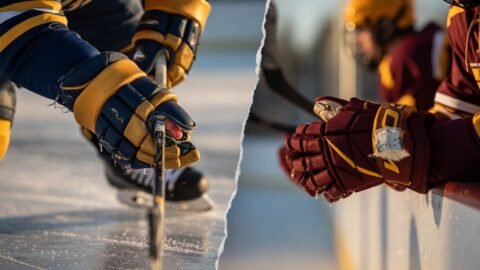
Matthew Mayich is still on life support at Barrow Neurological Institute while Arizona State opened its hockey season with a 5-0 win over Lindenwood. A 21-year-old Blues prospect, a first-year Sun Devil, a kid eight days into Tempe after transferring from Clarkson, collapsed near the end of an outdoor military-style workout on August 20 and has not come back. That fact alone turns every institutional delay into a moral failure.
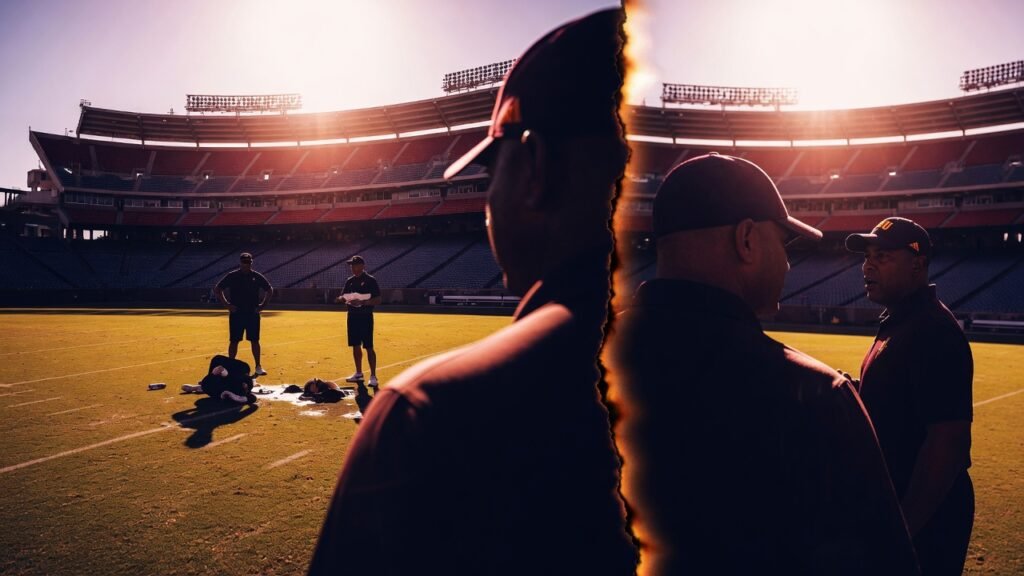
I am building this case on the record, not on mood. The session at Sun Angel Stadium was run by Tim Ziesel, a former U.S. Army Green Beret operating on a handshake with head coach Greg Powers and staff. No formal ASU contract. No completed outside-consultant vetting. Coaches present. Athletic trainer present. Calisthenics, bear crawls, buddy carries, medicine-ball sprints in 86-to-89-degree heat. Tempe Fire answered a heat-related call around 8:30 a.m. Family attorneys say Mayich was not placed in an ice bath. Exertional heat stroke starved his brain of oxygen. Attorneys for the family have stated there is no chance of meaningful recovery.
ASU’s answer was an internal review under Senior Vice President James Rund that assigned no blame and proposed a future “blue-ribbon” panel. Seven current players, roughly a quarter of the roster, answered that document with a 26-page letter that disputed duration, water access, signs of distress, medical response, and the character of the workout itself. They did it anonymously, through attorney Tim Carey, because they feared scholarships and ice time. Arizona lawmakers at the state and federal level, including both U.S. senators, joined the call for independence.
Powers finally went on paid administrative leave on day 41. The outside investigator arrived on day 43.
Forty-Three Days Is an Institutional Choice
Let me tell you something about Graham Rossini. The athletic director’s first public comments after the collapse framed the school as hungry for clarity. Appearing on the Burns and Gambino Show, Rossini said ASU had “really encouraged everyone in the program” to share information through a “deliberate process” and that “We want the answers and as much clarity as we can find.” Deliberate is a polite word for slow when a player is on life support and teammates are writing anonymous letters because they do not trust the room.
The counterargument from Tempe is predictable: the school has now retained former Arizona Supreme Court Chief Justice Scott Bales, age 70, a serious jurist, to lead an independent review of planning, staffing, emergency response, and outside consultants, with a target of early December and confidential pathways for athletes. On paper that sounds like accountability. Family attorney Leonard Aragorn already answered the paper. “An independent investigator needs to interview every single player. They need to interview every single staff member, every single coach and say, ‘Why did this happen?’” Aragorn said on Front Office Sports Tonight. “Because if ASU’s own policies were followed, this never would have happened, and they weren’t. And someone needs to be held accountable here.”
That is the standard. Not a future-facing policy memo. Accountability for August 20.
Reporting to the Office That Already Missed It
Robert Carey, also representing the Mayich family, put the structural problem in plain English. Bales will report findings to ASU. Carey said the results should go to the Board of Regents, which oversees the state system, instead of “the office whose own review has missed too much.” He also flagged skepticism that the charge is to examine “policies” rather than what went wrong on the field and who is responsible. The full coaching staff remains behind the bench while Powers sits on paid leave. Carey and the seven players have renewed the call to put the entire staff on leave for the duration. ASU has not done it.
Powers makes $450,000 a year and has run this program since the club days and through the jump to Division I. His statement supported the leave so a thorough review could proceed without distraction. Cooperation is the minimum. The players who signed attestations of presence still need protection that outlasts one coach’s temporary absence, because the rest of the staff that was at that workout is still employed and still coaching.
The season is underway. Mayich’s jersey is in the locker room. The ASU Police investigation continues on a separate track toward the Maricopa County Attorney. Civil litigation is the obvious next chapter. None of that substitutes for a probe that can compel the truth without the subjects fearing the people who control their ice time.
I am not interested in process theater. A handshake with an unvetted outsider, a punishment-tinged outdoor grind in late-August heat, disputed water access, a no-blame internal timeline, anonymous players forced into a lawyered letter, and 43 days before the university hired a name with real stature. That sequence is the indictment. Bales has until early December. The only finding that will matter is whether anyone at Arizona State is held to the same standard the school demands of its athletes every day they put on the sweater. Mayich cannot answer for himself. The people who ran that workout still can.