Arizona State is treating a non-responsive 21-year-old transfer as a scheduling problem. Greg Powers is still running practices. The staff is still on the ice. The opener is still locked for Oct. 2 at Lindenwood. Matthew Mayich remains in a neurological facility with recovery odds his family’s lawyer has described in the bleakest terms available, and the university’s public posture is continuity first.
That is the choice on the table. Not whether the Sun Devils can field a roster. Sources close to the program say none of the current players have asked out, and agents with clients on the team have told College Hockey News their guys want to stay in school and stay on the roster. The choice is whether a program that brought in an outside former Green Beret for a multi-day outdoor conditioning session can keep the same chain of command intact while it sorts through what happened on Aug. 20.
I keep landing on the same mechanism. When the people who designed and supervised the workout are still the people who control ice time, scholarship leverage, and roster spots, player testimony does not move freely. That is not a theory about guilt. It is a structural fact about college athletics.
Carey Asked for Separation. ASU Chose Proximity.
Mayich family attorney Robert Carey has been explicit. He has called for an independent investigation, and for the coaches and players to be separated, so the players would be allowed to speak freely. That demand is the entire fight. Carey has also said the coaching staff and the third-party former Green Beret who led the workout did not follow correct protocols on water breaks and safety, and that the session was unnecessarily strenuous given the heat. The family side puts Mayich’s acclimation short of school policy. Program-side sources push back on the timeline and on the water narrative. Both versions cannot be fully tested while the same staff remains the daily authority over the witnesses.
ASU’s answer has been an internal “review” led by Senior Vice President James Rund. Athletic director Graham Rossini has framed it as fact-gathering, not a finding that something went wrong. University language has stressed this is “not an investigation.” ASU police opened a standard probe after the 911 call for a heat-related emergency. No criminal charges have been indicated. Both sides are already bracing for a wrongful death suit. None of that replaces an outside look with real firewalls.
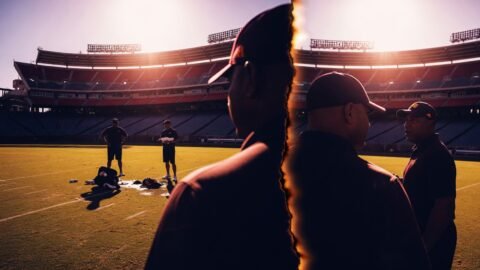
The workout itself sits in a documented box. First day NCAA rules allowed formal activity. Roughly 45 to 60 minutes of military-style work at Sun Angel Stadium and the Joe Selleh Track area: sprints with extras for form and lagging, push-ups, planks, flutter kicks, bear crawls, fireman’s carries, medicine-ball relays. Temperature near 86 degrees at 6:51 a.m. with humidity in the low 50s and no wind, heat index already in a high-risk band under ASU’s own heat policies, extreme heat warning in effect that week. Powers was present. Tim Ziesel, the outside leader, left before the final routine. Mayich, a 6-foot-2 to 6-foot-3 Blues sixth-rounder out of the Ottawa 67’s and a freshman year at Clarkson, collapsed near the end of a medicine-ball relay. Tempe Fire responded around 8:30 a.m. He was transferred to Barrow. The family attorney has described the outcome as exertional heat stroke with oxygen loss to the brain and used language including “zero chance of recovery” and “condition is irreversible.”
Arizona Republic reporting said Ziesel did not complete the required consultant paperwork and full vetting. College Hockey News sources counter that the appearance was approved even without a signed contract. That dispute alone is why “internal review” is a weak instrument. The people who requested the outsider and stood on the track are still the institutional face of the program.
Practices Climb While the Evidence Window Shrinks
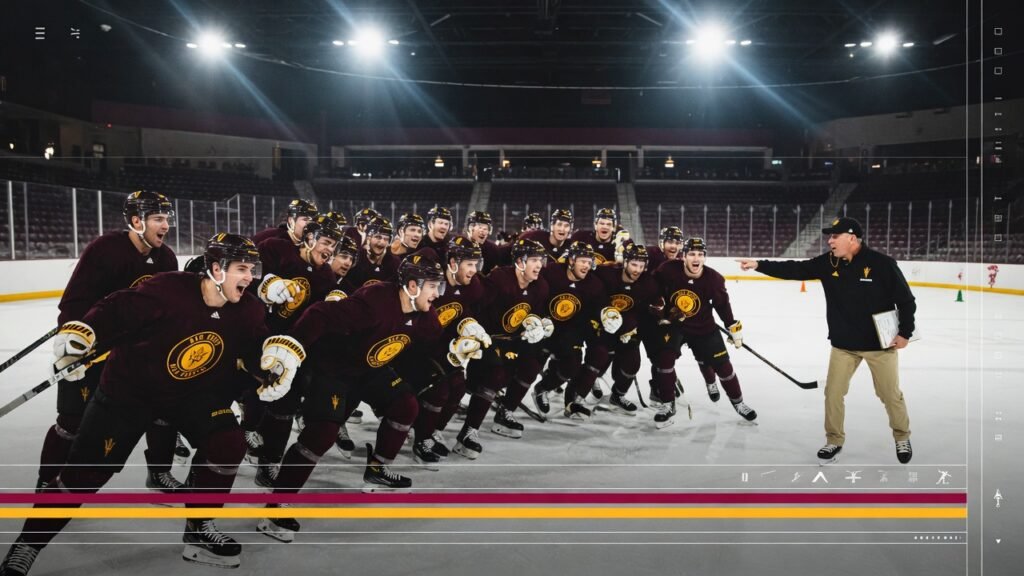
The operational tempo tells you the priority. Four hours a week now. Eight next week. Season prep is not paused. Powers’ X account disappeared in early September. The remaining Ziesel sessions were canceled. The NCHC has not blocked the schedule. Mullett Arena still has a product to sell. Powers is the only head coach this Division I program has ever had, locked in through 2030 on an endowed deal, coming off a late-season freefall and a heavy portal churn into 18 newcomers. Continuity is the brand.
I do not need a verdict on fault to see the cost of that brand. An independent firm, administrative leave for the staff during interviews, and a clean channel for players who fear distortion or retaliation are the minimum process moves when a transfer collapses outdoors on day one of formal activity and does not wake up. The Professional Hockey Players Association already flagged the need for a thorough inquiry that protects athletes from blowback. Carey’s letter to general counsel asked for evidence preservation and a response window. ASU has declined detailed public comment and left Powers in place.
College hockey has lived through enough heat and conditioning failures to know how fast narratives harden. Acclimation windows exist because Phoenix in August is not a rink in Ottawa. Outside military-style leaders exist because coaches want a different stimulus. Neither is free of protocol. When the school’s own consultant rules and heat policies become the contested ground, the review cannot be staffed by the same athletic hierarchy that green-lit the day.
Mayich is still non-responsive. The Sun Devils are still ramping practice hours. Oct. 2 at Lindenwood is still on the board. The family asked for independence and separation. Arizona State answered with an internal review and a full coaching staff on the ice. That gap is the story, and it will be the exhibit the lawsuit opens with if the recovery odds hold.