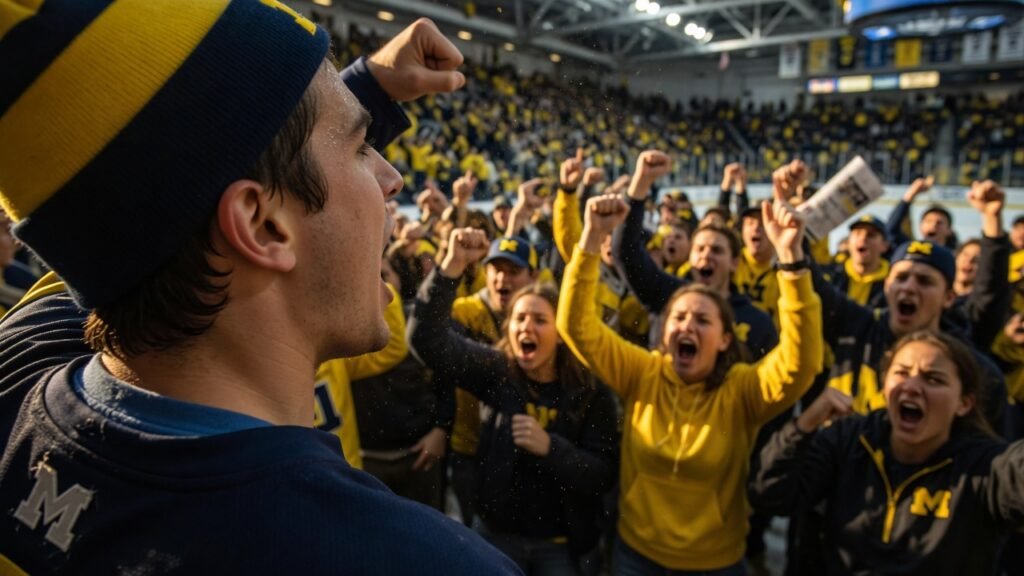
College hockey lobbied like its roster survival depended on it, and the NCAA still walked away with the blueprint. The Division I Cabinet unanimously locked in the new age-based eligibility model on June 23, 2026, and every coach who built a program on late-blooming juniors just got handed a different sport.
I watched this thing twist for months. The original version started the five-year clock at high-school graduation, which for a sport that thrives on 20-year-old freshmen was a slow strangulation. Hockey pulled in the commissioners, the AHCA, College Hockey Inc., the USHL, the CHL, USA Hockey, and the NHL. Bill Daly even went straight at NCAA President Charlie Baker. Basketball and the service academies jumped in. They forced a tweak: the clock now starts at initial full-time enrollment or the academic year after the 19th birthday, whichever comes first. A 20-year-old freshman still gets four years. That part is real.
Celebrate carefully.
The Old Delayed-Enrollment Cheat Code Just Expired
The delayed-enrollment exception that let some freshmen arrive as old as 21 is gone. Full stop. Under the new model, if you sit in juniors past that 19-year-old trigger and enroll at 21, you walk onto campus with three years left. One extra junior season after the birthday burns eligibility year-for-year. College Hockey Inc. already laid out the math in plain terms, and it is not subtle.
Josh Whitman, Illinois AD and Division I Cabinet chair, called it decisive: “With these changes, the Cabinet has taken decisive action for the benefit of student-athletes and the system of NCAA Division I athletics. For many student-athletes who enroll in college immediately after high school, these changes will result in the opportunity to potentially compete for an additional season in their chosen sport.”
I hear him. The kids who show up at 18 get a fifth year and cleaner rules. The hockey kid who needed another USHL or CHL season to physically catch up just got told the development window is smaller. That is the trade the entire North American hockey community accepted to avoid the three-year disaster.
Implementation hits hard for anyone first enrolling full-time in fall 2027 or later. Current athletes and the 2026-27 first-timers get whichever model is more favorable. Anyone who burned their final season in 2025-26 gets nothing extra. Waivers under the old system had a hard July 31, 2026 deadline. The gray area is closing.
Recruiting Timelines Just Became Birthday Math
I keep coming back to roster construction. Programs that leaned on older, more finished freshmen at smaller schools just lost their identity play. The power brands with earlier access and NIL gravity will vacuum the 18- and 19-year-olds who still carry five full years. Everyone else will be stuck in a tighter age band fighting over four-year windows and three-year stopgaps.
The CHL pathway after the 2025 eligibility shift already rewired the junior-to-college map. Now the NCAA age clock stacks on top of it. Coaches will recruit the calendar first and the player second. Birthdates become as important as production. A September 1 cutoff nuance already has people reverse-engineering academic years like tax accountants. That is the new normal.
Ivy programs never got fifth-year freedom anyway, so their disadvantage relative to the rest of the field just got louder. Women’s hockey feels less of this because the age distribution was never as late. Men’s hockey ate the whole plate.
Traditional media will spin the unanimous vote and the “hockey won the lobby” headline for a week. I am not buying the parade. Hockey avoided catastrophe and still surrendered the thing that made its developmental ecosystem distinct: the ability to bring in a finished 21-year-old who could contribute immediately without torching the eligibility ledger. Five years for the early birds is a nice gift. The late-arriving pipeline that stocked half the mid-major rosters just got nerfed by design.
The sport that once treated age as a feature now treats it as a hard stop. Rosters will skew younger, recruiting cycles will compress, and the programs that cannot lock kids before that 19th birthday academic year will feel it first. The fifth year is real for some. For the rest of the map, the window just got smaller and the birthday calculator just became the most important tool on every coach’s desk.