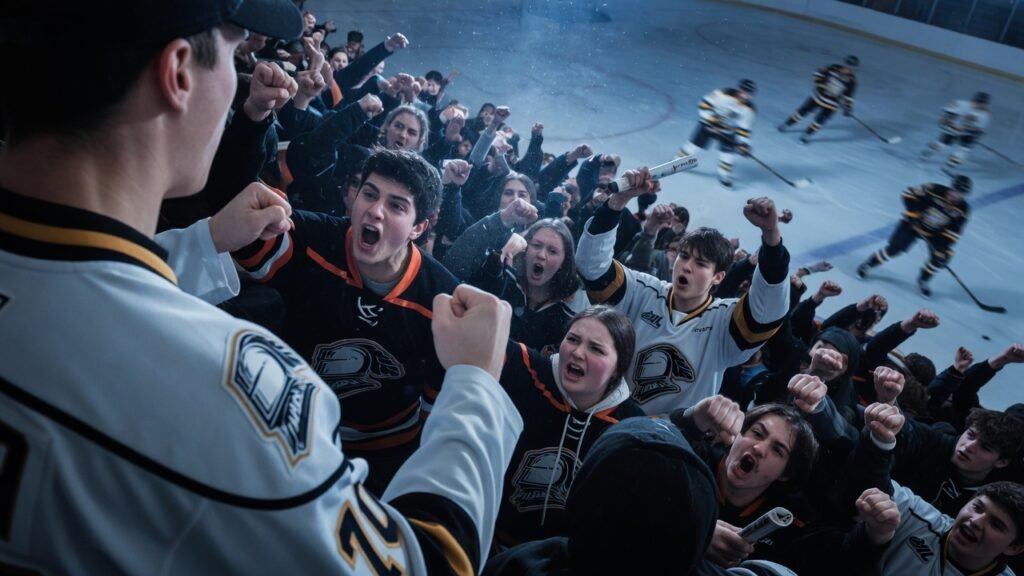
The old college hockey man is dead. The NCAA just put a five-year clock on his corpse and told every 19-year-old still hanging in juniors that the free years are over.
I watched the Age-Based Eligibility Model land on June 23 and I did not see a tidy administrative update. I saw the end of the scenic route. Five years of DI eligibility now starts at full-time enrollment or the fall after your 19th birthday, whichever hits first. Stay in the CHL or USHL past that birthday and you burn a year of college eligibility for every season you linger. The 21-year-old rule that used to let kids cook in juniors until they rolled onto campus as grown men? Gone. Replaced. Cooked.
This lands right on top of the CHL floodgates that opened August 1, 2025. One year of Canadians pouring south and the whole development map already looks different. Now the NCAA just put a hard stopwatch on how long anyone can stay in that pipeline without paying for it.
The CHL Flood Already Rewrote the Depth Chart
Michigan State coach Adam Nightingale said it plain when the CHL became eligible: “all of a sudden you’ve got 1,500 more players that are eligible to play college hockey now.” He was not exaggerating for effect. As of April 9, 2026, 297 CHL players had committed to Division I programs. That is 38 percent of every DI commitment on the board.
Look at the roster math if you still think this is gradual. U.S. players on DI rosters dropped by 147 between 2024-25 and 2025-26. Canadian players jumped by 97. Minnesotans still lead the country, but even they fell 27 spots off a record 249. Boston University opened last season as the youngest team in the country at 19.9. That is the new normal, not a cute outlier.
The CHL itself called the original eligibility change “a positive development that will provide our players with more opportunities to continue their hockey and academic careers following their time in the CHL.” Correct. It also turned every American junior league into a feeder fighting for scraps against three major junior circuits that suddenly kept the NCAA door open.
Thirteen of the first 15 picks in the 2025 NHL Draft came out of the CHL. Three of that group chose campus over an NHL deal. That used to be unthinkable. Now it is a Tuesday.
The Clock Just Nerfed the Late Bloomer
Here is where the age model gets vicious. Ninety-nine percent of first-year DI men’s hockey players still come from juniors. Average age at enrollment sat around 20.3. Average commitment age last cycle was 19.7. Eighty percent of freshmen were already 20 or 21 when the puck dropped. Under the old setup that made sense. You took your time, got stronger, then showed up ready.
Under the new rules, every season after 19 costs you. One year post-birthday and you arrive with four years left. Two years and you are looking at three. The 65 guys who were still 25 years old as of March 31 last season? That era is finished. The ceiling drops to roughly 24 and the redshirt and delayed-enrollment safety nets get stripped out. Current players get the better of the two models. Incoming kids in fall 2026 get the same choice. Everyone after that lives on the clock.
I know what the traditionalists are typing. “Development takes time.” “Some kids need the extra junior year.” Cool story. The NCAA just told those kids the extra year is no longer free. You can still take it. You just show up with less eligibility and a shorter runway to the NHL.
Scholarships went from 18 to 26 in the same window. More money, more roster spots, and a talent pool that just added the entire CHL. The American kid who used to park in the USHL until he was physically ready now has to decide earlier, commit earlier, and hope the academics stayed clean while he was chasing points north of the border. Recruits who let the core courses slide will still get burned. That problem does not disappear. It gets louder.
College Hockey Just Got Younger and Meaner
The combined effect is not subtle. The CHL opening expanded the supply. The age model compressed the timeline. Recruiting windows shrink. Commitments happen younger. Rosters skew Canadian and major-junior. The old path of grinding until 21 and arriving as a finished product just became a luxury tax.
I am not crying for the system. The old model protected some slow-developing Americans and produced some absolute studs. It also produced 25-year-old freshmen and a development path that looked increasingly out of step with the rest of the hockey world. The NCAA did not fix that with nuance. It swung a hammer.
Players who exhausted eligibility after 2025-26 get nothing extra. Incoming freshmen this fall still get to pick the better rule set. After that, the five-year window is the only game in town. High school graduation still lets you take one post-grad junior season clean if you time the birthday right. Miss that window and the meter starts running.
The pipeline did not get a gentle redesign. It got flooded from the north and then put on a hard deadline. Every coach who built his program on patient American juniors just watched the ground shift under his skates. Every 17-year-old prospect just got a louder clock in his ear.
The next wave of commits will tell the story faster than any press release. Watch the ages. Watch the leagues. Watch who still has four years left when they finally hit campus. The kids who treat 19 like a suggestion are about to find out the hard way that the NCAA stopped handing out free years.