The Title IX finding said forcible rape. The appeal said stay on campus. That gap is the whole story, and it is rotting in public view.
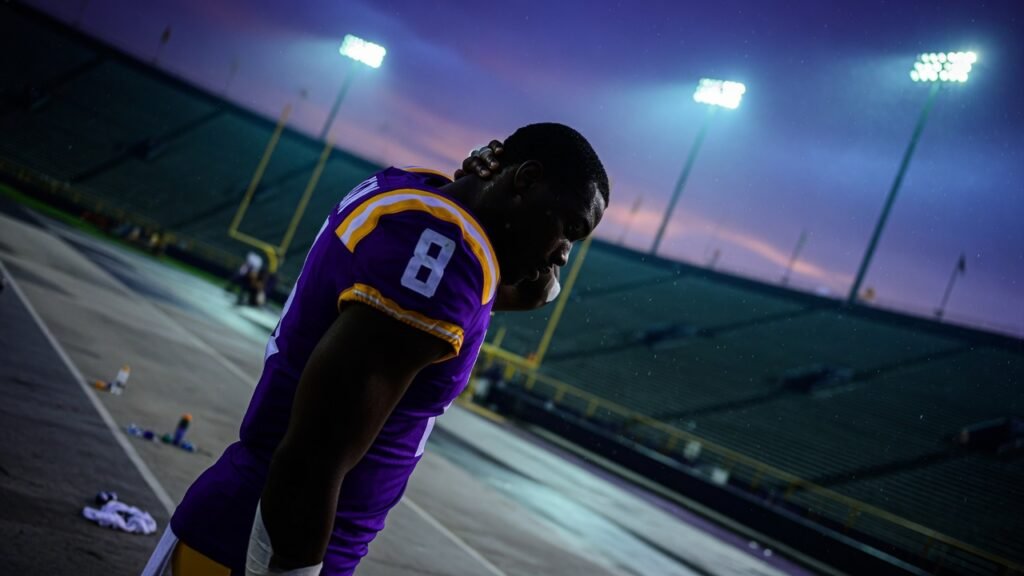
Damien Shanklin, an LSU defensive end, was found responsible by a university hearing panel for “forcible rape” after an October 18, 2025 encounter in Riverbend Hall with then-freshman Kendall Francis. Both sides described some initial activity as consensual. Francis alleged the encounter crossed into nonconsensual penetration, that she told him to stop, and that it continued briefly. The panel agreed the night went from consensual to nonconsensual and handed down a one-year suspension through May 2027, plus property restrictions and counseling conditions for any return.
Then the appeal landed. On or about August 25, 2026, Administrative Law Judge Janet Waguespack upheld the responsibility finding and still cut the sanction to four semesters of disciplinary probation without restrictions. Shanklin could stay enrolled, stay on campus, and remain eligible for activities if he kept clean. The ruling framed the original hit as “exceedingly harsh,” cited no prior record, noted the brief duration and mixed consensual stretch, and described the conduct as “an error in judgment.” I read that phrase and the room temperature dropped. A forcible-rape responsibility finding reduced to probation without restrictions is the kind of institutional shrug that makes every other student on that campus recalculate what the process is actually for.
Probation After a Rape Finding Is the Real Rupture
Francis learned of the reduced sanction by email while sitting in class. She moved courses online to avoid contact. Starting mid-September she posted TikToks laying out her account, saying she felt LSU protected football players, that she had misunderstood Title IX versus criminal process, and that she was now pursuing charges. She also alleged Shanklin’s mother contacted her after the incident asking her not to press charges or ruin his career, and that she received $1,000 via Cash App that she later called “hush money” in the videos. Title IX materials referenced the payment. Once the criminal probe opened she declined further comment on accepting it.
Around September 21 she filed a formal criminal complaint. By September 22, East Baton Rouge Parish District Attorney Hillar Moore’s office had opened an investigation and requested the full stack of reports, interviews, and evidence from LSU, LSU Police, Baton Rouge Police, the coroner’s office, and everyone else in the chain. LSU Police called it ongoing. As of early October reports, Shanklin had not been arrested or charged. He remains on the 2026 roster but has not practiced or appeared in games; Lane Kiffin said in August he was not practicing. Shanklin’s attorneys say he maintains innocence and will cooperate fully. LSU President Wade Rousse said the university properly followed Title IX policies and is cooperating.
I do not get to retry the night in Riverbend Hall from a keyboard. Courts decide criminal guilt. What I do get is the paper trail the university already produced: responsible for forcible rape, then probation without restrictions because a judge decided a year away was too much for a first-time “error in judgment.” That sequence is why this blew open. Campus justice and criminal justice are different machines. Francis said she thought the Title IX result would trigger the second one. It did not. So she went public and forced the DA’s hand.
Athlete Gravity Still Bends the Process
This is the part that keeps me up. A non-athlete freshman found responsible for the same conduct does not glide back onto campus with open eligibility and a clean practice window. The roster has gravity. LSU can recite every procedural checkbox it hit. Rousse already did. Checkboxes do not answer why a forcible-rape finding produced a suspension that an appeal turned into a wristband. The victim changed her entire class schedule to avoid the person the university just cleared to walk the same sidewalks. That is the lived outcome of “probation without restrictions.”
Shanklin self-reported the encounter the day it happened and flagged Francis’s messages accusing him of rape and expressing suicidal ideation. Police treated it first as a mental-health response, took her to a hospital, and a rape kit was done across roughly seven hours. No criminal complaint then. The Title IX office got the police report in December. The formal complaint arrived in January. The hearing landed in the summer. The appeal landed in August. The TikToks landed in September. The DA landed days later. Every date is a choice someone made about speed, silence, and priority.
I keep the ledger simple. A panel said forcible rape. An ALJ kept the finding and erased the exile. The accused player’s camp says innocence and cooperation. The accuser says the school protected the jersey and that a thousand dollars showed up afterward. The district attorney now holds the file. None of that is a game preview. It is a program standing next to a responsibility finding it already made and a sanction it already watered down, waiting to see whether a criminal case does the work the campus process refused to finish.
LSU wanted the roster protected and the paperwork clean. It got a public victim, a DA request for every document, and a defensive end who has not taken a snap while his name leads every search result out of Baton Rouge. The finding stayed. The punishment did not. That is the rupture, and it is still open.