Arizona State’s own review found the policy breaks. It still would not name a single person responsible for the workout that put Matthew Mayich on life support.
That is the whole report in one sentence. A 21-year-old defenseman, a St. Louis Blues sixth-rounder out of Clarkson, arrives from Ontario on August 12, clears his pre-participation physical, and eight days later collapses at Sun Angel Stadium during a morning session framed as team building. The university’s preliminary investigation, released around September 22 under senior VP James Rund, catalogs the failures and then stops short of accountability. Family attorneys Rob Carey and Leonard Aragon called it a whitewash. The tape of the session and the timeline ASU itself published make the gap impossible to miss.
Policy Paper, Zero Names
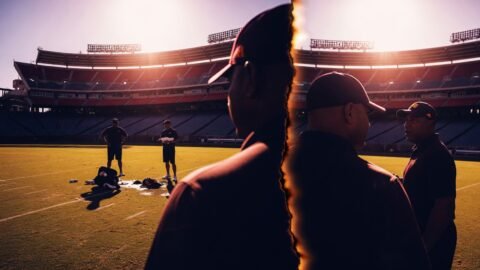
The mechanism is the story. Hockey staff brought in Tim Ziesel, an ex-Green Beret introduced by program supporter James Fairorth, as an outside consultant for a three-day teambuilding event with physical components. They requested permission. They did not submit a written plan of the training activities for review by ASU strength and conditioning coaches. Ziesel had no contract with the university. Equipment bought light-colored short sleeves. The strength staff reserved the outdoor track. Head coach Greg Powers, the other two hockey coaches, and the assigned athletic trainer were all present on August 20 from roughly 7:00 to 8:30 a.m.
Temperatures sat between 86 and 89 degrees with humidity in the high 40s to low 50s. ASU’s own estimates put wet-bulb globe temperature in the low-to-mid 80s in full sun and mid-70s in shade. The work was circuits of push-ups, planks, flutter kicks, bear crawls, squats, sprints, and buddy carries, finishing with medicine-ball carries across the field. Water break came about 20 minutes in. Iced towels and a cooler were on site. What the NATA and Mayo Clinic heat-illness guidelines flag as the priority response, cold-water immersion, was not part of the setup ASU described.
Mayich went down in a later group near 8:20 to 8:30. He stumbled, dropped the ball, fell, tried to rise, fell again. The trainer and teammates kept him down, applied iced towels and cool water, moved him to shade, and called 911 as his condition worsened. Tempe Fire arrived at 8:31 on a heat-related call. Ziesel had already left after the huddle around 8:06. Powers and staff remained. Mayich remains incapacitated. Family counsel has said exertional heat stroke cut oxygen to the brain and left no realistic path to full recovery.
Rund’s letter confirms the missing written plan, the consultant process, the presence of water and towels, and the emergency response. It proposes a blue-ribbon panel on outdoor activity planning, staffing, monitoring, and outside consultants. Twenty people interviewed so far. No suspensions. No firings. No named responsibility. ASU police continue a separate track that will go to the Maricopa County Attorney. The season still opens in early October.
The Right Guy and the Missing Cold Tub
Powers faced questions at NCHC media day on September 23 and declined all of them on the August 20 session because of ongoing matters. He said he believes he is “the right guy” to lead the program he has built for roughly two decades, called it a difficult time, and kept Mayich and the family in his thoughts and prayers. That is leadership language under institutional cover. It does not answer why a punishment-tinged circuit, with coaches watching and repeats for missed counts according to the family’s attorneys, ran outdoors on the first day NCAA rules allowed formal activity without the heat protocols ASU’s own timeline shows existed on paper.
Ziesel’s attorney, Buddy Rake, said the report matched what he knew and that the case “got way off track by trying to find blame before facts were known.” Fair point on sequence. The counter is simpler. ASU’s facts already list the violations. The consultant was not fully vetted through the strength staff. The written plan never landed. Immediate 911 and cold immersion sit in the guidelines the university cites. The response used towels and hose water after the collapse, not an immersion tub staged for a session in the 80s. Finding the breaks and refusing to attach them to a decision-maker is how programs teach the next staff that process is optional until the outcome is irreversible.
College hockey does not get the same heat scrutiny football does in the desert, and that is exactly why the mechanism matters. A transfer defenseman eight days into Tempe, three prior voluntary sessions with limited outdoor time, then a full outdoor circuit under a special-forces consultant the hockey staff brought in without the paper trail. The blue-ribbon panel is the correct next step on paper. It is also the classic delay when the preliminary review already had enough to draw lines. Players will notice. Recruits’ families will notice. The wrongful-death track the family’s counsel is preparing will notice.
Powers built this program from nothing. That history does not rewrite the August 20 timeline. ASU found the policy gaps, confirmed the medical clearances, confirmed water was available, and still would not say who owned the session that put a 21-year-old on life support. The panel can study outdoor approvals all fall. The accountability vacuum is already the culture statement.