The most damning sentence in Arizona State’s preliminary report is not about the temperature or the medicine ball. It is the admission that the hockey staff never ran the workout plan past the people paid to keep athletes upright in the desert.
Matthew Mayich, 21, a St. Louis Blues sixth-round pick who had just transferred from Clarkson, collapsed on the morning of Aug. 20 during the wind-down of an outdoor session at the Sun Angel Stadium track complex. Exertional heat stroke cut oxygen to his brain. He remains hospitalized in critical condition. His family’s attorney says full recovery is unlikely. That is the human cost. The process cost sits in James Rund’s four-page timeline.
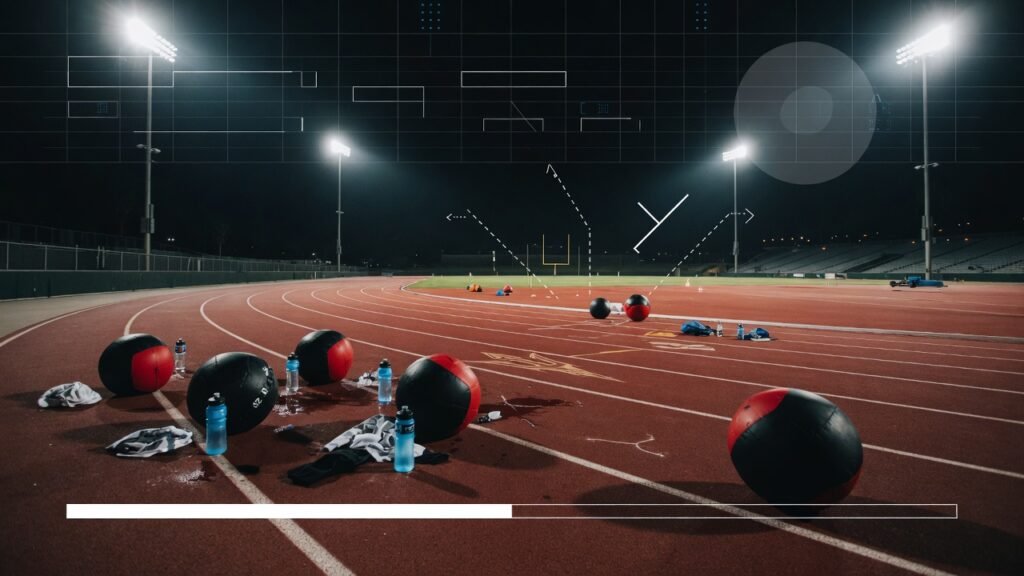
Rund, the senior vice president leading the review, wrote that the coaching staff requested permission for former Green Beret Tim Ziesel to address the team in a three-day team-building event, yet they “did not submit a plan of training activities for review by ASU’s strength and conditioning coaches prior to the event.” Ziesel had no contract with the university. He had spoken to the group in January about leadership. On Aug. 20 he was running push-ups, planks, flutter kicks, bear crawls, squats, sprints, buddy carries and a final medicine-ball relay in high-80s heat with relative humidity between 46 and 51 percent. All three hockey coaches and the athletic trainer were present. Water and iced towels were on site. Powers instructed Ziesel to give a water break at the 20-minute mark and another toward the end. Ziesel left before the final exercise. Mayich went down on the wind-down run.
That sequence is the mechanism. Strength and conditioning staff exist to own load, heat progression, and exercise selection. When a non-employee leads the physical work and the plan never crosses their desk, the safety chain is already broken before the first count.
Punishment or Team-Building Is Beside the Missing Gate
Rob Carey, the Mayich family’s attorney, told ESPN exactly what he believes the report soft-pedals: “What the report doesn’t say is what the players will tell you: this was a punishment workout. Miss a count, your group runs again. The head coach set it up, stood there and watched it, and didn’t stop it when the signs were there. And when Matthew went down, there was no plan and no preparation, so he was treated in a way that hurt his chances rather than helped them.”
ASU’s document frames the morning as team-building. It notes athletes regularly train and compete outdoors, that Mayich and the rest of the roster had been medically cleared, and that the group had completed three prior voluntary outdoor sessions of roughly 15 minutes with medicine balls, ropes and sleds. The coaching staff had messaged players to rest and hydrate the night before. Mayich and his roommate ate dinner, watched videos and slept. Tempe Fire Medical Rescue arrived around 8:30 a.m. after the trainer moved Mayich to shade, applied iced towels and hose water, and called 911 once his condition deteriorated.
I am not scoring the intensity dispute. I am scoring the gate that never closed. Twenty people have been interviewed. A separate police investigation is still open and will go to the Maricopa County Attorney’s Office. The university’s own recommendation is a blue-ribbon advisory panel on outdoor activities and outside consultants. That is institutional language for “the existing filter did not catch this.”
Acclimation Windows Do Not Care About Transfer Rankings
Mayich had been in the Phoenix area about a week, five days max by the family’s account, after arriving from Ontario. ASU’s transfer class ranked first in the country. Aug. 20 was the first day NCAA rules allowed formal hockey activities and the first day of fall classes. The desert does not grade on a curve for roster construction. Historical precedent in college athletics is consistent: every time an outside motivational figure turns a session physical without strength-and-conditioning sign-off, the school still owns the athlete’s body and the liability that follows. The speaker owns the speech. The medical and conditioning staff own the work. When that handoff is skipped, the only remaining variable is luck.
The report assigns no individual blame. It documents the missing submission. That gap is the story the numbers already tell. Mayich is 21. The temperature was in the high 80s. The plan never reached the strength coaches. Everything else—punishment versus bonding, response timing, how long Ziesel stayed—is argument layered on top of a process failure that should have been impossible under a functioning review structure.
ASU hockey will keep practicing. The blue-ribbon panel will eventually produce recommendations. The police process will finish on its own clock. None of that rewrites the sentence Rund already put on paper. No training plan submitted for review. A 21-year-old Blues prospect is still in a hospital bed because of what followed.