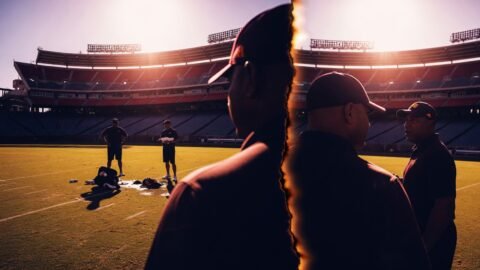
Arizona State is still practicing. The first game is still Oct. 2 at Lindenwood. An assistant coach is still on the recruiting trail. And Matthew Mayich, the 21-year-old defenseman who transferred in from Clarkson, remains incapacitated in a neurological center after collapsing in an Aug. 20 off-ice workout.
That is the entire story in one frame. The program is treating the calendar as fixed while the facts of that morning are still being sorted by the university, by ASU Police, and by the family’s legal team. I keep coming back to how cleanly those two tracks are running side by side.
Mayich is a former St. Louis Blues sixth-round pick who played four seasons in the OHL and then a full freshman year at Clarkson, where he posted 15 points in 34 games and led the freshmen in ice time. He arrived in Tempe looking like a ready-made NCHC defenseman. Family attorney Robert Carey has been blunt about the prognosis: “he is incapacitated and has almost no real chance of recovering from that situation.” Carey has also said Mayich had no pre-existing medical condition. The collapse came near the end of a session that began around 7 a.m. near Joe Selleh Track, with temperatures in the mid-to-upper 80s and humidity near 50 percent. Tempe Fire responded just after 8:30 a.m. to a heat-related emergency.
The Review That Refuses the Word Investigation
Athletic director Graham Rossini has been careful with language. Speaking on local radio, he said the university has “a number of units at the university working around the clock to understand what happened, what do we learn from this and how do we implement things moving forward.” He has repeatedly framed it as a review of facts and protocols, not an investigation that assumes wrongdoing. On any potential discipline for the staff, Rossini offered almost nothing: “Really nothing to talk about on that note. … We’re not at that point yet of making a statement on what comes next.”
The coaching staff under Greg Powers is still running the program as usual. That is the operational choice ASU has made so far. Carey has called for an outside firm to handle the inquiry and has criticized the university for failing to put coaches on leave or sequester them from players. According to Carey, ASU’s own heat acclimatization and exertional heat illness policies were not followed. He has alleged that Mayich had been in the Phoenix area five days at most, that water access during the workout was limited and sometimes performance-based, and that immediate cooling measures were not in place the way the school’s guidelines require. University statements acknowledge the existence of those guidelines without confirming compliance that morning. Tim Ziesel, the former Green Beret who led the session at Powers’ request, has through his attorney disputed the “extreme” characterization of the workout and said medical staff were present throughout his portion of the day.
I am not here to litigate liability from a keyboard. I am here to note the structural tension. A player is in irreversible condition, per his family’s counsel. Multiple investigations are open. And the default setting of the program is continuity.
October 2 Still Owns the Calendar
The NCHC has said Arizona State is planning to play the season. Agents for two different players have told College Hockey News they are not aware of anyone looking to leave. Prayer vigils outside the hospital have drawn nearly 100 to more than 160 people on different nights. The program eventually identified Mayich by name on social media with a thoughts-and-prayers graphic. That is the public posture: acknowledge the human cost, keep the schedule intact.
College hockey does not have a deep playbook for this. When a serious medical event happens in an off-ice session run partly by a non-university volunteer, the questions land on heat protocols, water access, who had final authority that morning, and how quickly cooling was applied. Carey’s team is running its own inquiry. ASU Police are contacting players. Senior VP James Rund is leading the internal review of policies on outside entities and heat illness. None of that has produced a public finding yet, and Rossini has made clear the university is not ready to announce next steps on personnel.
What I keep watching is the gap between the medical reality Carey describes and the institutional decision to keep practicing toward Lindenwood. Programs always default to the next game until forced to do otherwise. Here the force has not arrived. No suspension. No outside investigator installed. No pause in recruiting. The first game remains Oct. 2. That date is doing a lot of quiet work while the reviews continue and a 21-year-old defenseman stays where he is.
The season will open unless something changes the calendar. Right now nothing has. The numbers that matter most are not points or ice time. They are the ones Carey keeps repeating about recovery, and the ones Rossini will not yet put on the record about what comes next for the people who ran that workout.