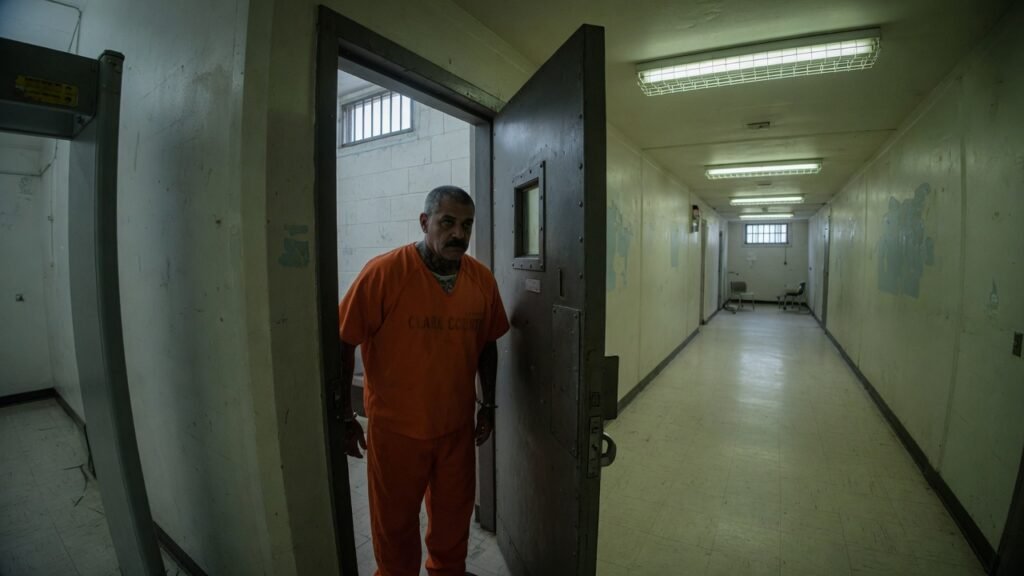
Forty hours after a Las Vegas jury needed just over two hours to convict him, Duane “Keffe D” Davis got on a video terminal at Clark County Detention Center and treated the rest of his life like a scheduling conflict.
“Shit, I ain’t worried. I’m getting out on an appeal,” he told The Hollywood Reporter, already framing the verdict as a clerical error with better lighting. “We already filed it before the trial even started. They violated my civil rights!”
Stay with me here. A man found guilty of first-degree murder with use of a deadly weapon in the 1996 killing of Tupac Shakur is not processing grief, shame, or even basic narrative continuity. He is workshopping season two. The most durable hip-hop cold case of the last three decades just got a clean courtroom ending, and the only person charged is already pitching the director’s cut where he was never in the room.
Look, I get it. Tupac’s death has been content longer than some streaming platforms have existed. Docuseries, podcasts, YouTube sit-downs, the 2019 memoir *Compton Street Legend* that billed him as the last living eyewitness. For years the market paid for the version where Davis was the South Side Compton Crips shot caller who provided the gun and ordered the hit after the MGM Grand melee involving his nephew Orlando “Baby Lane” Anderson. Prosecutors used those statements. The jury listened. Deliberation took roughly the length of a long lunch.
Now the product has flipped. In the THR interview, Davis insists he is “a good man. I’m a good person.” He says he was not in Las Vegas that night. He says the confessions were scripted, profitable, protective, or all three. He says the book was someone else’s liberties. He says cops and witnesses lied. The appeal, he claims, was teed up before opening statements.
The Book Was the Evidence, Not the Alibi
Here is the screenplay problem nobody in the true-crime industrial complex wanted to fix while the meters were still running. You cannot spend a decade selling yourself as the architect of the BMW shooting on Flamingo and then, once a Clark County jury treats the sales pitch as proof, announce that the whole catalog was fan fiction for cash and family cover.
Davis, now 63, told THR his old attorney Edi Faal once framed the legal mess as a wealth event with a short layover: “When my old attorney, Edi Faal first heard about this case, he told me, you’re going to be a rich man after it’s over… He told me that you might have to go to jail for two or three years because of it, but … this is just local court.”
That line is the tell. Not the swagger. The genre confusion. He is still talking about this like a mid-budget indie that overperforms, not a first-degree murder conviction with sentencing set for October 13 and the possibility of life without parole hanging over the docket. Local court. Two or three years. Rich man after. The dialogue sounds like it was written by someone who watched too many procedurals and never sat through the part where the jury comes back fast.
Compare that to storytelling that actually lands. *The Wire* never let Clay Davis off on charm alone; the corruption had receipts and a price. Breaking Bad did not reverse-engineer Walt’s innocence in the finale because the monologues had been good TV. When the plot is built on your own recorded voice, the rewrite has to be surgical. This one is a sledgehammer: I was never there, the memoir was a co-author’s hobby, the proffer was theater, the Vlad hits were payroll.
Prosecutors walked the jury through the 2008 federal proffer, the later detective interviews, the public boasts. Defense argued immunity deals, profit motives, and pressure. Davis did not take the stand. His lawyers, according to coverage of the trial, preferred the appeal posture to the cross-examination risk. The gang enhancement got dropped post-verdict over witness logistics. None of that erased the core charge the panel signed off on after those short hours in the room.
Two Hours Is a Review, Not a Cliffhanger
Now, you might be thinking the speed of the verdict is just Vegas efficiency. It is also a creative judgment. Juries that smell a finished story do not linger for ambiguity they were never given. Thirty years of rumor, dead alleged co-occupants of that white Cadillac, a survivor in Suge Knight, a cultural saint in Tupac, and one living defendant who kept describing the scene until the descriptions became exhibits. The deliberation clock did not stutter.
What thrives in the gap is the myth economy. Tupac at 25, shot four times after the Tyson fight, dead six days later, frozen as both artist and unfinished revolution. Every new confession, denial, and jailhouse exclusive extends the half-life of the legend without restoring a single bar of music. Davis on video, avuncular and profane, insisting he is no killer while the conviction is still warm, is the latest episode of a franchise that confuses momentum with meaning.
The Hollywood Reporter piece catches the texture: cold visitation wing, video terminal, handwritten notes on the first pass because recording was barred, a second try through the prison GTL system where he could not even hear the questions cleanly. He still projected ease. Charisma without continuity. The performance of a man who believes the audience will always prefer the twist to the credits.
Massive shock: the guy who published the insider account now needs the insider account disowned. Stunning and brave, if your definition of bravery is treating a guilty verdict like a bad Yelp review you can get taken down on process grounds.
October 13 Does Not Care About the Brand
Sentencing is on the calendar. The appeal language is already in circulation. Civil rights violations, prior agreements, the whole procedural buffet. Maybe some of it bites. Courts have reversed cleaner cases than this on narrower grounds. That is process. It is not the same thing as the culture suddenly deciding the two-hour conviction was a misunderstanding.
The deeper failure is artistic. A generation of producers, streamers, and podcast hosts milked every version of this night until the versions canceled each other out, then acted surprised when a jury picked one and went home. Mystery-box plotting with no controlled payoff is how you get a 63-year-old in a detention center explaining that the autobiography was basically cosplay while Tupac’s family sits with three decades of absence and a single courtroom line on the board.
Davis can keep saying he is a good person. He can keep saying the money interviews were scripts. He can keep saying he will walk. The record, as it stands this week, says a Nevada jury heard the catalog of his own words, took just over two hours, and called first-degree murder. October 13 will put a number on what that costs. The content machine will spin whatever comes next into another exclusive. None of it writes Tupac a longer life, and none of it turns a short deliberation into doubt just because the defendant still sounds like he is pitching the paperback.