Gillian Anderson did not lose her cool at strangers. She drew a hard line with people she has known for two decades, and the internet still treated it like a celebrity meltdown. That gap is the whole story.
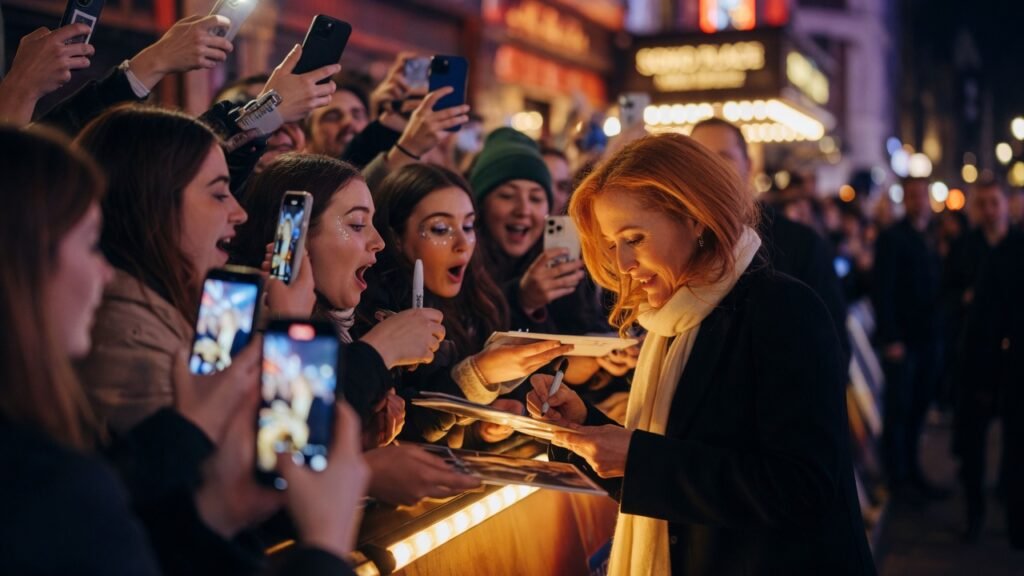
Outside Soho Place, after a performance of *Who’s Afraid of Virginia Woolf?*, the 58-year-old told a group of women they could not keep sitting front and center night after night. “You guys cannot sit in the front row,” she said while signing. When one fan offered that the show made them “cry so much,” Anderson answered without softening: “I do not care; you cannot sit in the front row. It’s so distracting.” Then the line that traveled farthest: “You can’t come 20 times and sit in the front row; it’ll drive me mad.” She laughed while she said it. She kept signing. The clip still cleared more than four million TikTok views and split the replies into gratitude versus entitlement.
Twenty Years Does Not Purchase the Fourth Wall
Anderson’s Sunday clarification on X should have ended the pile-on. The women were acquaintances of more than twenty years. She asked people not to attack them. She also refused to walk back the substance: “We’re thrilled to be doing this show but for people in the front row, please be aware that in such an intimate venue we can all see you and sometimes, it can be a tad distracting!” She closed with love and thanks. That is not a diva tantrum. That is a working actor protecting the conditions under which Albee’s three-hour marital war can still land.
Soho Place holds 602 seats. The staging is close enough that eye contact is not optional. Front-row seats were released by the thousands earlier in the run precisely because the production sells proximity as the feature. Proximity cuts both ways. When the same devoted faces occupy that sightline performance after performance, the actor is no longer playing to an audience. She is performing under surveillance by people who already know every beat. Martha’s rage and George’s games require the cast to stay inside the fiction. Repeat front-row superfans punch holes in it whether they mean to or not.
The loudest counter-argument calls Anderson ungrateful. These women cry, they return, they buy the tickets that keep a West End revival alive through mid-December. Fair sentence. The answer sits in her own wording: thrill at the work does not erase the distraction. Loyalty is not a backstage pass to rewrite the contract of live theater. You pay for a seat. You do not purchase the right to become part of the set.
London’s Stage Door Keeps Catching the Same Problem
Anderson is not an outlier. Last month Cate Blanchett stopped a National Theatre audience cold over filming during *Electra/Persona*: “There are few places on this planet at the moment where we can simply be together and be present.” Cynthia Erivo halted her one-woman *Dracula* after spotting a phone. Rosamund Pike used a curtain call to call out texting during the finale of *Inter Alia*. Different stars, same complaint. The phone and the familiar face in the front row are cousins. Both yank the room out of the shared present that makes theater worth the ticket price.
This is larger than etiquette scolding. Audiences trained on streaming and fandom meetups now treat every live event like content they already own. The West End’s intimate houses expose the friction faster than a Broadway barn. When the venue is small enough that the cast can clock your expression, your job as a spectator is to disappear into the dark. Superfans who return twenty times and camp the rail reverse that bargain. They become the story. Anderson simply said the quiet part at the stage door instead of swallowing it for another month.
The production runs through 19 December. Plenty of nights remain for first-timers and for returning fans willing to sit farther back. The work still needs the boundary more than it needs the same tears in the same seats. Anderson kept the tone light while she signed, then cleaned up the discourse the next day without apologizing for the request. That combination is the model: firm about the craft, generous about the people, unwilling to pretend distraction is flattery.
What nobody wants to admit is how ordinary the ask is. Actors have always noticed the regulars. Most never say it on camera. The clip went viral because it caught the friction in real time, not because the friction is new. In a 602-seat room doing Edward Albee, presence is the product. Protecting it is not hostility. It is the job.