Harvey Weinstein got fifteen years in a Manhattan courtroom for the 2006 sexual assault of Miriam Haley, and the only person who sounded like she understood the math was the woman who lived it.
This was the retrial. The original 2020 New York conviction that carried twenty-three years got erased in April 2024 when the Court of Appeals ruled the first trial unfair over prejudicial testimony from women whose allegations were never charged. Massive shock: a system that spent decades treating a producer’s hotel-suite leverage as standard operating procedure suddenly discovered process. The June 2025 jury convicted him on the single count involving Haley, a former Project Runway production assistant. It acquitted him on the charge tied to former model Kaja Sokola and deadlocked on the Jessica Mann allegation. A later trial on Mann also hung. By late June 2026 the Manhattan DA’s office dropped that count after she indicated she could not testify again.
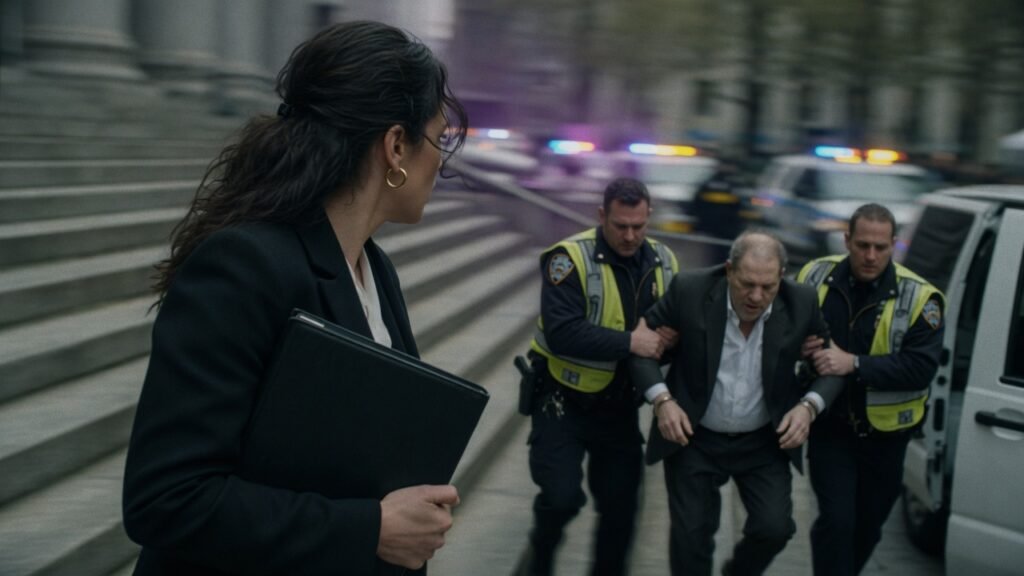
One count survived. First-degree criminal sexual act, a class B felony, maximum twenty-five years. Prosecutors asked for twenty plus five years of post-release supervision. Defense asked for nine and waved his health. Justice Curtis Farber landed on fifteen, five years supervised release, and sex offender registration. Weinstein is seventy-four. He arrived in a wheelchair, hands cuffed. He has already served more than six years across the New York and California cases. He maintains innocence and plans to appeal. His spokesman says he strongly disagrees with the sentence. DA Alvin Bragg praised Haley’s courage. The statements write themselves.
Look, I get it. People wanted a number that felt like a full stop. Fifteen is not the original twenty-three. Fifteen is also not the defense’s nine. California still has its own unfinished business: the December 2022 Los Angeles conviction for rape and sexual assault was upheld in June 2026, but the sixteen-year sentence was vacated for resentencing because the original judge weighed the later-overturned New York terms. The calendar is not finished with him. The culture already scrolled past three cycles ago.
Haley’s Math Is the Only Math That Holds
Miriam Haley, now forty-nine, delivered the line the docket never captures. “Having been sexually assaulted by Harvey Weinstein has had a devastating effect on my life and sense of security that may never go away. Making the decision to speak up will have me looking over my shoulder for years to come,” she told the court. Then the sentence that should be bolted to every greenlight meeting that ever needed his movies more than it needed a clean hallway: “It’s a life sentence for me.”
She added that she had been “further traumatized in exercising my right to hold him accountable. All of this traces back to his actions.”
That is the actual review. Not the wheelchair optics. Not the defense brief about the increased chance of dying inside. A production assistant who rebuffed him in a SoHo bedroom in 2006 and then carried the cost of making the charge stick through two New York trials and one successful appeal. Hollywood will package a prestige documentary about courage before it will sit still with a victim impact statement that refuses to become content.
Weinstein offered this: “I do have remorse for Miriam Haley’s pain, but I have to reiterate my innocence.” Remorse for the pain. Innocence on the act. You can hear the lawyers in the grammar. It is the same sentence structure the industry used for years when the whisper network was treated like a scheduling conflict instead of a security failure.
Eighty Accusations, One Surviving New York Count
More than eighty women have accused Weinstein of sexual assault or harassment. The courts have delivered one New York count that survived appeal and a California conviction that survived its own. That gap is the real second-act collapse. The industry that once treated access to him as career capital spent years pretending the structure was complicated. It was not complicated. It was a closed set with bad incentives and worse oversight.
When the first New York case fell, some corners called it #MeToo overreach. When the retrial produced a narrower verdict, the take flipped to diluted accountability. Both miss the screenplay note. The failure lived upstream of any jury form. Studios, agencies, boards, festival gatekeepers. The people who needed the library and the premieres. Die Hard works because the threat is specific and the hero is trapped in the building with it. Hollywood’s building had open elevators and a guest list.
Farber’s fifteen years sits between the state’s ask and the defense ask like a negotiated backend point. The judge indicated a preference for consecutive time with California; California decides its own clock. The machinery keeps producing statements while the practical question for a seventy-four-year-old with more than six years already served is whether the sentence outlasts the body.
What the Number Actually Purchases
Defense counsel made dying in prison the argument for nine. Prosecutors made twenty the argument for seriousness. Fifteen is the court’s attempt to split a difference that cannot be split cleanly. Haley’s life sentence does not come with a parole board or a resentencing date.
The lasting debate is not whether fifteen feels light or heavy on a spreadsheet. It is whether an industry that spent a generation protecting a man like this can do anything except process his sentencing day as another narrative package. The scripts got better at including the speech. The meetings that once required his approval are still the meetings.
Weinstein will appeal. California will resentence. Haley will keep looking over her shoulder because that, in her own words in open court, is what the crime purchased. Fifteen years is the figure on the New York sheet. The rest of the ledger never fit a docket that could close it.