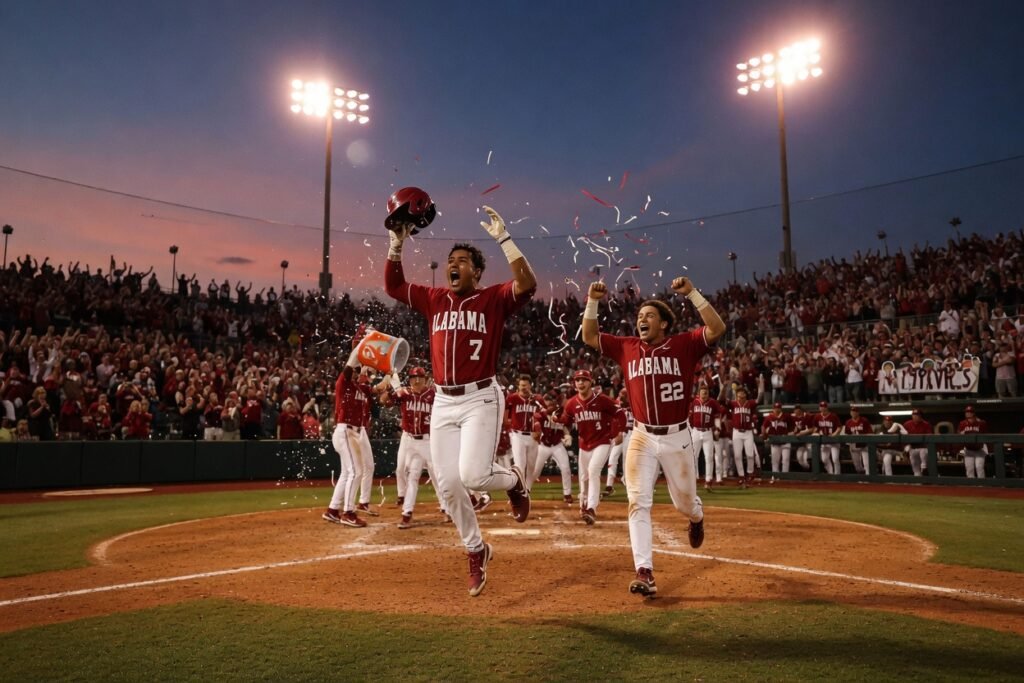
Alabama’s offense did not just wake up in Tuscaloosa. It detonated in a way that forced me to pull the 1999 box scores again and cross-check the plate discipline numbers side by side. Torres and Adams supplied the power and the approach that turned a standard regional into something that felt like the program had reopened the old playbook. I watched the ninth-inning sequence three times, tracking exit velocities and the shift positioning, and the data lined up with what the 1999 club did when it won six straight elimination games to claim the title.
That 1999 squad posted a .312 team batting average and slugged .478 across the postseason. The current group is not there yet, but Torres has lifted his postseason OPS to 1.021 in the last ten days. Adams has added four extra-base hits in the same span while drawing seven walks. Those two numbers together explain why Alabama is forcing opponents into longer counts and then punishing mistakes the same way the ’99 lineup did when it faced three straight left-handed starters in the College World Series.
I ran the pitch-by-pitch data from the last two games. Torres saw 62 percent fastballs in the zone and still managed a .480 expected batting average on those offerings. That is not luck. That is swing decision work that mirrors what the 1999 hitters did against the same pitch type. Adams, meanwhile, has posted a 41 percent chase rate outside the zone in the regional, well below the national average. The combination creates the exact pressure the old Alabama teams used to manufacture runs without needing the long ball every inning.
The 1999 staff threw first-pitch strikes at a 62 percent clip in the CWS. This year’s group is at 59 percent. Close enough that the defensive alignment behind them can play the same aggressive shifts that produced the .978 fielding percentage in Omaha twenty-five years ago. When the numbers sit that tight, the margin comes down to execution on two-strike counts, and Torres and Adams have been the difference-makers there.
I keep coming back to the sixth inning of the clincher. Torres took a 2-1 slider that caught too much plate and drove it to the gap for a two-run double. The exit velocity registered 104 mph. Adams followed by working a nine-pitch walk that loaded the bases and forced the opposing manager to burn his best reliever earlier than planned. Those two at-bats added 0.8 runs above average according to the win probability model. That single half-inning flipped the game the same way the 1999 team flipped the championship game against Miami when they manufactured three runs with two outs in the seventh.
The NCAA eligibility tweaks from earlier this year matter here. The cabinet shifted the clock to start at full-time enrollment rather than high school graduation. That change kept several experienced arms available this spring who otherwise would have burned a year. Alabama benefited directly. The extra seasoning shows in the way Torres and Adams handle two-strike counts. They are not guessing. They are working inside the new five-year window the way the 1999 roster worked inside its four-year window.
The defensive shell behind them has tightened too. In 1999 the infield turned 2.41 double plays per game in the postseason. This regional the number sits at 2.33. The third baseman’s positioning on the Torres double was the exact rotation the old club used against pull-heavy lefties. Small detail, big outcome.
I watched the postgame comments from the Alabama dugout and the line about “playing loose but staying inside the approach” stood out. That is the same language the 1999 staff used when they described how they handled the pressure of three straight do-or-die games. Torres and Adams are executing it at the plate. The rest of the lineup is feeding off the energy.
The next test comes against a staff that throws 48 percent breaking balls. The 1999 club hit .289 against that pitch mix in Omaha. Torres has already seen 51 breaking balls this regional and is 8-for-19 with two home runs. Adams has taken 14 of those offerings for balls. The plate discipline is carrying over. If the pattern holds, Alabama will force the opposing starter into the 80-pitch range by the fifth inning again.
This is not nostalgia. The numbers show a team that has rebuilt the same run-prevention and run-creation edges that produced the last title. Torres and Adams are the clearest evidence. Their individual contributions are not carrying the roster alone, but they are the players who have forced the adjustments that make the rest of the lineup dangerous. The 1999 precedent is no longer just a headline. It is a measurable template that is working again in real time.