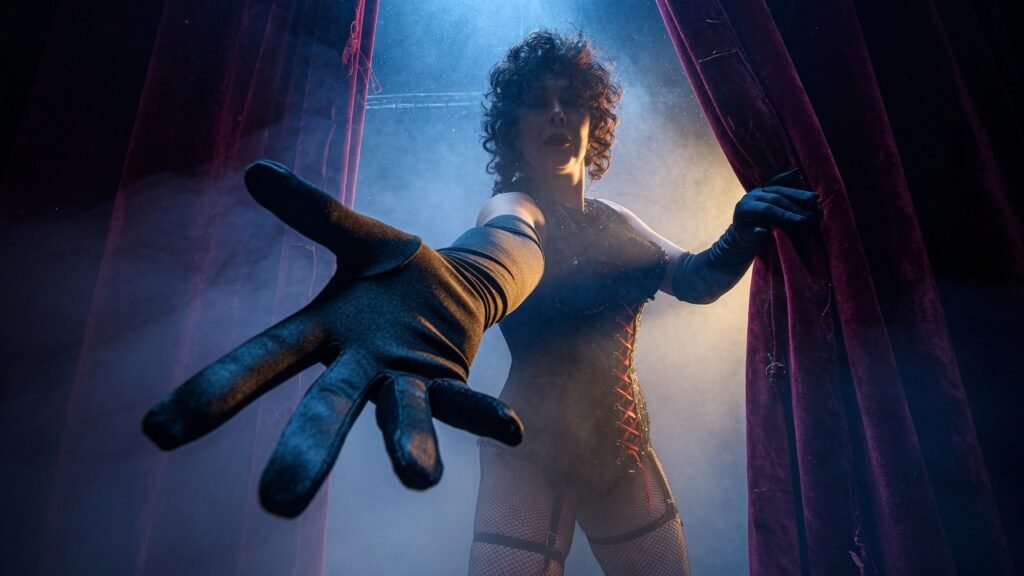
Tim Curry died Tuesday night at his home in Toluca Lake, age 80, and the first reflex will be to freeze him in fishnets and heels. Resist that. The stockings were the costume. The radical act was the invitation underneath them.
He originated Dr. Frank-N-Furter on a London stage in 1973, carried the creature into a $1.2 million film in 1975, and somehow turned a midnight curiosity into the longest-running participatory movie culture in American life. Studios did not build that. Audiences did, week after week, shouting back at the screen because Curry made the screen shout first. “It’s given a lot of people permission to be themselves,” he said later. “To not dream it, be it, which is the motto of the movie, really. I would like to be remembered for that.” He should be. Permission is harder to manufacture than a catchphrase, and almost nobody in mainstream horror-comedy has matched it since.
His manager and longtime friend Marcia Hurwitz confirmed he “passed away peacefully,” and the fuller statement got closer to the man than the résumé ever could: “his greatest legacies to those who knew him were his curious, expansive mind and generous, gentle heart, both of which remained open and filled with anticipation until his final breath.” That line is the whole career in miniature. Flamboyance was the delivery system. Curiosity was the engine.
The Villain Who Wanted Company
Curry’s genius was never pure menace. It was menace that kept offering you a seat. Pennywise in the 1990 *It* miniseries reached more than 37 million households because kids could feel the clown enjoying the hunt. Wadsworth in *Clue* made exposition feel like a magic trick. Rooster Hannigan in *Annie* turned cartoon greed into something you almost rooted for. Carol Burnett, who worked with him on that film, put it clean: “Nobody could play lovable villains better than he could.” Rob Schneider noticed the smaller instrument: “his one eyebrow could say more than most actors entire bodies.” That is craft talk, not eulogy padding. Curry understood that a raised brow is a contract with the audience. You lean in. He rewards you.
Three Tony nominations (Mozart in *Amadeus*, *My Favorite Year*, King Arthur in *Spamalot*), a Daytime Emmy as Captain Hook, three solo albums that still sound like a man daring radio to keep up. Range was never the question. The question was why so many of those performances felt like the same dare: watch me cross a line, then decide whether the line was ever real.
Susan Sarandon, who shared the screen with him in *Rocky Horror*, cut past the myth on Instagram: “What a funny, sexy, original he was. But what I loved about him most was his heart. Even wheelchair bound he continued to be so sweet and generous with his fans.” That sentence matters more than another clip reel. After the major stroke in July 2012, Curry spent roughly fourteen years in a wheelchair, partially paralyzed on the left side, relearning speech itself. “I had to learn how to speak again,” he said. “I hated not being able to speak because I speak a lot. I have to be told to shut up a lot. I love words, I love to communicate.” He kept communicating. Voice work. Anniversary appearances. A 2025 memoir, *Vagabond*, that told the public exactly how much of his private life was none of their business. He never married. He had no children. He left the work and the permission structure instead.
Midnight Culture Does Not Close
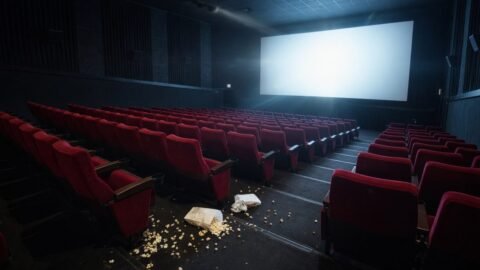
Here is the part the obituary industrial complex will underplay. *The Rocky Horror Picture Show* did not become a phenomenon because it was polished. It became a phenomenon because Curry’s Frank-N-Furter treated desire, gender play, and camp excess as hospitality rather than threat. In 1975 that was a live wire. In 2026 it is still the reason strangers throw toast at a screen together and call it church. Prestige cinema of that decade got the retrospectives. Curry got the weekly congregation. That is the rarer win.
He knew the end was coming and refused the melodrama. In a 2025 interview he said, “I don’t fear death. I try to avoid it, as I think we all do, but I suspect that in the end I will welcome it.” No performance there. Just a man who had already rebuilt a voice, a public life, and a late literary chapter after the body tried to shut the show down. The Los Angeles Fire Department responded to his home around 10:42 p.m. on August 25. Police followed for a death investigation. No foul play. Peaceful, at home, after a long second act most actors never get.
What lingers is not only the catalogue. It is the template. Every time a character actor makes villainy feel like charisma, every time a cult object outruns its budget by decades, every time an audience answers a movie out loud, Curry’s fingerprints are somewhere in the room. He moved between comedy, horror, drama, and music for five decades without asking permission first. Then he spent the last stretch proving the body can fail and the invitation can still stand.
Rewatch the red lips. Rewatch the eyebrow in *Clue*. Rewatch Pennywise smiling like he already knows your name. Then notice how many people in the theater are still dressed like him, still shouting the lines he made safe to shout. The stroke limited the legs. It never touched the dare.
VERDICT: REWATCH THE CATALOG, START WITH ROCKY HORROR AT MIDNIGHT IF YOU CAN. Legacy score: 9/10 — he turned a $1.2 million oddity into permanent cultural permission, and the screenings will not stop because the man who opened the door has left.