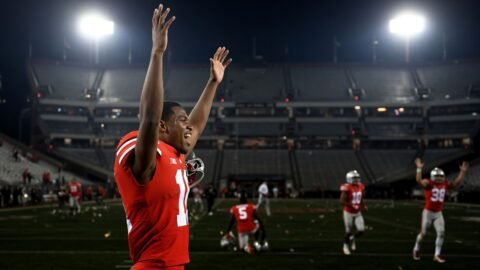
The NCAA spent June congratulating itself on a clean five-for-five eligibility model. A federal judge in Denver just lit that model on fire and handed the Class of 2022 the matches.
U.S. District Judge Charlotte Sweeney granted class certification and a preliminary injunction that covers every Division I athlete who started in 2022-23, burned through four seasons under the old rules, and got told they were done. Not a handful of basketball guys. Everybody. Football included. The transfer portal opens for them August 3 through 10. Fall camps start with real bodies who thought they were finished suddenly back on the board.
I know what the blue-check coaches and the salary-cap accountants are already typing. Roster chaos. Scholarship math. Depth charts that looked set two weeks ago now look like crime scenes. Good. Chaos is the only language the NCAA understands when it tries to rewrite the rules mid-game and screw the kids who already played by the old ones.
Baker’s Congress Beg Is Peak L Energy
Charlie Baker came out swinging with the exact energy of a guy who just lost in court and wants Congress to bail him out. “Today’s rulings and the chaos they bring to college sports are exactly why it’s time to pass this bill,” he said. He went further in the longer statement, warning that without congressional protection “failed professionals will continue to use college sports as a fallback option — robbing the next class of young athletes of college scholarships.”
Read that again. The president of the NCAA is framing fifth-year eligibility for kids who already competed four seasons as some kind of pro refugee crisis. That is not leadership. That is a man who got outflanked by antitrust law and is now begging Capitol Hill to put the genie back in the bottle. The Protect College Sports Act is not a solution. It is a surrender document dressed up as reform.
Sweeney did not buy the “roster chaos” defense for a second. She wrote that the plaintiffs “have met their burden at every step. They are likely to succeed on the merits of their Section 1 claim. They will suffer irreparable harm without” the injunction. Irreparable harm. Not inconvenience. Not awkward depth-chart meetings. Harm. The judge looked at the NCAA’s attempt to cut Class of 2022 off at the knees and called it what it is.
Football Rosters Are About To Get Extremely Uncomfortable
This is where it gets delicious for anyone who actually watches the sport instead of managing spreadsheets. An undrafted guy grinding through an NFL camp right now can, in theory, pack it in and head back to campus for one more year. Position battles that were settled in spring suddenly have veterans with four years of tape walking back through the door. Coaches who filled their 85 and told the last wave of portal guys “we’re good” now have to decide whether to cut a true sophomore to make room for a 24-year-old who already knows the system.
I can already hear the traditional media take: “Well, statistically speaking, the average impact will be limited.” Spare me. This is not about averages. This is about leverage. Every Power conference program that whiffed on a portal edge or lost a starter to the draft just got a free mulligan on experience. The programs that planned cleanly and cut dead weight just got punished for competence. That is the opposite of competitive balance. That is the NCAA’s own rulebook being used as a weapon against the kids who followed it.
The class definition is brutal in its clarity: anyone who began collegiate sports in 2022-23, competed in Division I, finished four years under the prior rules by the end of 2025-26, and got barred by the new five-for-five implementation. No sport carve-outs. No “but football is different.” The Tennessee basketball injunction earlier the same day was the appetizer. Colorado made it the main course.
Schools are about to face budget and scholarship decisions they did not price in. Some will welcome the veterans with open arms and NIL bags. Others will quietly hope the appeals stick so they do not have to cut current players. Either way, the athletes hold the cards for once. That is the part Baker cannot stand.
The NCAA wanted a clean five-year clock starting with the 2027 enrollees and tried to strand the Class of 2022 on the wrong side of the line. A federal judge just erased the line. Appeals are coming. The Tenth Circuit will get its turn. None of that changes the immediate reality: August portal window, fall camps, and a whole generation of players who were told they were finished suddenly having one more year of eligibility and the receipts to prove it.
If you are a head coach who already locked your depth chart and told your staff “we’re done shopping,” I hope you enjoy the next two weeks. The Class of 2022 is not asking permission. They just got it from the bench.
You still think the NCAA is in control of its own sport, or are you finally ready to admit the inmates took the keys and the wardens are just filing motions?