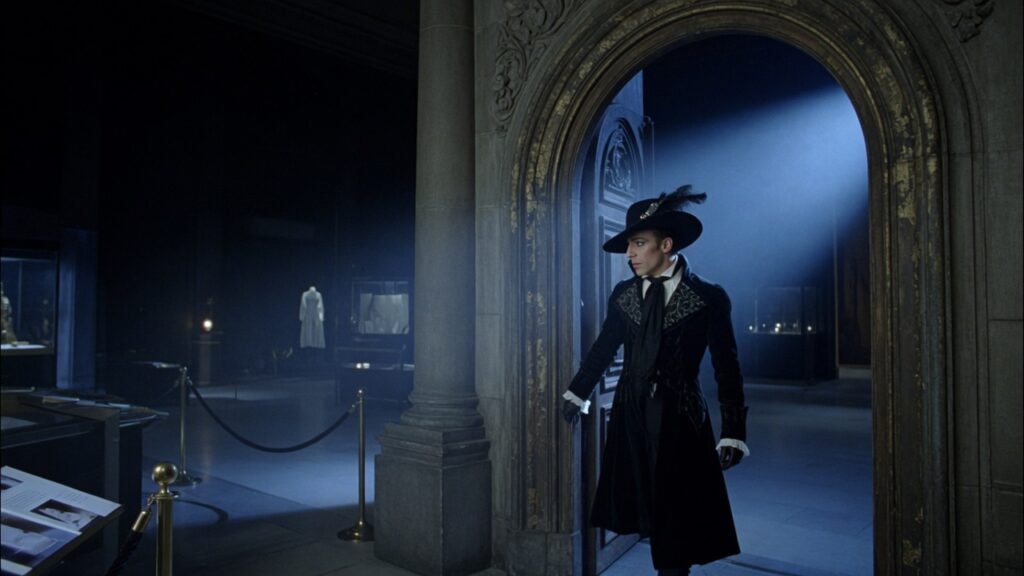
The Metropolitan Museum of Art spent July building a nine-month shrine to John Galliano and spent August watching it catch fire. On August 31 the designer and the museum jointly pulled the plug on “John Galliano: Horizons,” the planned spring 2027 Costume Institute retrospective and Met Gala theme. Massive shock. A living designer gets offered only the third solo Costume Institute show in history, after Yves Saint Laurent and Rei Kawakubo, and the whole thing collapses before a single toile hits a mannequin.
Look, I get the hunger. Galliano’s clothes still move like weapons and poems at the same time. The 1984 Central Saint Martins graduate collection through Givenchy, Dior, his own label, and Maison Margiela is a body of work most museums would kill to borrow. Andrew Bolton wanted the full arc. Anna Wintour was in the room. The Met even promised wall text about “the rupture” of 2010 and 2011. They thought scholarship plus sequins would settle the bill.
It did not.
The Crime Was Never a Mood Board
In late 2010 and early 2011, while creative director at Dior, Galliano delivered antisemitic and racist rants at a Paris café, one of them caught on video with the line “I love Hitler” and threats that the targets “would be dead” or “gassed.” Dior fired him. On September 8, 2011, a Paris court found him guilty of public insults based on origin, religion, race, or ethnicity. Suspended fine: 6,000 euros total, plus court costs. He cited addiction, apologized, got treatment. The Anti-Defamation League later accepted a private apology. He rebuilt a career at Maison Margiela and, by his own 2026 count, has fifteen years of sobriety.
That is the record. Not a subplot. Not a “complicated chapter.” A conviction.
The Met’s original July 31 announcement treated it like a curatorial opportunity: garments, sketches, research books, and a frank reckoning with the rupture. Stay with me here. Museums do this with dead painters who were monsters. They rarely do it as a black-tie fundraiser for a living man whose worst footage still circulates. And they almost never schedule the party for the first Monday in May 2027, a date that lands on Yom HaShoah. Donors noticed. Rabbis who had sat in private briefings noticed. New York City Council Speaker Julie Menin called the decision a “serious mistake.” Trustees talked about moving the Gala. Funding threats arrived. The New York Times mapped the pressure by late August. The Met had meetings. Then the meetings stopped mattering.
Redemption Theater Needs Better Writers
Galliano’s statement on the way out is pure institutional prose. “I am profoundly grateful to The Metropolitan Museum of Art, and particularly to Max Hollein, Andrew Bolton and Anna Wintour, for the extraordinary honour of proposing an exhibition devoted to my work.” He continues: “After much reflection and discussion with The Met and all those involved, I have decided, with great sadness, that it is best for the exhibition not to take place at this time.” Max Hollein confirmed the joint decision. A replacement show and Gala theme will be announced later. Everyone gets to look gracious. Nobody has to defend the original booking on camera.
Now, you might be thinking this is pure cancel culture, the mob denying a recovered man his victory lap. Fashion loves that framing because it keeps the spotlight on process instead of content. The actual failure is simpler and dumber. The Met tried to run a redemption arc the way a franchise runs a soft reboot: acknowledge the toxic season in the press notes, then roll credits over the pretty frames. Second acts do not work that way when the second act is a hate-crime conviction and a videotaped homage to Hitler. You do not get to soft-focus it with toiles and a champagne staircase while antisemitism is climbing and the calendar collides with Holocaust remembrance. That is not courage. That is calendar blindness dressed as scholarship.
Compare it to how better institutions handle living legacies that carry real damage. They separate the archive from the coronation. Show the clothes. Publish the history. Do not hand the offender the night’s biggest microphone and call the lighting design “context.” Galliano’s talent never required a Met Gala theme to remain true. The Gala is a branding exercise that happens to fund a museum. Confusing those two jobs is how you get donors on the phone and a joint press release written in the past tense of regret.
The “at this time” in Galliano’s statement is doing heavy labor. It leaves the door cracked. It also admits the timing was the problem the museum refused to see until the board meeting loomed. Fifteen years sober is real work. It does not automatically purchase a nine-month victory lap on Fifth Avenue. Genius gets exhibitions. Genius with that specific conviction, on that specific calendar, in this specific climate, gets a harder question than wall text can answer. The Met answered it by folding.
Fashion will keep recycling the same argument because the industry runs on myth and money in equal measure. Some will call this a loss for art. Some will call it overdue. Both can be true without requiring a black-tie theme night that treats a court record like a difficult fabric choice. The garments still exist. The sketches still exist. The conviction still exists. What no longer exists is the fiction that all three belong under one triumphant banner in May 2027.
The museum will announce something safer. The Gala will still raise money. Galliano will keep whatever private peace his sobriety has bought him. The rest of us get to stop pretending a retrospective and a reckoning are the same product just because the invitation is expensive.