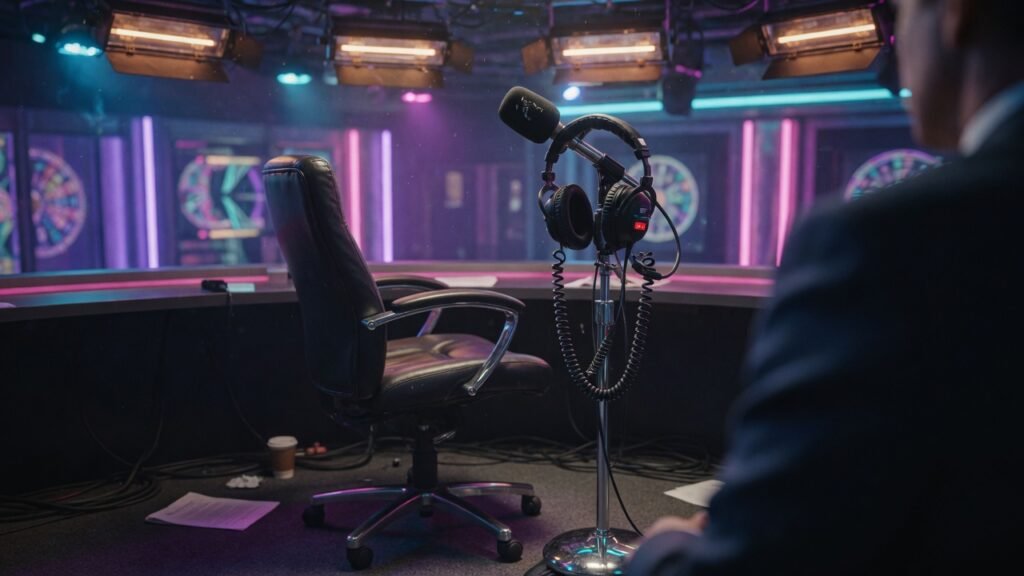
The most reliable voice in syndicated television just got yanked from the booth, and the people who own the show will not say what he is supposed to have done.
Jim Thornton has been the sound of *Wheel of Fortune* since 2011, the steady cadence that turns letter boards into jackpots and prize plugs into muscle memory. More than 2,200 episodes. The celebrity spinoff since 2021. A career that runs through KNX radio, traffic reports, *Monsters, Inc.*, and enough voice work to fill a résumé most announcers would kill for. On September 1, Sony Pictures Television put him on ice with a statement that could have been drafted by a compliance bot: “We have recently been made aware of allegations concerning Jim Thornton. He has been suspended from Wheel of Fortune, and we are recasting while we conduct a thorough investigation.”
Recently. The flight that apparently triggered this was May 14.
American Airlines Flight 1276 landed at LAX that day and got the full police greeting after a passenger raised concerns about Thornton onboard. The airline confirmed the basics: law enforcement met the plane “following concerns reported by a customer onboard.” Thornton’s attorney told TMZ the whole encounter lasted five minutes or less. No arrest. No charge. Officers, according to the lawyer, “immediately determined that no wrongdoing had occurred and told my client he was free to go.” He “did not engage in any illegal conduct.”
That is the entire public ledger. A passenger complaint. A five-minute chat. Four months of silence. Then a suspension and a temporary recast while Sony investigates “allegations” it will not describe. A pre-taped episode with Thornton still announcing aired the same night the news broke. The voice was already marked for removal and somehow still in your living room. Massive shock, right? A studio protecting the brand by saying almost nothing.
Four Months Is a Long Time to Become Recently Aware
Look, I get the corporate reflex. Game shows are comfort food. *Wheel* still pulls more than 8 million viewers and sits atop syndication. You do not want the guy who says “a new car” becoming a liability in the next news cycle. But stay with me here. When the only concrete facts are a May police contact that produced zero charges and a September statement that treats the audience like goldfish, the process itself starts to look like the product.
Sony is not obligated to litigate in public. Fine. It is also not obligated to erase a fifteen-year fixture on the strength of language this vague while the criminal system already walked away. The gap between “law enforcement spoke to him for five minutes or less” and “we are recasting” is where the real story lives. That gap is pure studio risk management. It is the same logic that turns every mid-season cast change into a press release and a shrug. The show tapes months ahead. The machine keeps spinning. The human who filled the booth for 2,200 episodes becomes a line item under review.
Now, you might be thinking this is just due diligence. Maybe. Or maybe it is the entertainment version of mystery-box plotting: big setup, no letters turned, and the audience left guessing the puzzle while the host smiles and moves on. Charlie O’Donnell owned that booth for decades. Thornton stepped in after O’Donnell’s death and never tried to reinvent the job. He just did it. Clean. Reliable. Invisible in the best way. When that kind of work gets suspended over material nobody will put on the record, you learn exactly how little the furniture of the show matters once legal and PR start measuring brand temperature.
The Announcer Is the Last Honest Job in the Room
Game-show announcing is pure craft. No arc. No redemption story. No “stunning and brave” reinvention. You hit the cue, sell the prize, keep the energy from dying between commercial breaks. Thornton did that long enough that millions of people can hear the cadence without knowing the name. Pulling him midstream without naming the allegation does not protect the audience. It trains the audience to accept disappearance as normal.
The reaction so far has been mostly headline shares and the usual low-grade bewilderment: what happened between May and now, and who is going to say “I’d like to buy a vowel” with the same muscle memory. A few jokes about lawyers solving the puzzle. Not much else, because there is almost nothing to grab. That absence is the point. Unspecified allegations plus a rapid suspension equal a story that exists mostly as a void. Sony gets to look decisive. Thornton gets to live inside a cloud. The show keeps its 8 million and its prime real estate in the evening.
I walked into this expecting the usual messy celebrity mess and walked out irritated by how cleanly the machinery worked. No charges. No public account of the passenger complaint. Just a four-month delay, a lawyer’s five-minute timeline, and a studio statement that treats the most familiar voice in the format like a replaceable sound effect. The investigation may clear him. It may not. Until somebody puts actual substance on the table, the only verified sequence is this: a plane met by police in May, a brief conversation that went nowhere, and a September mute button pressed while the wheel keeps turning.
That is the full public record. Everything else is noise the audience is not allowed to hear.