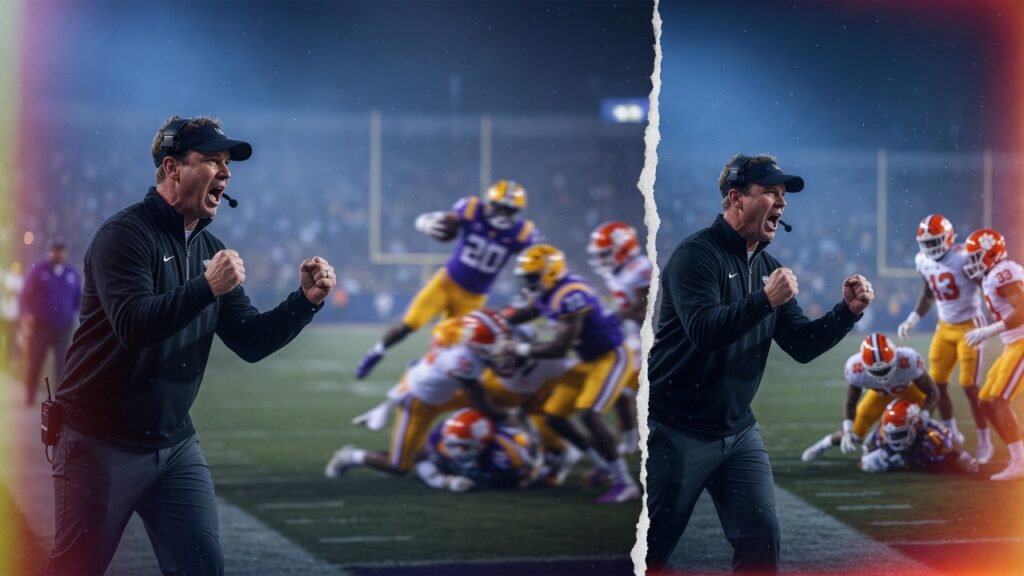
Lane Kiffin stood on a national broadcast with his team up 31-3 at the half and volunteered the quiet part out loud. “Imagine if we had pro players,” he told ABC. LSU still beat Clemson 51-10 without them. The SEC answered by putting the Tigers’ membership on a Thursday ballot and asking a federal judge to keep Baton Rouge from blocking the room.
I have covered this league long enough to recognize a program testing how far it can stretch a rule before the other fifteen presidents decide the stretch is the point. The amended complaint filed Tuesday does not read like theater. It cites Section 3.1.5 of the SEC Constitution, the clause that hands presidents plenary power over conference affairs of any type, including the authority to terminate a member with a two-thirds vote. The league added Louisiana Attorney General Elizabeth Murrill as a defendant and sought a temporary restraining order so nobody could undo the September 10 meeting. That is a conference drawing a hard perimeter around its own right to exist.
Kiffin Said the Quiet Part. The Filing Made It Evidence.
The SEC’s own words in the filing land like a verdict. Kiffin’s halftime and postgame comments, the league alleges, “stand in sharp contrast to the silence by the President and Athletic Director of LSU” and “confirm the lack of institutional control over the athletics program at LSU that is required by Article 6 of the SEC Constitution.” I watched that opener. The score was never in doubt. The roster spots stayed empty. The former NFL players, Dae’Quan Wright and Zxavian Harris, remained on campus practicing while the university left itself two vacancies after the NCAA deadline. The complaint treats that combination as proof of intent, not coincidence.
Commissioner Greg Sankey and the presidents already voted 16-0 to affirm the professionalism ban. LSU abstained when the penalties came up. That abstention sits in the record like a shrug. Then Kiffin went on national television and advertised the very roster the conference just prohibited. I am not inventing motive here. The SEC put the sequence in federal court and asked a Birmingham judge for protection of the vote itself. When a conference has to sue its own member and the state attorney general just to hold a meeting, the membership question has already left the polite stage.
The league statement is blunt: “The SEC and its member universities have the right to establish, through agreed-upon governance procedures, the rules under which they voluntarily compete and to expect those rules to be followed.” Another line follows: “A commitment to those rules, and to the core principles of the Southeastern Conference, is an essential element of SEC membership.” Read that twice. Membership is not a birthright. It is a contract. LSU signed it. Lane Kiffin is daring the other presidents to enforce it.
The Two-Thirds Threshold Is the Real Message
Expulsion is not the expected outcome. Multiple outlets have reported the same. The filing is still the loudest signal the SEC has sent in years about whether its bylaws mean anything once a blue-blood program and a high-profile coach decide the rules are optional. College football spent the last half-decade watching conferences chase television money while the competitive floor cracked under NIL, the transfer portal, and every state court injunction that treated eligibility like a local ordinance. The SEC is telling its members, and every other Power conference watching, that it still claims the power to police who wears its brand.
I keep coming back to the institutional control charge. President Wade Rousse and athletic director Verge Ausberry stayed quiet while their head coach turned a blowout into a campaign commercial for pro eligibility. The amended complaint treats that silence as evidence. In any other era that would have produced a private phone call and a fine. In this one it produced a special meeting of the presidents and a request for a federal shield so the vote can happen. The two-thirds bar is high on purpose. Crossing it would rewrite the map of the sport. Leaving it on the table already rewrites the power dynamic inside the league.
Wright and Harris signed NFL contracts before trying to return. The broader Louisiana injunction covered dozens of athletes. Three of the named players had pro paperwork; one dropped out. The other two practiced at LSU while the conference sued. That fact pattern is why the SEC went to Alabama federal court in the first place and why the amended filing now seeks to protect the Thursday meeting from interference. The league is not debating vibes. It is defending the right to set the terms of competition and to remove a member that, in the presidents’ judgment last week, no longer fits those terms.
Thursday’s vote will either end with LSU still seated or with the unthinkable becoming minutes. Either result leaves a permanent mark. If the presidents hold the line without terminating, every future coach who wants to test a roster ban will remember that Kiffin forced the conference into federal court and still lost the argument on institutional control. If they pull the trigger, the SEC will have done something no modern Power conference has dared: treat membership as conditional. I will be watching the Birmingham hearing and the presidents’ room the same way. The scoreboard Saturday was 51-10. The real contest is whether the conference still owns its own rules when the loudest voice in the building decides they are a suggestion.