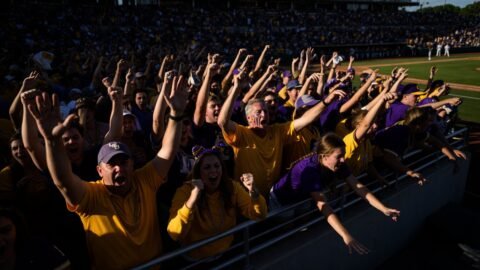
REV Entertainment just dropped the 2027 College Baseball Series slate, and if you’re not paying attention, you’re already behind. This isn’t just some schedule announcement, fam. This is the latest bulletin from the front lines of a war that’s already been fought and won: college sports, as we knew it, is dead. And REV Entertainment just held the funeral in grand style, complete with fireworks and a marching band made of dollar signs.
I’m talking about a full-on professional takeover, draped in the convenient, rapidly-fraying cloak of “amateurism.” Forget your grandpappy’s dusty memories of quaint regional rivalries. That era? Cooked. Buried. We’re talking big-money, big-brand, big-stadium events that look, sound, and feel exactly like what they are: a minor league system for MLB, with a side hustle in collegiate branding.
And I love it.
Go ahead, @ me. I know what you’re about to type in the comments. “But RyGuy, what about the purity of the game? The student-athlete experience?” Bro, the “purity of the game” left when NIL money started flowing like a busted hydrant and every coach became a glorified CEO managing a roster of free agents. The “student-athlete experience” now includes driving a Charger your booster bought you to your 8 AM. Get real.
This isn’t a slow burn. This is a five-alarm blaze, and REV Entertainment is just fanning the flames with a leaf blower. They’re locking in premium matchups, pushing them into bigger venues, and making damn sure the eyeballs are glued to the screen. Why? Because the market demands it. Because players demand it. Because the money is there, and anyone still pretending it’s not is living in a simulation from 2005.
Let’s talk about the “enhanced” part of this announcement. They didn’t just add a few more games. They’re talking about “showcasing top talent” and “elevating the fan experience.” What does that mean in RyGuy speak? It means they’re building out a legit, early-season gauntlet designed to be a content machine. It means your favorite mid-major is getting nerfed out of these big-money opportunities unless they’ve got a lottery pick on the mound. It means the 2K ratings are about to get real.
Texas A&M head coach Jim Schlossnagle didn’t mince words when he talked about the shifting sands. “The NIL and transfer portal has changed everything,” Schlossnagle said in a 2023 interview. “If you’re not trying to figure out how to navigate that, you’re probably falling behind.” And he’s absolutely right. Schlossnagle gets it. He’s not out there clutching pearls; he’s out there signing checks and recruiting dawgs. This REV series slate is just another manifestation of that reality. You either adapt, or you’re left eating dust in the SEC West.
The traditional media talking heads, your Skip Bayless clones and ESPN talking points machines, they’ll probably spin this as “growth for the sport.” They’ll trot out some numbers about viewership and ticket sales. But they won’t tell you the real story. They won’t tell you that this isn’t just growth; it’s a full-scale corporate hostile takeover, and the NCAA is just standing there holding the door open. They’re too busy glazing over the obvious truth because it makes for bad optics in the corporate boardroom.
I’m telling you, this is a beautiful, brutal acceleration. The best players are no longer shackled by archaic rules. They’re looking at these early-season tournaments, seeing the big lights, the national exposure, the pro scouts, and they’re saying, “Yeah, I want *that*.” This isn’t just about winning games; it’s about building a brand, increasing your draft stock, and setting yourself up for generational wealth.
Paul Skenes, who went from LSU to the MLB as a top pick, understood this perfectly. He openly acknowledged the impact of NIL. “I think it’s a good thing,” Skenes said after being drafted in 2023. “It gives players an opportunity to make money while they’re still in college and helps them develop.” And he’s spot on. The players are the product, and for too long, they weren’t getting their cut. These enhanced series, with their massive visibility and increased stakes, are just another avenue for players to showcase their value and demand their worth. The L energy of “amateurism” is being replaced by the W/L record of commercial viability.
Think about it: who benefits from these massive early-season showdowns? The blue bloods. The programs with the deepest pockets, the best facilities, the most established recruiting pipelines. They get to play each other, boost their RPI, get prime TV slots, and solidify their status as the feeder system for MLB. It’s an arms race, and REV Entertainment is supplying the nukes.
I see it as a necessary evil, maybe even just a necessary. The demand for high-stakes, high-quality college baseball is through the roof. Just look at the College World Series. Tony Vitello, Tennessee’s head coach, once called it “like the Super Bowl for college baseball” back in 2022. He wasn’t wrong. And now, REV is trying to bring that same energy, that same level of spectacle, to the *beginning* of the season. They’re not waiting for Omaha; they’re bringing Omaha to February.
This isn’t about the love of the game, not anymore. This is about the *business* of the game. And the business is booming. The transfer portal ensures that if you’re a player with no aura at a small school, you can bounce to a program that *does* have the aura, that *will* get you on these big stages. It’s a meritocracy of exposure, and REV is just creating more stages for it.
The old guard will whine about tradition. They’ll lament the loss of regional tournaments, the quaint charm of rivalries built over decades in smaller ballparks. But guess what? Nostalgia doesn’t pay the bills. Nostalgia doesn’t get you a better TV deal. Nostalgia doesn’t attract five-star recruits who want to play on national television against other future pros. This is the new paradigm, and it’s unapologetically commercial.
This shift isn’t just for baseball, either. This is the blueprint for all “non-revenue” college sports trying to stay relevant in a landscape dominated by football and basketball. You professionalize. You commercialize. You find partners like REV Entertainment who understand that you’re selling a product, not a pastime. You package it, you market it, and you put it on display.
So when you see the 2027 slate, don’t just see a schedule. See the future. See the inevitable march towards a fully professionalized college sports ecosystem where the lines between amateur and pro are so blurred they’re practically invisible. See the players getting paid, the coaches becoming titans of industry, and the fans getting a premium product. It’s not a war crime against the salary cap, it’s a declaration of independence from the past.
And if you’re still clinging to the idea that college baseball is about some romanticized ideal, you’re already lost. The game chose violence, and REV Entertainment just handed them a bazooka.
Are you ready to admit that college sports are already fully professionalized, or are you still living in a fantasy world?