Prime Video just canceled Nicolas Cage’s Spider-Noir after one season, and if that sentence doesn’t make you want to throw your remote through the screen, you have already accepted the new rules of prestige television. Eleven Emmy nominations. Ninety-two percent critics, ninety percent audience. Cage’s first proper lead TV role. A complete eight-episode noir that actually looked and sounded like it knew what decade it was in. And still: dead. Massive shock.
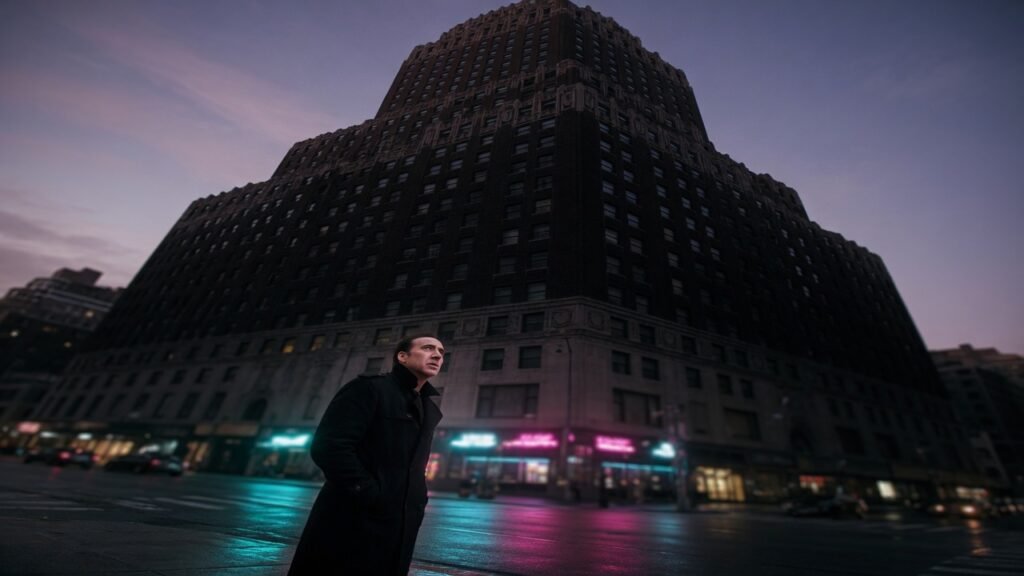
The show dropped in late May 2026, color on MGM+, then the full binge on Prime with that delicious dual-track black-and-white “Authentic” option. Ben Reilly as a washed private eye in 1930s New York who also happens to be the city’s only costumed ghost. Not another multiverse homework assignment. Not another origin that spends six hours explaining powers. Just a man in a suit, a city that hates him, and the kind of personal tragedy that forces the mask back on. Co-showrunner Oren Uziel put the pitch cleaner than any trailer: “We’re really trying to make an old Bogart movie. It’s just that Bogart happens to be Spider-Man.” That is the entire thesis. It worked.
Cage understood the assignment at a molecular level. “For me, this character was 70 percent Bogart, and 30 percent Bugs Bunny,” he told Esquire. “I was basically Mel Blanc doing Bogart, with that sarcastic sense of humor. But it’s a hundred percent me.” You felt it. The performance sat inside the black-and-white frame like it had been waiting there since 1941. He had spent years refusing television because he didn’t want homogenized product. Then his son sat him down with Breaking Bad during COVID and the math changed. Eight hours meant seeds. Character that could bloom. With Spider-Noir, he said, “the vision that I had in my imagination manifested in the exact way that I’d hoped.” Stay with me here: that is a man who got exactly what he wanted out of the medium, and the medium still fired him.
Emmys Are Participation Trophies Now
Eleven nominations. Most of any Prime Video series this cycle. Production design, title design, cinematography, prosthetic makeup, original score, original song, sound editing, sound mixing, visual effects, stunt coordination, stunt performance. The craft categories lined up like they were daring the streamer to notice. Amazon noticed the wrong thing. Nielsen had it at 851 million viewing minutes in week one, good for No. 2 among originals. Six weeks later the total sat at 2.6 billion. Solid. Respectable. Not the kind of number that makes a finance deck forget the dual-format VFX bill or the period production costs that kept climbing. Season 1 mostly closed its own loops. Limited loose threads. In the old world that would be called “satisfying.” In the current one it is called “no franchise runway.”
Look, I get it. Streamers do not renew for love. They renew for retention curves and sequel hooks that can spin into the next six titles under the Sony Marvel deal. Spider-Noir was the first chapter that actually premiered. Silk got scrapped earlier. The machine needs volume, not one perfect little black-and-white detective story that ends when the case ends. Uziel had already mapped the escape hatch: “One of the magical things about any private detective story is, if you want another story, all it takes is another client to knock on that door.” He built the thing to run as long as anyone wanted. Nobody knocked.
The cancellation landed September 4 with the usual corporate silence. No long statement from Cage, no exit interview from the showrunners explaining the math. Just the quiet confirmation across the trades. Cage had already answered the only question that mattered back in June, talking to Variety about a second season: “I do not know. But I would say that whether it happens or not, all of us achieved what we set out to do, and it works on its own. We’ll see what happens.” He was right. It works on its own. That is precisely why it is gone.
The Dual-Format Tax Nobody Wanted to Pay
They shot the entire season so you could watch it the way noir is supposed to look and the way the algorithm prefers color. Roughly 3,250 VFX shots. Period New York. Practical and digital fighting for the same frame. Reports floated a Season 1 price tag that made accountants sweat; primary outlets never locked the number, but the dual presentation alone told you the ledger was not lean. High craft is expensive. High craft that refuses to become a toy aisle is fatal. Harry Bradbeer (Fleabag, Killing Eve) set the visual grammar in the first two episodes and the rest of the season kept the promise. Brendan Gleeson, Lamorne Morris, Li Jun Li, Jack Huston: nobody phoned it in. The script gave them actual scenes instead of exposition dumps disguised as banter. And still the spreadsheet won.
Now you might be thinking the audience scores and the Emmys should have bought another season on reputation alone. That is adorable. Reputation is what you use to launch the next thing, not to keep the current one alive when the daily top-10 chart stops glowing. Spider-Noir fell off relatively fast. In streamer logic that is the same as never existing. Compare it to the shows that do get renewed with half the reviews and a third of the nominations: they leave doors open, post-credit stingers, mid-credits cameos, anything that can be sold as “the universe expands.” This one told a story. Oh no… anyway.
Sony and Amazon will keep making more under the deal. Something else is reportedly nearing series order. The pipeline does not care that Cage finally found an eight-hour canvas that fit his particular brand of controlled chaos. It does not care that the black-and-white version felt like a recovered film print instead of a filter. It cares about the next logo on the next thumbnail.
The real tell is how little anyone in the building seemed surprised. A show can be stunning and brave in the craft categories, rack up the nominations, earn the audience love, and still get treated like a completed tax write-off the moment the viewing minutes stop looking like a hockey stick. Cage planted the seeds. The character bloomed. The door never got another knock. All eight episodes are still sitting there on Prime, finished, self-contained, and now officially a one-season wonder with better bones than half the multi-year franchises still clogging the queue. That is the part that should keep you up. Not that a good show got canceled. That the definition of “good enough to keep” no longer includes the thing that actually works on its own.