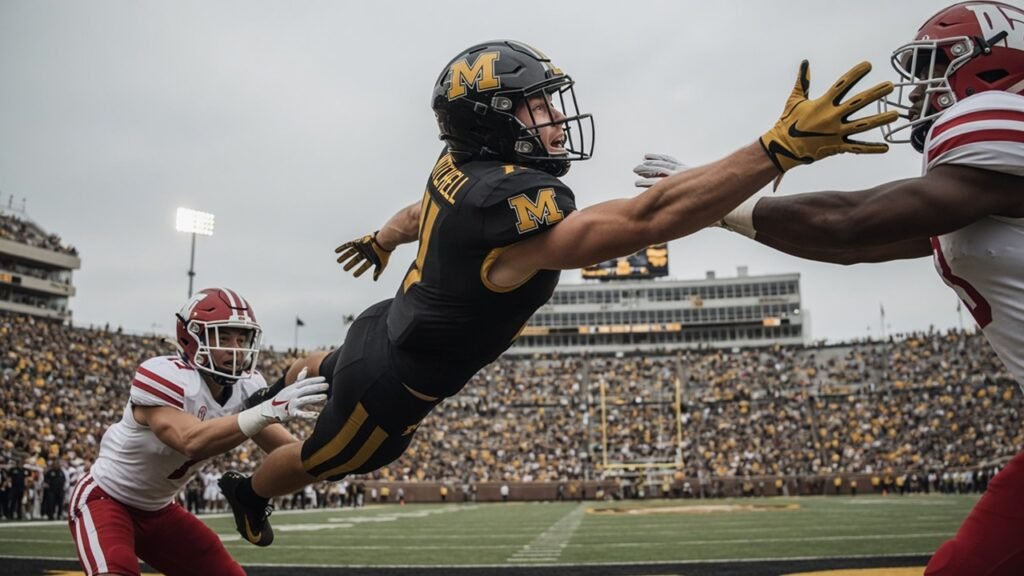
The Kentucky Court of Appeals just told Mark Mitchell and nearly 40 other athletes that asking for the same five years the NCAA already handed everyone else would “disrupt the status quo.” Read that again. The organization rewrote eligibility in June. The Class of 2022 is the only group locked outside the door. And a three-judge panel treated their request like an invasion.
Friday’s order dissolved the August 21 temporary injunction that had kept Mitchell eligible after his senior year at Missouri. Louisville’s Seth Trimble, LSU’s Skyy Clark, Kentucky linebacker Alex Afari, and Texas Tech quarterback Thomas Castellanos got the same news. The underlying lawsuit is still alive. A hearing sits on the calendar for October 9. But right now, Mitchell cannot play.
I have a hard time swallowing the panel’s logic. “There was no loss of an opportunity for them because nothing changed, and the new rule did not, as the circuit court surmised, ‘bar’ them from doing anything they previously had a right to do,” the judges wrote. Then the money line: “Permitting the high school Class of 2022 to play a fifth season — the very relief the respondents were requesting — would disrupt the status quo.”
The NCAA changed the status quo. Age-based eligibility is the new architecture. Five years is the product. The Class of 2022 finished four seasons under the old clock, watched the league flip the model, and got told they were born a year too early to cash the same check. That is the disruption. Calling the players the problem is institutional gaslighting with a robe on.
Mitchell Built a Resume the Court Just Shelved
Mitchell is not some fringe roster filler hunting a free ride. Last season he averaged 18.3 points, 5.2 rebounds, and 3.6 assists. He started all 33 games. He shot 54.7 percent from the field and 38.8 percent from three. All-SEC Second Team. He led Missouri in points, rebounds, and assists in the same season, the second Tiger ever to pull that off. His scoring average was the highest in Columbia in 12 years. He went undrafted, ran Summer League with Denver, and still wanted one more college year.
Evanmiya.com had Missouri at No. 39 with him and No. 54 without him. Fifteen spots. That is the difference between a bubble conversation and a February slog. The Tigers just lost their best player to a procedural ruling about whether an injunction could move the furniture.
Judge Sara Walter Combs put it clean for the court: “A restraining order cannot disrupt the status quo. A temporary injunction can.” Fine. Legal distinction. The practical result is still a star forward sitting while the NCAA gets to run out the clock until tip-off.
Football already ate the collateral damage. Afari had 11 tackles through four games for Kentucky. Castellanos had already taken snaps for Texas Tech. Those games happened under the injunction. Now the protection is gone and the tape is not. Basketball has a month. The timeline is uglier.
Thirty-Eight Players, One Bad Blueprint
About 38 athletes rode that Jefferson Circuit Court order. One filing. One judge. One appeals panel that yanked the floor out. Sam C. Erlich, the Boise State legal studies professor tracking these fights, sketched the next moves without romance: “One, filing a new motion for an injunction in the Kentucky court, but that may be tough. Or two, dismissing and refiling in Missouri, which may or may not be easier. There are lots of these cases right now in Missouri, and they all seem to be going different directions.”
Different directions. That is the entire eligibility landscape in one sentence. Some fifth-year guys already have cover in other courts. Mitchell and the Kentucky plaintiffs do not. The NCAA has not blinked on its position that four seasons equals done. Players keep finding judges who disagree, until the next panel does not.
Mitchell already lived the circus once. He committed to Kentucky off the August order, then backed out when the SEC signaled it would enforce the intra-conference transfer rule the court refused to touch because the conference was not a defendant. He returned to Missouri. Now he needs a Missouri filing or a rebuilt Kentucky injunction just to get back on the floor he never left by choice.
College basketball season starts in a month. Rosters are supposed to be settling. Instead the Class of 2022 is running a legal gauntlet for a rule the NCAA already sold as the future. Mitchell put up All-SEC production and still needs a new complaint to prove he belongs under a five-year model. The status quo the court protected is the one that keeps changing on the athletes who cannot afford the delay.
The October 9 hearing will not fix that. Individual state filings might. Until one of them sticks, Missouri is the No. 54 team with an empty wing and a stack of paperwork where its best player used to be.