Cale Makar just dropped a $20.4 million AAV nuke on the NHL salary structure, and somewhere in Minnesota, Pat Brisson is smiling like a man who just watched his client print money without lifting a stick.
Eight years. $163.2 million. Starts in 2027-28. First defenseman to clear the $20 million AAV line, largest contract the league has ever seen by total and average, and Colorado did it with a year still left on his old deal. Joe Sakic called him a generational defenseman and said the Avalanche are beyond thrilled to keep him in the sweater for the next decade. Fair. The rest of the league just got the bill for that thrill.
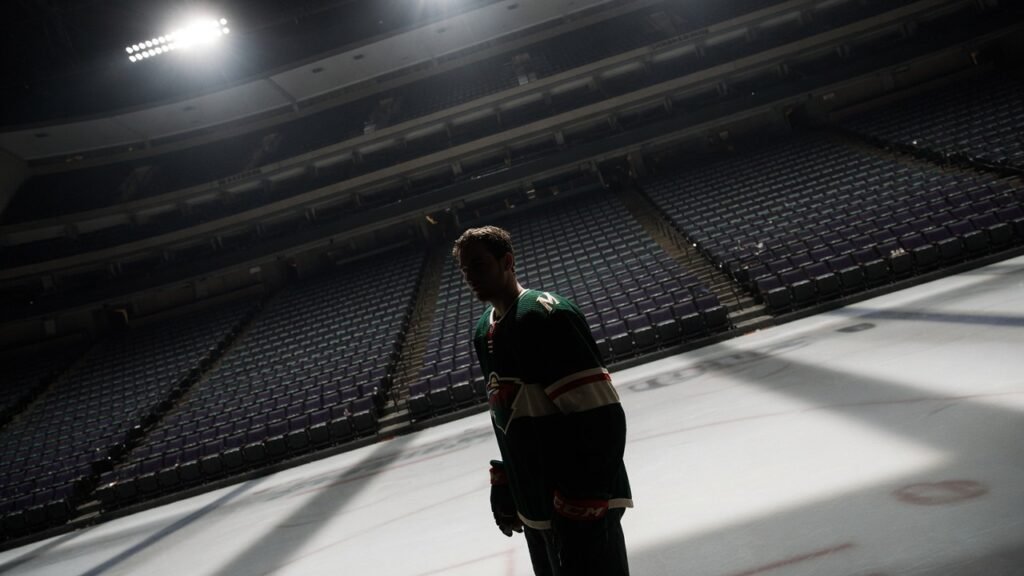
Quinn Hughes is sitting in Minnesota on the final year of a $7.85 million deal that now looks like a historical artifact. The Wild traded a haul to get him from Vancouver last December. Owner Craig Leipold already said publicly they would re-sign him. Hughes said after the playoffs he liked it there and was open to staying. Talks with Brisson had been quiet. Then Makar hit send on the biggest defenseman contract in history and suddenly every number on the table in Minnesota just aged poorly.
The Ceiling Just Became the Floor
Before this, Dom Luszczyszyn had Hughes valued around $17.8 million on an eight-year deal. Reasonable. Clean. The kind of number a contending team could absorb and still sleep at night. Makar just made that projection look like it was written in 2023 money.
Hughes put up 76 points last season, 53 of them in 48 games after the trade, then tied for the Wild playoff lead with 15 points in 11 games. Norris winner already. Elite transition, elite vision, the kind of blue-liner who tilts a series by himself. The market does not care that Makar has two Norris trophies, a Conn Smythe, and a Cup. The market cares that Colorado just proved a franchise will pay $20.4 million AAV to lock a generational defenseman through his thirties. Hughes is the only other name in that conversation right now.
Minnesota has nearly $46 million in projected cap space for 2027-28. That sounds like breathing room until you realize the new comps start at twenty. Max AAV under the current structure sits at $20.8 million. After July 1, 2027, if Hughes hits unrestricted free agency, the projected cap jumps and the max climbs with it. Term matters too. Eight years is still available if they get this done before the new CBA window tightens. Wait too long and the leverage flips completely.
I know what the comments are loading. “Hughes isn’t Makar.” Cool. Tell Brisson that. Tell the other 31 front offices that just watched Colorado set the price. Bowen Byram’s $12.5 million AAV already looked soft. Kirill Kaprizov’s $17 million deal with the same Wild suddenly feels like a different tax bracket. Makar did not just get paid. He re-priced the position.
Minnesota Already Paid Once. Now They Pay Again.
The trade cost them Marco Rossi, Liam Ohgren, Zeev Buium, and a first-rounder. That was the entry fee. The extension is the real purchase price, and it just went vertical. League sources shot down the New Jersey trade smoke in late August, which is another way of saying the Wild know exactly what they have and what happens if they blink. Training camp is weeks away. An unsigned Hughes walking into the season on an expiring deal is not a flex. It is a slow bleed of leverage.
Colorado structured Makar with $127.6 million in signing bonuses. That is not a coincidence. That is how you win the negotiation and still keep the player happy when the cap rises. Minnesota has the space. They have the owner on record. They have a player who already said he likes the place. What they do not have is a soft landing if this drags. Every day after Makar’s announcement is another day Brisson can point at $20.4 million and ask why his guy is supposed to accept less for the same job description.
I watched Hughes run the power play and kill rushes in real time last spring. The production is not theoretical. The Wild did not acquire a rental. They acquired the second name on the short list of defensemen who can carry a franchise, and then Makar reminded everyone what that list actually costs.
Pay him. Structure it heavy on bonuses. Get the eight years. Do it before the calendar and the CBA take options off the table. The alternative is watching a $20-plus million player walk into a market that Colorado just taught how to spend, while the assets you traded to get him are already wearing different sweaters.
Makar did not just lock up his own future. He handed Quinn Hughes the loudest negotiation chip in the league, and Minnesota is the team that has to answer it.