RJ Luis Jr. sat in a Baton Rouge courtroom for five or six hours on August 24 and walked out with a preliminary injunction that told the NCAA something it has spent years pretending not to hear. Judge Ronald R. Johnson looked at a 23-year-old wing who logged three NBA preseason games, roughly seven or eight total minutes, six points, a groin injury that required surgery, and zero regular-season professional appearances, and said the quiet part clean: “In the court’s mind, [Luis] did not actually play professional basketball.”
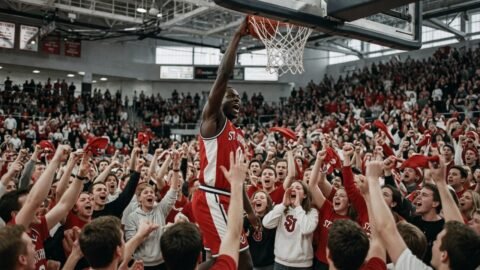
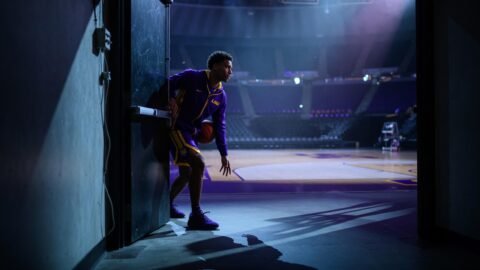
I have watched eligibility theater for long enough to know when a league is arguing principle and when it is arguing control. This was control. Luis left St. John’s after a Big East Player of the Year season in which he posted 18.2 points, 7.2 rebounds, and 2.0 assists across 35 games, went undrafted in 2025, signed a two-way with the Utah Jazz, got flipped to the Boston Celtics, got waived in mid-October, and never saw a real pro minute because his body shut the door. Now Will Wade has him in purple and gold for 2026-27, and the people who built the current money machine are clutching their rulebook like it still means what it did in 1994.
Sankey Filed Paperwork Against a Kid Who Never Played
Let me tell you something about Greg Sankey. The SEC commissioner put his name on an affidavit calling Luis’s return “a competitive disadvantage and fundamental unfairness for current student-athletes who have not pursued a professional sports career but instead have maintained their commitment to the collegiate athletics model.” He wrapped it in the usual language about athletics as “an integral part of the academic experience” and about preserving opportunities for future kids.
I read that affidavit and I laughed without smiling. The same conference that has spent the NIL era turning its basketball and football rosters into open markets suddenly discovers purity the moment a former All-American tries to come back after a failed two-way experiment. Sankey has run this play before. Charles Bediako got the same treatment at Alabama. Temporary relief, then the machinery ground him down. The pattern is not subtle. When a power program wants the body, the affidavit appears. When the body is inconvenient, the integrity speech gets louder.
NCAA attorney Taylor Askew stood up and delivered the house line: “Actions have consequences. Decisions have outcomes and they’re not always the right ones or the ones that you want.” True enough in a vacuum. Luis chose the draft. Luis signed the contract. Luis took the risk. What Askew will not say is that the governing body already converted college basketball into a paid enterprise and then drew a bright red line at the precise spot where a kid’s career went sideways for medical reasons. That is not stewardship. That is selective memory with a legal department.
Wade Gets the Star the League Tried to Erase
Luis’s attorneys did not whisper. Tony Clayton called the ruling “precedent” and “monumental,” then admitted the human part out loud: “I didn’t want to hug him too long because I didn’t want to cry. But I felt a big relief lift off that kid’s shoulders.” Elliot Abrams went further and put the entire association on blast: the NCAA “chose to allow schools to start paying players directly,” then “start[ed] drawing these arbitrary distinctions,” and now “every time someone challenges an arbitrary decision of the NCAA, the NCAA cries wolf.”
I am with Abrams on the architecture. Once you pay players, once you let them transfer freely, once you treat the portal like free agency, the claim that three preseason minutes and a waived two-way forever ban a man from campus ball stops sounding like principle and starts sounding like panic. Judge Johnson even flagged whether Luis was properly advised of his options when he left. That detail lingers for a reason. Advisors sell the dream. The dream ends on a training table in Maine. Then the same system that sold the dream files paperwork to keep the gym locked.
The day after the injunction, the SEC announced it would bar former professionals from its own rosters. Conference first, association second. Protect the brand while the lawsuit crawls through discovery. LSU is still an SEC member. The injunction lets Luis practice and potentially play while the full case continues. Wade hugged him in the courtroom. The Tigers, thin on the roster earlier in the summer, just added a proven second-team AP All-American who already owned a Big East title run and a two-seed March.
I do not pretend this is tidy. It is not. A 23-year-old wing with real production and unfinished college eligibility should not have to sue his way back onto a campus after a pro experiment that never left the exhibition schedule. The NCAA built the professionalized college game, then tried to police the exit ramps with rules that a Louisiana judge refused to rubber-stamp. Sankey can keep filing affidavits. Askew can keep talking about consequences. Clayton and Abrams already forced the association to live with a record that says this kid never actually played.
Luis gets to put the jersey back on. The league that waived him does not get to erase the tape from St. John’s. And every future two-way casualty now has a courtroom map drawn in Baton Rouge ink. That is the precedent. Live with it.