I haven’t felt this kind of quiet, simmering outrage over a pop culture narrative in ages – not since we collectively decided that “gritty reboot” was a viable creative strategy. Because let’s be crystal clear: if you’re talking about a WWII courtroom masterpiece, and your first thought isn’t the one that ripped open the very soul of the 20th century, then we need to have a serious conversation about what “masterpiece” even means. Collider might be buzzing about a new *Nuremberg* film, a Russell Crowe vehicle that apparently “emerged as something of a sleeper hit” on PVOD with a “stellar 95% score on the aggregator website Rotten Tomatoes” from its target audience. And sure, good for them. But to position *that* film as the primary reference point, only to then tease its “spiritual precursor” now streaming on Prime Video, feels like introducing a Michelin-starred chef by first complimenting the guy selling hot dogs down the street. We’re not here for hot dogs, folks. We’re here for the transcendent, the gut-wrenching, the historically seismic *Judgment at Nuremberg*. And yes, it’s finally, rightfully streaming.
This isn’t merely a film; it’s a moral crucible. Stanley Kramer’s 1961 epic, starring a murderers’ row of acting legends – Spencer Tracy, Burt Lancaster, Richard Widmark, Marlene Dietrich, Judy Garland, Montgomery Clift, and the Oscar-winning Maximilian Schell – doesn’t just depict history. It *interrogates* it. It doesn’t just tell the story of the trials; it forces *you*, the viewer, into the jury box, grappling with questions that echo even louder today amidst a rising tide of historical amnesia and convenient revisionism.
The “new” *Nuremberg* seems to focus on the charismatic villainy of Hermann Göring, a common, almost seductive trap for films dealing with evil. But *Judgment at Nuremberg* understands that the true horror wasn’t just the monster at the top, but the complicity of the *system*, the educated, “respectable” men who lent their intellect and authority to barbarism. These were the judges, the lawyers, the very pillars of the German legal system who perverted justice into a tool of genocide. It’s a far more chilling prospect than a single, bombastic antagonist.
Kramer, a director often dismissed by some critics as too “message-driven,” understood that some messages are too vital to be subtle. He used the full power of cinema to force an uncomfortable reckoning. His films, like *The Defiant Ones* or *Guess Who’s Coming to Dinner*, often tackled societal issues head-on, but none with the sheer historical weight and moral complexity of *Judgment at Nuremberg*. As Kramer himself once said, “I make films about subjects I believe in. It’s a risk, but it’s one I’m willing to take.” And what a risk it was, daring to revisit Germany less than two decades after the war, shooting on location, and forcing the world to confront the uncomfortable truth of collective responsibility.
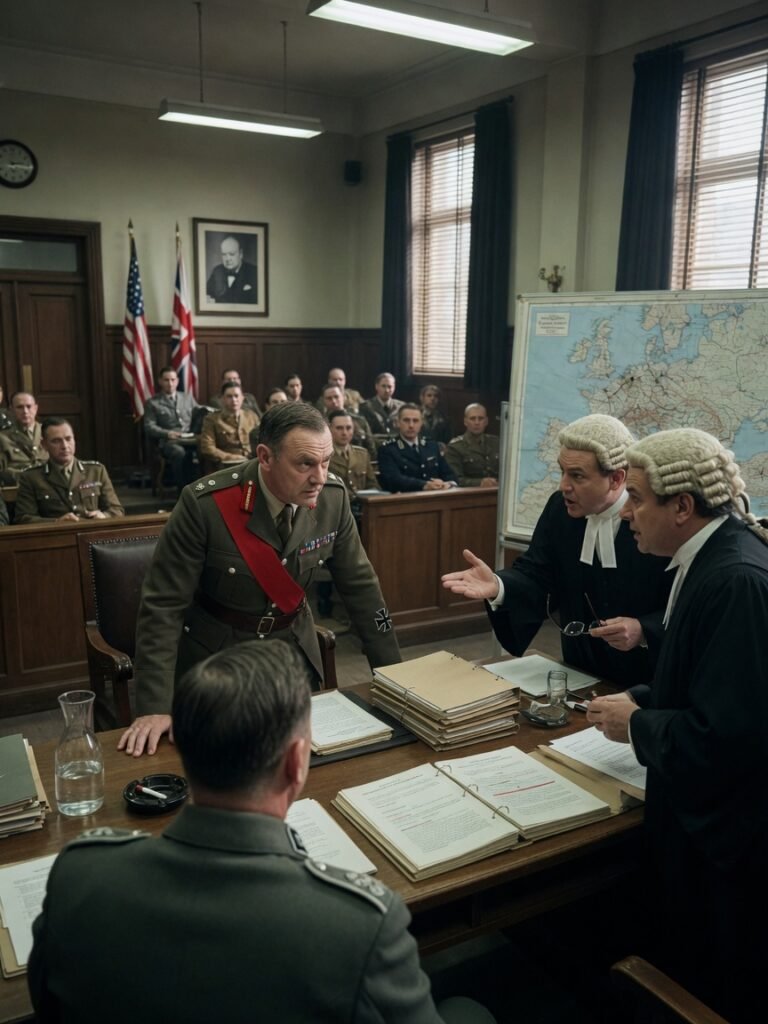
The film follows Chief Judge Dan Haywood (Spencer Tracy), an American, as he presides over the trial of four German judges accused of war crimes, including sentencing innocent people to death and sterilizing others for racial purity. It’s a staggering ensemble piece, but Tracy’s quiet gravitas anchors the storm. He’s not a showman; he’s a man burdened by the weight of justice, seeking truth in a post-apocalyptic moral landscape. His performance is a masterclass in understated power, a weary moral compass trying to navigate a world that lost its way.
Then there’s Maximilian Schell as Hans Rolfe, the defense attorney for the accused German judges. Schell’s performance is electric, a whirlwind of impassioned rhetoric, legal maneuvering, and a desperate attempt to frame his clients as mere patriots caught in an impossible situation. He won an Oscar for this role, and it’s easy to see why. He’s not just defending men; he’s defending a nation’s ability to move forward, to justify its past, even if that justification feels morally repugnant. His arguments are designed to make you uncomfortable, to probe the very limits of empathy and understanding.
The film’s genius lies in its refusal to offer easy answers. It challenges the very notion of “just following orders.” It asks: at what point does obedience become complicity? When does silence become consent? These aren’t abstract philosophical questions; they are the bedrock of human ethics, presented with a stark, unflinching honesty that few films, before or since, have dared to touch. The black-and-white cinematography lends it an almost documentary-like authenticity, grounding the theatrical performances in a chilling reality. Every shadow, every close-up of a haunted face, every stark courtroom angle reinforces the solemnity of the proceedings. This is not a popcorn movie; this is an education.
**SPOILER-FREE VERDICT:** Watch it. Now. This is essential cinema, a vital piece of history and a masterclass in moral storytelling. It’s a film that demands your attention and rewards it with profound insights.
—
**SPOILER TERRITORY**
Let’s talk about the performances, because they are the very engine of this film’s power. Burt Lancaster as Ernst Janning, the most prominent of the accused judges, gives a performance of profound, tormented silence. For much of the film, he refuses to speak, his face a canvas of internalized guilt and despair. When he finally breaks, delivering a harrowing monologue admitting his culpability, it’s a moment of seismic emotional impact. He doesn’t just confess; he explains the insidious creep of ideology, how good men can rationalize evil step by step. “We did it because we loved our country,” he states, a chilling echo that resonates with every nationalist movement throughout history. That line isn’t just dialogue; it’s a warning.
And then there are the supporting roles that are anything but minor. Judy Garland, as Irene Hoffmann Wallner, a woman accused of “racial defilement,” brings a heartbreaking vulnerability and quiet strength to her testimony. Her scene with Montgomery Clift, who plays another victim of Nazi injustice, is raw, unflinching, and almost unbearable to watch. Clift’s character, Rudolph Petersen, is a man mentally scarred by sterilization, unable to fully articulate his trauma, his brokenness speaking volumes. These aren’t just characters; they are ghosts of a recent past, their pain given voice and form in the stark courtroom.
Marlene Dietrich, as Madame Bertholt, the widow of a German general executed for war crimes, represents the segment of German society that wished to forget, to move on, to deny the depth of their nation’s atrocities. Her interactions with Judge Haywood are a subtle dance of denial and suppressed truth, a testament to the complex psychology of a post-war nation. She’s not evil, but she embodies a dangerous complacency.
The central conflict, expertly crafted by Abby Mann’s Oscar-winning screenplay, isn’t just about guilt or innocence. It’s about the *definition* of justice itself. Rolfe argues that the victors cannot judge the vanquished, that the trials are merely “victor’s justice.” He forces Haywood to confront the hypocrisy of the Allied powers – the firebombing of Dresden, the dropping of the atomic bomb, the very real atrocities committed by the “good guys.” This isn’t an attempt to exonerate, but to complicate, to force the audience to see the shades of grey, even in a conflict as morally stark as WWII.
“We knew what was happening,” Janning confesses in his climactic testimony. “We permitted it to happen. We participated when we were asked to. We were silent when we should have protested.” This is the film’s core thesis: the culpability of the bystander, the intellectual who rationalizes, the citizen who looks away. It’s a powerful counterpoint to the more simplistic “good vs. evil” narratives that often dominate WWII films. It doesn’t allow for easy moral outsourcing; it implicates everyone who lived under the regime.
The film culminates in Haywood’s sentencing, where he declares that while the defendants may have believed they were serving their country, they violated fundamental human rights. He makes it clear that justice must transcend national boundaries, that there are universal principles of humanity that cannot be abrogated. It’s a powerful statement, but it’s not a triumphant one. The final shot of Haywood, alone in the empty courtroom, looking at Janning’s cell where he’s been sentenced to life imprisonment, speaks volumes. Justice has been served, but at an immense, almost unbearable, cost. The scars remain.
Comparing this profound, multi-layered exploration of complicity and justice to the new *Nuremberg* feels almost unfair. While I haven’t seen the Crowe/Malek film, the description suggests a more conventional focus on a charismatic villain and the procedural aspects of bringing him to justice. That’s a valid story, but *Judgment at Nuremberg* (1961) transcends it. It’s not just about prosecuting a few individuals; it’s about the very soul of a civilization, the fragility of democracy, and the insidious nature of ideology. It’s a film that understands that the biggest monster isn’t always the one with horns and a pitchfork, but the one wearing a judge’s robe, twisting the law to serve a hateful agenda.
This film stands as the definitive cinematic statement on the Nuremberg trials, far surpassing any other attempt. It’s not just a courtroom drama; it’s a historical document, a moral treatise, and a testament to the power of cinema to confront humanity’s darkest chapters. It ranks as one of the greatest historical dramas, and certainly the most impactful WWII courtroom film, ever made. It’s a stark reminder that the lessons of history are not optional.
—
**FINAL VERDICT:** WATCH.
**SCORE:** 10/10 – A relentless, intellectually rigorous, and emotionally devastating masterpiece that remains critically relevant.