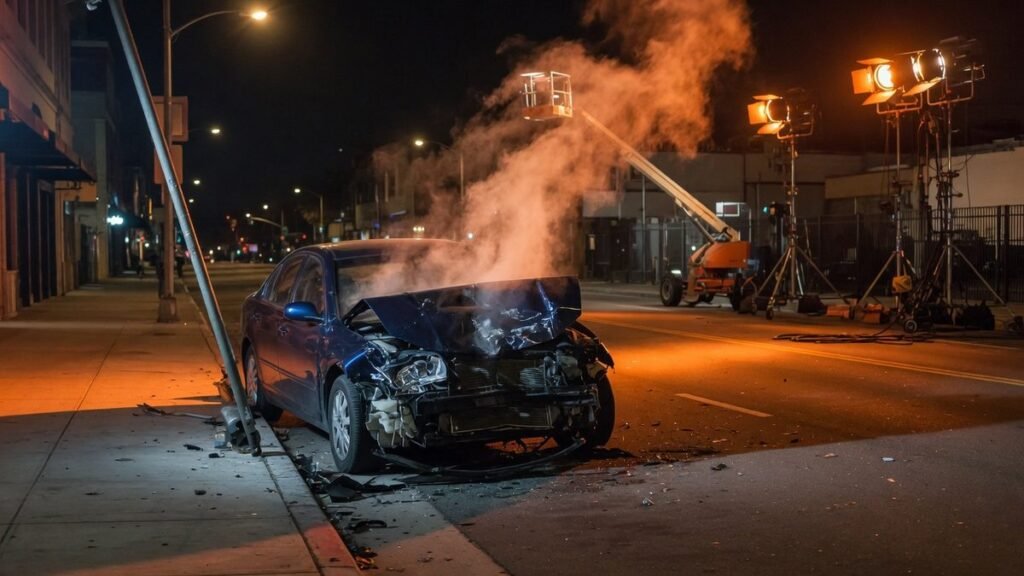
Alright, let’s talk about Jason Statham. Not the man himself, mind you – the bloke seems perfectly amiable. We’re talking about the *idea* of Jason Statham, that beautiful, brutal promise he makes every time he squints into the camera. He’s a walking, talking, perfectly-choreographed blunt instrument in a bespoke suit. Give him a target, give him a ticking clock, and for God’s sake, get out of his way. That’s the Statham pact: a clean, visceral thrill where violence is a language, and he’s fluent in every dialect of bone-crunching, car-flipping, problem-solving mayhem.
And that’s precisely why his worst movies are such a special kind of cinematic betrayal. It’s not that he suddenly forgets how to throw a punch or deliver a line with the gravitas of a man who’s seen too much. No, the man himself is consistent. As Statham himself once put it, “I’ve always been drawn to characters that have a physical capability and a certain amount of integrity within their own world, even if it’s a criminal world.” He knows his lane. The problem is when the filmmakers, the writers, the studio execs who greenlight these things, decide to build a highway that has no business being in his lane at all. They take that beautifully honed weapon and ask it to peel an orange, or worse, explain quantum physics with a PowerPoint presentation. It’s an insult to his craft, and frankly, an insult to *our* intelligence.
So, let’s get into it. The six worst offenders. The films that had the ingredients for a classic Statham vehicle but somehow managed to turn the engine over, only to drive it straight into a narrative ditch.
### 6. *The Meg 2: The Trench* (2023)
Look, I get it. Giant sharks. Bigger giant sharks. A trench. Explosions. What’s not to love? Well, almost everything, as it turns out. The first *Meg* was a gloriously dumb monster movie that knew exactly what it was. It let Statham be Statham – a grizzled professional who just wanted to punch a really big fish. It was schlocky, sure, but it had a pulse. *The Meg 2*, however, decided that the only thing better than one giant shark was *three* giant sharks, a giant octopus, and a bunch of other prehistoric nonsense, all wrapped in a plot so thin you could read a screenplay through it.
Statham, as Jonas Taylor, spends the entire film looking like he’s trying to remember if he left the stove on. He’s the anchor, the reason we show up, and they turn him into a glorified tour guide for a gaggle of utterly forgettable supporting characters. The action is frantic but weightless. The pacing is a disaster, lurching from one CGI spectacle to the next without any sense of build-up or genuine threat. There’s no tension, just a relentless barrage of “things happening.” It’s a committee-written, focus-grouped mess that takes Statham’s grounded, no-nonsense appeal and drowns it in a sea of bland, green-screen chaos. You know a movie’s lost its way when Statham is fighting a giant squid with a jet ski, and you’re still bored. Massive shock, I know.
### 5. *The Mechanic: Resurrection* (2016)
The original *Mechanic* remake wasn’t a masterpiece, but it was a solid, grimy action flick that gave Statham’s Arthur Bishop a clear skillset and some genuine moral ambiguity. He was a hitman with a code, a craftsman. A sequel, then, had potential. But *Resurrection* is the cinematic equivalent of a paint-by-numbers kit where half the colors are missing.
Here, Bishop is forced out of retirement to perform three “impossible” assassinations to save his love interest (Jessica Alba, given absolutely nothing to do). The premise itself isn’t terrible, but the execution is breathtakingly generic. Each assassination feels less like a clever puzzle and more like a video game level you’ve played a thousand times. The film constantly tells us Bishop is a master of making deaths look like accidents, but then shows him blowing up yachts and dangling from skyscrapers in broad daylight. The narrative function of Alba’s character is purely as a damsel in distress, a trope so tired it needs a full-time carer. There’s no emotional core, no real stakes, just a series of thinly connected set pieces designed to justify Statham traveling to exotic locations. It’s a stunning and brave decision to make a movie about a master assassin so utterly devoid of cleverness.
### 4. *Revolver* (2005)
Now, this one hurts a little, because it’s a Guy Ritchie film. Ritchie is the director who helped launch Statham into stardom with *Lock, Stock and Two Smoking Barrels* and *Snatch*. You’d think they’d have a shorthand, a shared understanding of Statham’s strengths. And yet, *Revolver* is a bewildering, pretentious mess that tries to turn Statham into a cerebral philosopher-king and fails spectacularly.
Ritchie, perhaps feeling the need to prove he was more than just a cockney crime-caper merchant, dove headfirst into a pseudo-intellectual narrative about ego, con games, and the nature of reality. Statham plays Jake Green, a gambler who gets out of prison and seeks revenge, but the plot quickly devolves into a labyrinthine series of double-crosses, enigmatic monologues, and visual metaphors that make absolutely no sense. Instead of letting Statham move with purpose, they weigh him down with exposition and internal monologues that sound like they were ripped from a self-help book written by a particularly smug guru.
As Ritchie himself once praised Statham, “He’s just an incredible presence. He’s a proper actor, but he also possesses that physicality that’s so rare.” In *Revolver*, that incredible presence is muted, that physicality mostly absent. The film asks Statham to be a chess master when his appeal is that of a master pugilist. It’s a valiant attempt to stretch his range, I suppose, but it’s like asking a finely tuned racing car to navigate a muddy bog while simultaneously teaching a philosophy seminar. The result is a stalled engine and a lot of confused onlookers.
### 3. *War* (2007)
A Statham-Jet Li team-up. On paper, this should have been the action movie equivalent of the Big Bang. Two titans, two distinct styles, a primal revenge plot. John Crawford (Statham) versus Rogue (Li) after Crawford’s partner is murdered. The pitch practically sells itself: Triads, Yakuza, FBI, shifting loyalties, bodies. You’re leaning forward just reading that, aren’t you?
The actual movie, however, is a masterclass in squandered potential. It’s a joyless slog where the two main attractions spend ninety percent of the runtime *not fighting each other*. Instead, we’re treated to endless plot mechanics, convoluted crime-war maneuvering, and a twist ending that isn’t nearly as clever as the filmmakers think it is. Crawford’s grief should make him a dangerous, driven man, but the script reduces him to a perpetually scowling revenge cop with all the inner life of a damp sponge.
“With Jet Li and Jason Statham, it felt like a no-brainer,” said Joe Drake, then Co-COO of Lionsgate Motion Picture Group, around the time of the film’s release. And that, ladies and gentlemen, is the sound of a studio executive resting entirely on the laurels of their casting. The film doesn’t earn its dramatic stakes or its action payoff. The fights, when they finally happen, are competent but lack the kinetic energy and emotional weight such a pairing deserved. It’s a massive shock that a movie designed to pit two action legends against each other somehow manages to be utterly boring. Oh no… anyway.
### 2. *Wild Card* (2015)
Here’s another one that sounds fantastic on paper. William Goldman, the legendary screenwriter behind *Butch Cassidy and the Sundance Kid* and *The Princess Bride*, wrote the source novel. Statham plays Nick Wild, a Las Vegas bodyguard with gambling problems, old wounds, deadly hands, and one last chance to leave town. This should have been a bruised, character-driven piece of neo-noir. Statham, playing a man whose restraint is constantly battling his destructive impulses? Yes, please.
Instead, *Wild Card* just drifts. It meanders through Vegas back alleys, touching on Nick’s gambling addiction, his loyalty to friends, his exhaustion, his fear of being trapped – all these fascinating elements are *present*, but they’re never truly explored. Statham gets glimpses of the film’s intended shape, especially when Nick’s control snaps and the violence is sudden, ugly, and personal. The diner confrontation, for instance, is a brutal, effective scene. But these moments are islands in a sea of underdeveloped subplots and characters who come and go without leaving much of an impression.
As Peter Travers of Rolling Stone put it in his review, “It’s a bizarre movie, because it has all the elements of a good Statham vehicle: a damaged man, a specific skill set, a criminal underworld. But it just… drifts.” He nails it. Statham is trying to play a wounded man, a character with genuine emotional baggage, but the movie keeps settling for a tired one. It’s the cinematic equivalent of a poker player holding a fantastic hand but folding before the river because they can’t be bothered to play it out.
### 1. *Parker* (2013)
This one takes the top spot because it commits the cardinal sin: it had *everything* to be a perfect Statham vehicle, and still managed to screw it up. Parker, from the Donald Westlake novels, is a professional thief with rules, grudges, discipline, and a talent for surviving betrayal. That is Statham. That is the character he was born to play. The opening robbery has enough tension, the double-cross sets up a clean revenge line, and the Palm Beach setting offers a shiny veneer to a dirty business.
So what went wrong? The movie keeps sanding down the criminal pleasure, the hard simplicity that defines Parker. Statham gives the character the right stoicism and ruthlessness, but the film around him is inexplicably… soft. Jennifer Lopez’s Leslie Rodgers, while bringing warmth and desperation, pulls the film into a completely different rhythm, derailing Parker’s focused revenge instead of tightening it. The ensemble of villains – Michael Chiklis, Wendell Pierce, Clifton Collins Jr., Bobby Cannavale – all have pieces of better crime movie characters, but the film never lets them feel truly dangerous or menacing. They’re just obstacles.
*Parker* has suits, guns, broken bones, betrayal, and wealth, yet the whole thing keeps playing safer than Parker himself ever would. It takes a character who lives by a brutal code and tries to make him palatable for a wider audience, thereby neutering the very edge that makes him compelling. It’s a stunning and brave act of self-sabotage, taking a perfectly good Statham blueprint and adding a sunroom, a conservatory, and a gentle water feature, completely missing the point that we came for the concrete bunker. It’s aggravating because you can *see* the good movie lurking within, struggling to get out, but shackled by choices that dilute its core appeal.
### The Rogue’s Final Word
Statham’s best films — *The Transporter*, *Crank*, *The Bank Job*, *Wrath of Man* — understand the pleasure of watching a man who can read a room, use his body clearly, and make violence feel like problem-solving. They give him a clear objective, a worthy adversary, and then they get out of his way. They don’t overthink it, they don’t over-explain it, and they certainly don’t try to turn him into something he’s not. These six films, however, serve as cautionary tales. They are monuments to wasted potential, proof that even the most consistent action star can be underserved by lazy writing, committee scripts, and studio executives who think audiences are goldfish. Give the man a purpose, a clear path, and let him do his job. It’s not rocket science. It’s just good storytelling.