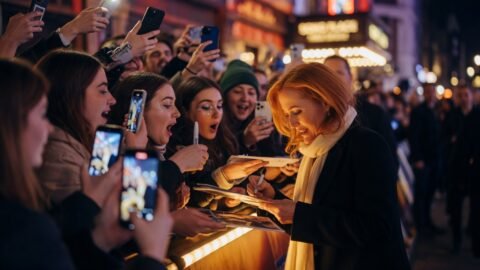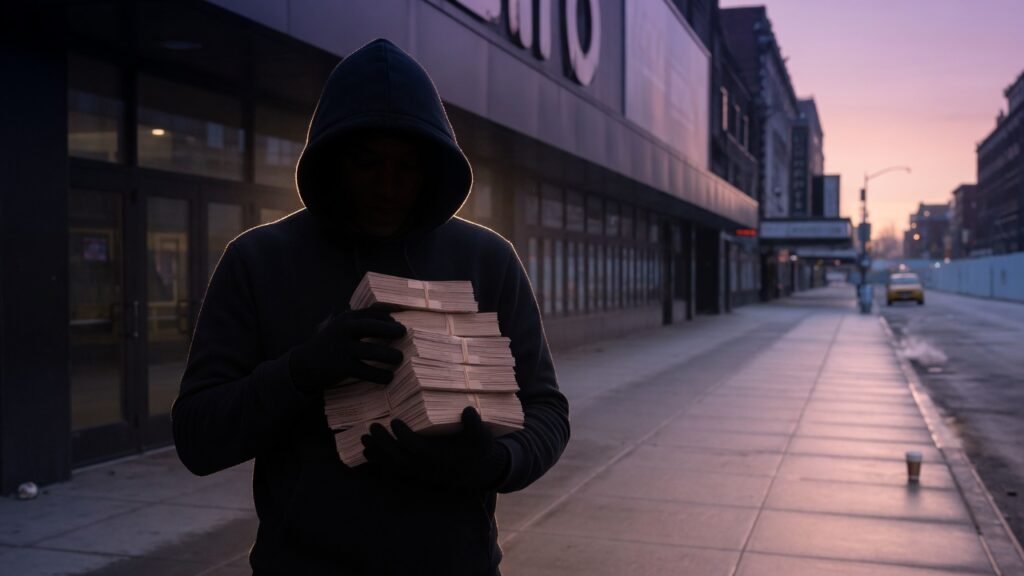
The war for Arrakis started four months early, and it did not involve sandworms. It involved AMC’s app freezing at noon Eastern, lines wrapping around Lincoln Square before sunrise, and a guy in New York walking out with roughly eighty tickets in his hands like he had just raided a spice silo. Dune: Part Three does not open wide until December 18, 2026. Insider IMAX screenings begin as early as December 14. Tickets for the premium drops went live August 18 and vanished into the secondary market before most actual humans finished loading the page.
Stay with me here. This is not fandom. This is extraction with better lighting.
Adam Aron, AMC’s CEO, posted the corporate equivalent of a white flag the same day. “Ticketing traffic across AMC’s website and mobile app reached levels approximately three times higher than what we experienced during the Spider-Man: Brand New Day ticket launch,” he wrote. Three times. Brand New Day was already a heavyweight drop. Aron called the glitches “intolerable and inexcusable,” admitted the company thought it was ready and wasn’t, and floated about $2 million in IT programming to fix the pipes. Fair enough. High-class problem, he said. Sure. Except the people who actually wanted to watch Denis Villeneuve finish his Frank Herbert adaptation on the format it was partially shot for got locked out while bots and bulk buyers cleared inventory like it was limited-drop sneakers.
The Bots Did Not Care About Three-Act Structure
Look, I get it. Premium IMAX 70mm seats for a Villeneuve tentpole are scarce by design. Earlier in April, a smaller allotment across roughly eleven U.S. cities sold out in minutes to an hour. Listings immediately hit eBay; one single ticket in Dallas moved for around a thousand dollars, and pair listings floated into the multi-thousand range. August’s wider wave unlocked more Insider screenings and more formats, and the same parasite class showed up faster. Resale posts for New York screenings cleared over $150 almost immediately. Other listings climbed into the high hundreds and past a thousand, some as high as $2,500 depending on seat and showtime. Face value for these premium tickets already runs past thirty bucks with fees. Everything above that is pure rent-seeking on someone else’s anticipation.
Fans have been doing the only thing left: screenshotting eBay posts that list seat numbers, theaters, and times, then reporting them so AMC can cancel for terms-of-service violations. That is not a strategy. That is mutual aid after the vault already emptied. A scalper holding eighty physical tickets is not a clever operator. He is a walking indictment of a system that still treats “first come, first served” as if the internet never invented scripts.
Now, you might be thinking this is just modern ticket culture, same as Taylor or Springsteen or any arena that sold its soul to dynamic pricing years ago. You would be half right. Concerts trained the market. Collectibles trained the bots. Happy Meal toys trained the parents. What makes this one sting harder is the object itself. Villeneuve did not make disposable content. He made two films that treated IMAX like a sacred instrument, not a marketing checkbox, and the combined franchise already banked nearly two hundred million in IMAX grosses. Part Three is the closer. It opens the same day as Avengers: Doomsday. Dune gets exclusive U.S. IMAX real estate for the opening stretch. That is not a coincidence. That is a studio admitting the sand picture is the one people will still leave the house for in a format that actually rewards the trip.
Scarcity Was the Point. Speculators Were the Tax.
The studios and exhibitors built the cathedral. They just forgot to hire security who could tell a pilgrim from a reseller. When Aron says the demand staggered them, he is accidentally describing the only healthy signal left in theatrical exhibition: people still believe a specific movie on a specific screen is worth planning months around. Massive shock, right? After years of committee tentpoles that feel engineered for the second-screen scroll, a director who shoots with IMAX film cameras and trusts silence and scale can still crash the servers. That part is good news dressed as chaos.
The bad news is structural. Every time something earns real heat, the secondary market arrives first and prices out the audience that would have actually filled the seats and talked about the movie afterward. Reporting scalpers helps at the margins. Facial recognition at the door is already being floated as the next necessary ugliness because the honor system died somewhere between Taylor Swift and McDonald’s toys. None of that fixes the original failure, which is allotting a tiny number of true 70mm experiences, announcing them with just enough lead time to mobilize the professionals, then acting surprised when the professionals win.
I walked through the August mess expecting the usual theater-chain shrug. What I found instead was proof that Villeneuve’s bet still lands. The writing, the scale, the refusal to sand down Herbert into quippy IP mush — that is what created three times the Spider-Man traffic. The scalping is just the tax we now pay whenever culture produces something people refuse to wait for on their couch. Additional inventory has trickled back in some markets. Retrying sometimes works. Most of the early premium slots, the ones that actually match how this thing was photographed, are already spoken for by people who will never sit in them without flipping the seats first.
December 14 is still the first chance to see how the Messiah material plays on the giant screen. The seats that matter will cost whatever the secondary market decides they cost, or they will require the kind of luck that used to be called just showing up. The movie earned the frenzy. The infrastructure around it turned the frenzy into a hustle. That gap is the entire story, and no $2 million IT patch closes it.