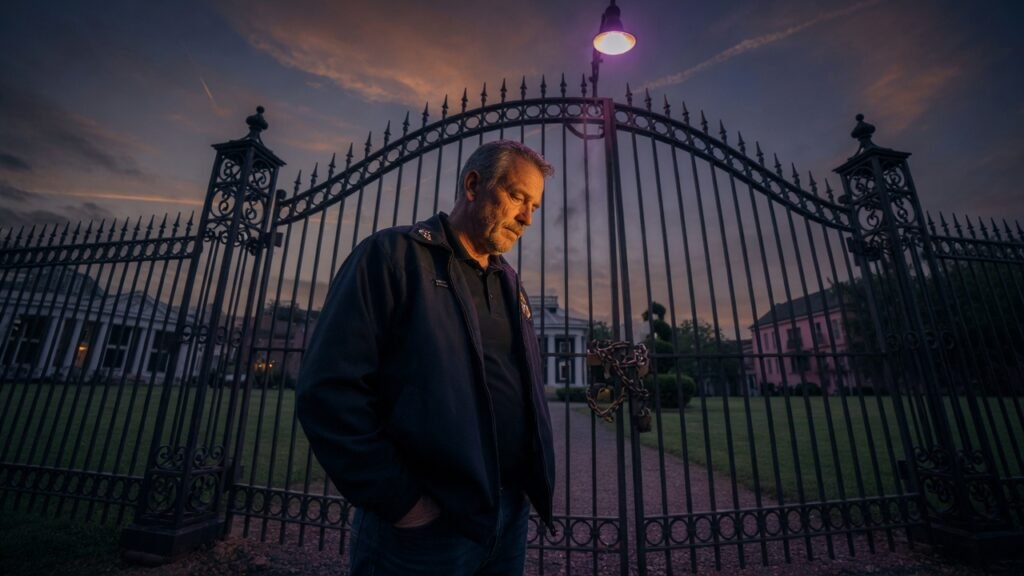
Dolly Parton spent six decades building a brand so airtight it could survive rhinestones, theme parks, and a nation that kept trying to turn her into a punchline. Four weeks after her death, the estate is in court asking a Nashville judge to keep her own nephew a thousand feet away from the people running it.
She died August 25, 2026, at 80, after a short stay at Vanderbilt-Ingram. Her husband Carl Dean was already gone. No kids. Bryan Seaver, son of her sister Cassie, had run her security for more than twenty years and was the one who posted the death announcement on her accounts because, he said, she had asked him to years earlier. By mid-September his company was out. On September 22, She’s Alive, LLC, the entity she built to guard the professional property and the legacy, walked into Davidson County Chancery Court with a temporary restraining order request and a pile of texts that read like a rejected action-movie treatment.
The complaint alleges a “campaign of threats, intimidation, and coercion” that started when Seaver supposedly realized her death might be imminent and kept going after the funeral. Court filings claim he described himself as a “killer,” an international arms dealer who does “warfare,” a man who owns only swords and guns and who closed a $27 million arms deal with Haitian police the day she died. The estate says employees quit or fled, an attorney withdrew, and private security had to be hired for staff homes. The TRO was granted the same day it was filed. Massive shock.
Seaver’s version is the one every messy family estate eventually produces. He has denied the statements were threats. He has called the messages private “rage talk” and grieving conversations with longtime manager Danny Nozell, a man Seaver says “fancies himself a gangster.” He confirmed pieces of the background while insisting the context was grief and bad business partners who had wronged Parton, not a shakedown of the trust. He and his team said they were “dismayed” by the termination, believed it was done in bad faith to profit, and remain resolved to fulfill Parton’s “final directive to protect her family.”
Stay with me here. The termination notice itself tried to thread a needle. Services were “formally dismissed and terminated” “for the protection of the trust and beneficiaries as a whole,” while the document carefully noted it was not a termination of his personal interest as a beneficiary. That is the sentence that tells you everything about how these things actually work. The job is gone. The blood claim stays. The brand is now a separate organism that needs bodyguards from the people who used to be the bodyguards.
The Security Guy Always Thinks He Owns the House
Twenty-plus years running protection for the properties, the museum, the downtown place, the warehouse, does something to a person’s sense of ownership. Seaver’s company, Squadron Augmented Protection Services, was the wall. When the wall gets fired three weeks after the principal dies, the person who was the wall does not experience it as corporate housekeeping. He experiences it as a coup. Look, I get it. Grief plus sudden irrelevance is a chemical reaction that produces ugly texts. The filings allege those texts included vows to destroy brand partnerships, including Dollywood-related ones, and threats to launch a podcast that would ruin deals unless money changed hands. Seaver says the targets were specific bad actors, not the estate itself. The court has the messages. The rest of us have the spectacle.
What makes this one land differently is the brand itself. Dolly Parton was the rare American figure who somehow stayed both a working-class saint and a ruthless business operator without the two stories canceling each other out. She controlled the image so completely that even the jokes about her were on her terms. She’s Alive, LLC, was built for exactly this moment: the day the person is gone and the property has to keep breathing. Danny Nozell and the bank are doing the job the entity was designed for. Seaver is doing the job the nephew who ran security for two decades thinks he was designed for. Those two jobs are now in open conflict, and the conflict is public because somebody put the texts in a filing.
Legacy Is Just Inventory With Better Lighting
Every major estate fight follows the same three-act structure, and Hollywood did not invent it. Act one: the icon dies and the public gets the soft-focus montage. Act two: the people who actually control the money discover that blood relatives and longtime staff have competing definitions of “what she would have wanted.” Act three: restraining orders, podcast threats, and lawyers billing by the hour while the brand tries not to look like a crime scene. You have seen this movie with Prince’s vault, with Michael Jackson’s estate, with every mid-tier country catalog that suddenly needs a co-trustee. The difference here is the speed and the volume of the alleged language. Most families keep the rage talk in group chats that never reach a chancery court. This one did not.
The filings claim the conduct forced resignations and home security details. That is the part that should make the industry people pay attention. When the people paid to protect the brand start quitting because they are afraid of the former head of security, the brand has a continuity problem that no amount of posthumous streaming numbers will fix. Seaver still has a beneficiary interest. The estate still has to administer the trust. Those two facts do not dissolve just because someone allegedly called himself a killer in a text. They just become more expensive.
Now, you might be thinking this is pure greed dressed up as grief. Maybe. You might also be thinking a man who spent two decades as the last line of defense for Dolly Parton does not go quietly when the new managers change the locks. Also maybe. Both things can be true at the same time, and the court will sort the difference between “rage talk” and actionable threats. What the public gets in the meantime is the unedited sequel. The woman who turned Appalachia, Hollywood, and Nashville into one coherent myth left behind a machine that still needs to make money and a family that still needs to feel like family. Those two needs are currently separated by a thousand-foot order and a stack of screenshots.
The TRO keeps Seaver away from the employees, the lawyers, and the partners while the larger suit for damages and permanent interference relief moves forward. He has not rolled over. The estate has not softened the language. Dolly Parton built an empire that could outlive her. The first real test of that empire is whether it can survive the people who loved her enough to fight over the pieces.