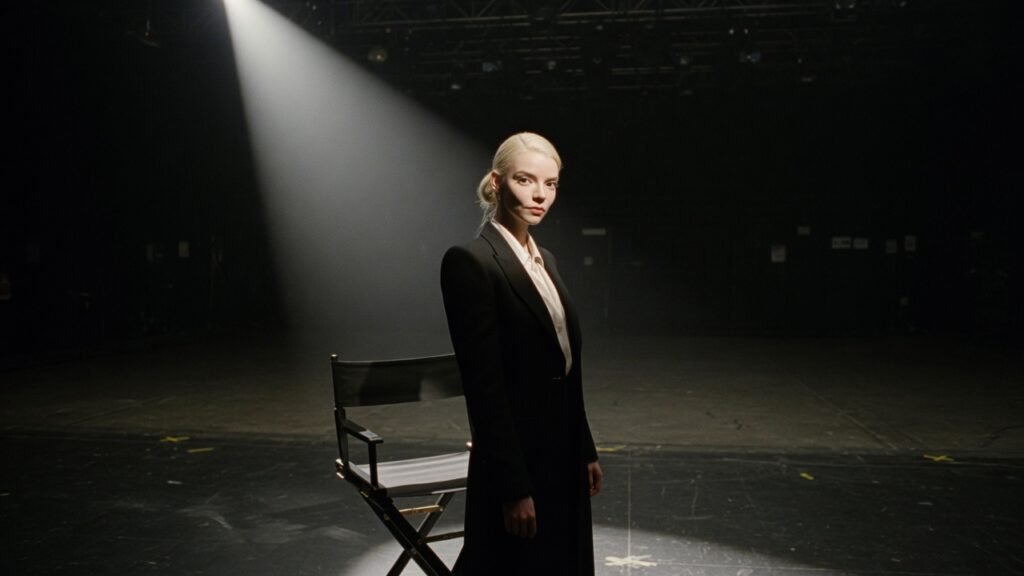
Apple TV just put a four-part story back on the pedestal while the rest of streaming is still busy explaining why their twelve-episode shrug needed a post-credits tease. That is not a scheduling note. That is a studio remembering that stories are supposed to end.
Look, I get it. Prestige television spent the last decade convincing itself that “more” was a creative choice instead of a content quota. Mystery boxes with no keys. Second-act love interests who exist to fill runtime. Finales that feel like the writers’ room lost a coin flip. Apple’s little four-episode run just walked back into critical acclaim by doing the one thing the industry treats like a stunt: finishing the thought.
Anya Taylor-Joy’s Apple TV crime thriller miniseries sitting among the biggest hits on streaming is not a coincidence riding her face card. It is what happens when someone greenlights tension that actually resolves. Audiences are not allergic to ambition. They are allergic to being edged for ten hours and handed a mood board.
Four Episodes Is Discipline, Not a Budget Cut
Stay with me here. The four-part format is not a limitation. It is a weapon against the exact habits that turned peak TV into a beige slurry. When you only have four hours, you cannot introduce a conspiracy board in episode two and hope the algorithm forgives you by episode nine. Every scene has to move. Every character has to cost something. The second act cannot sag under a romance that serves zero narrative function because there is no room for the sag.
Compare that to the classics that still work when you revisit them. *Aliens* does not pause to explain the corporation’s feelings. *Die Hard* does not pause for a flashback about Hans Gruber’s childhood. *Terminator 2* understands that escalation is the point, not world-building homework. Great crime and thriller storytelling has always known the clock is part of the tension. Apple’s four-parter returning to acclaim is simply that old rule enforced by runtime instead of committee notes.
Now you might be thinking this is just apple-polishing from a platform that needs wins. Fair. But watch how other streamers still treat limited series like pilot season with better catering. They stretch three episodes of plot across eight because the data team whispered that completion rates love a cliffhanger more than a conclusion. Massive shock: audiences can tell when the story ran out of gas and the season order did not.
The writing failures are specific and boring. Flat procedural dialogue that sounds like it was approved by three layers of brand safety. Twists that reverse character logic instead of revealing it. Endings that mistake ambiguity for depth. When a four-part piece snaps back into critical favor, it is usually because someone in the room still believed payoff was not optional.
Streaming Still Thinks You Have the Attention Span of a Goldfish
The dirty secret is that the bloat was never for you. It was for the spreadsheet that needs “engagement hours” and the executive who thinks leaving the audience slightly annoyed is the same thing as leaving them hungry. Apple’s recent run, including that Anya Taylor-Joy crime thriller posting real numbers as one of the biggest hits on the service, keeps exposing the con. People will show up for craft. They will even rewatch it. What they will not do is pretend a ten-episode shrug was profound because the cinematography was moody and the score went hard on the strings.
I walked into plenty of these prestige packages expecting nothing and left furious that the good ones do not get copied. The bad ones get renewed. That is the tell. When a tight four-part story re-enters the critical conversation, it is not nostalgia. It is a market correction. Viewers are voting with their residual attention for shows that treat them like adults who can handle an ending.
Hollywood’s stunning and brave response so far has been to announce another eight-episode “event” that will absolutely stick the landing this time, promise. Oh no… anyway.
The comparison that matters is not Apple versus Netflix in some empty subscriber cage match. It is disciplined storytelling versus content that is afraid to stop talking. *The Godfather* does not need a spin-off about Clemenza’s early catering years to justify its existence. *Breaking Bad* earned every minute because the engine never idled. *The Wire* built a city without padding episodes for the sake of a round number. When a modern four-parter earns its acclaim the old-fashioned way, by being good and then stopping, it quietly indicts everything still clogging your continue-watching row.
The Ending Is the Point, Not the Afterthought
Here is what is actually at stake. If the streamers keep learning the wrong lesson, we get another five years of handsome emptiness. Handsome leads. Handsome locations. Scripts that read like they were generated to satisfy a checklist of “prestige textures” without a single earned turn. The four-part Apple piece clawing back critical respect, paired with a star-driven crime miniseries actually moving the needle as a genuine hit, is evidence that the audience never left. The writing did.
Colin Farrell’s *Sugar* already floated a version of this dare: trust people with the hard part instead of babysitting them through empty calories. The principle scales. Short does not mean small. It means every frame has to justify the electricity it burns. When the industry forgets that, you get seasons that feel like they were extended in post because somebody panicked about churn. When it remembers, you get the thing currently sitting back in the acclaim column.
So yes, celebrate the four-parter. Stream the crime thriller that is actually landing. Then demand the next one does not apologize for knowing when the story is over. The alternative is more committee scripts, more flat characters, and more finales that treat resolution like a brand risk. I will take the masterpiece that ends on purpose. Every single time.