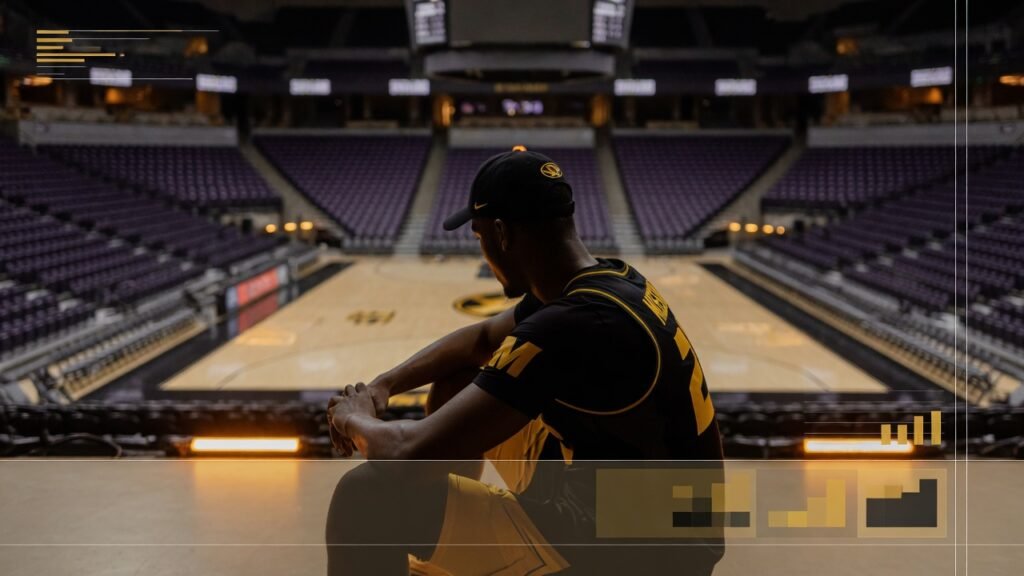
Mark Mitchell just turned a Kentucky commitment into a Missouri re-enrollment in nine days, and the reason has nothing to do with minutes, scheme fit, or NIL. It is the SEC’s own transfer calendar, still standing after a court win that was supposed to free him.
The 6-foot-9 forward averaged 18.3 points, 5.2 rebounds, and 3.6 assists last season while shooting 54.7 percent from the field and earning second-team All-SEC. He led Dennis Gates’ Tigers in all three categories, started every game, and helped push Missouri into the NCAA Tournament in what everyone believed was his final college year. Then the five-for-five rule arrived without grandfathering the Class of 2022. A Jefferson Circuit Court temporary restraining order on Aug. 21 restored the fifth season. Mitchell entered the portal the same day and pledged to Mark Pope’s Wildcats on Aug. 22.
Nine days later the path snapped shut.
The SEC Window Was the Real Opponent
The league’s longstanding intraconference rule blocks SEC-to-SEC moves outside the primary spring portal window. For basketball that window ran April 7-21. Mitchell never entered it because, like every other graduating senior under the old four-year model, he thought his eligibility was finished. Once the TRO opened a special window, the SEC still treated the spring dates as binding. Commissioner Greg Sankey’s memo to schools spelled out the penalties for violations: half-season coach suspension, a fine equal to 50 percent of the sport’s operating budget, loss of voting rights, and whatever else the league decided to pile on.
Mitchell’s camp amended the complaint to claim the SEC was acting in concert with the NCAA. Judge Brian Edwards declined to take that motion up. “I don’t believe that that motion is proper to take up this morning,” he said. “They have not been named as a defendant in this case. … They have not had an opportunity to respond, and I don’t feel it’s proper to ask them to do so.”
That left the risk on the table. Winning the argument later is not the same as playing in November. Agent and older brother Brandon Mitchell made the call plain: “No one else is an option, except for him going to Missouri. Kentucky is no longer an option, that’s correct.” Re-enrolling at Missouri by the Monday deadline removed the intraconference barrier. The fifth-year eligibility fight itself remains live against the NCAA, but the transfer obstacle is gone.
I ran the same calculation Mitchell’s advisors did. A compelling legal theory is worthless if the player sits while the injunctions and appeals grind. The safe roster is the one that already owns his eligibility history.
Missouri Gets the Proven Piece, Kentucky Keeps the Open Spot
The on-court difference is immediate. Mitchell’s two Missouri seasons produced back-to-back All-SEC honors after two years at Duke that ended in an Elite Eight. Career numbers across 134 games: 13.2 points, 5.1 rebounds, 51.8 percent shooting. Last year he added volume and playmaking at 33.8 minutes a night. Gates now returns a high-usage forward who already knows the system, the teammates, and the defensive assignments inside the league.
Kentucky drops a projected starter and the final piece of what had become the top-ranked transfer class. Pope still has an open roster spot and a deep enough frontcourt that the loss is not catastrophic, but the ceiling math changes. CBS Sports already moved Missouri up to No. 21 and Kentucky down to No. 17 on the strength of the flip alone, treating committed players as rostered until proven otherwise. That is the correct preseason posture right now. The season starts in nine weeks; every ranking is provisional until the eligibility cases resolve.
This mirrors every other high-stakes fifth-year scramble since June. Players who thought they were done suddenly have one more season, then discover that conference bylaws written for a different era still control the chessboard. The NCAA’s refusal to grandfather the 2022 class created the lawsuits. The SEC’s refusal to bend its portal calendar created the decommitment. Mitchell did not lose a bidding war. He lost a timing fight that never should have existed.
The broader mess is the real story. Temporary restraining orders restore eligibility on paper. They do not erase conference constitutions or the risk of mid-season sanctions. Programs that recruit these players are recruiting contingency plans. Missouri just inherited the cleanest version of one. Kentucky is left holding an open scholarship and a reminder that legal victories do not automatically translate into eligible minutes.
Mitchell is a Tiger again because the path of least resistance still runs through Columbia. That is the only rational outcome in a system that rewards whoever can stay out of court the longest. The numbers he put up last season will travel either way. The eligibility paperwork will decide whether anyone sees them.