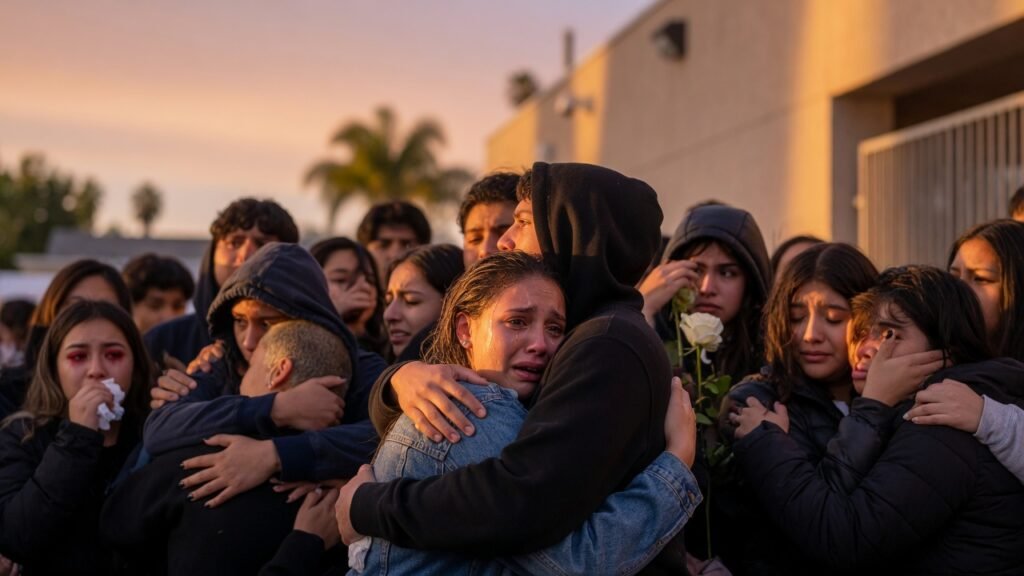
Presley Gerber died at 9:45 on a Sunday morning inside a Los Angeles rehab facility, age 27, with the autopsy still open and the only family statement that mattered already filed: privacy, during a very difficult and painful time.
That is the official frame. The human one is harder. For the better part of two years he had been turning the private catastrophe of his own mind into public instruction, posting Mental Health Mondays, naming the medications, naming the panic, naming the decade it took him to realize that modeling had stripped the sports and the body work out of a kid who once lived in the water. He died in the place built to interrupt that story. The interruption failed.
He Offered the Mistakes First
On the Studio 22 podcast he put the assignment in plain English. “Having struggled with mental health, depression and some other things that come along with that, I think that whether I help one person or a hundred people get out of that place that I was in at one point in my life, that’s all I need to do.” He followed it with the line that now reads like a will: “What I hope I can do is have made the mistakes for some other people, so they don’t have to make the same mistakes that I made.”
Listen to the grammar. He was not promising recovery as a brand. He was offering his wreckage as a shortcut. Mental health, he said, was “a 24/7 job.” In a December 2025 Instagram video he later deleted, he listed Buprenorphine, Xanax, Valium, the panic attacks, the recent losses, and the loneliness he assumed was shared. “I have a feeling that if I say all of this, a lot of people will at least know that there’s someone else going through it.” His mother answered in the comments the way mothers answer when the camera is already rolling: “Presley – we love you and you are not alone.”
The culture rewarded the candor. We always do, until the body count arrives. Celebrity children who go public about addiction get cast as either cautionary exhibits or wellness influencers. Presley tried to occupy the thinner lane between those two, the one where the person still in the fight narrates the fight without waiting for the victory lap. He had a DUI at 19, a face tattoo that read MISUNDERSTOOD and then the removal of it, a runway career that started at 16 with Moschino and IMG, and a long public acknowledgment of opiates, benzodiazepines, near-fatal overdose, ibogaine, and the slow reintroduction of physical activity after a decade of letting the work erase the athlete. The résumé of struggle was not hidden. It was the product.
Kaia Named the Family Math Early
Weeks before the death, Kaia Gerber sat for a Vogue cover story and said the quiet family arithmetic out loud. “When something like that happens in a family, it kind of levels everyone.” She described becoming “the easy one” who never wanted to ask for help, “because it felt like too much to have two children who were needing.” Then she did the thing almost no famous sibling does while the other sibling is still alive and still struggling: she called him the teacher.
“My parents for most of our lives were very, very private and didn’t share anything – and now we have this absolute teacher, my brother, who says, ‘I’m gonna be very human for everyone.’ There’s only so much you can hide from the world… And trying to put a lid on something just makes the person feel like you’re ashamed of them.”
That interview is now a primary document. It explains the shift inside a household built on Cindy Crawford’s global image discipline and Rande Gerber’s business quiet. Privacy was the family operating system until Presley broke it on purpose. Kaia’s point was not branding. It was that secrecy itself can read as shame to the person already drowning. He refused the lid. The cost of that refusal is what the medical examiner is still sorting, and what TMZ’s sources described to the family as an overdose under police investigation with no foul play indicated. Official cause remains pending. The gap between “in treatment” and “safe” is the part the industry still cannot package.
Paris Hilton, posting through the first shock, called him a beautiful soul, sweet, sensitive, kind, genuine, a gentle heart. Those are the words people reach for when the public record already contains the harder material and nobody wants to perform hardness on the day of. They are also accurate to the version of him that kept showing up on panels and in recovery talk as recently as a June mental health appearance with his parents. In July, for his 27th birthday, Cindy wrote: “I’m so proud of the man you’ve become, but I’ll always see you as my little boy!” The two sentences can both be true. Pride and the refusal to stop seeing the child are what parents publish when the adult version is still in the weather.
Rehab Is Not a Plot Twist
Here is the cultural failure this death keeps exposing. We have spent a decade congratulating famous people for “speaking out” about mental health and substance use. Speaking out is not a treatment plan. A rehab facility is not a locked guarantee. Living on the grounds with other people in a separate house, as reports described his arrangement, still left room for the thing that killed him, whatever the final toxicology writes down. The openness he practiced was real and useful and still insufficient against a disease that does not care how many Mental Health Mondays you filmed.
Presley’s own standard was modest and brutal: help one person or a hundred get out of the place he had been. He does not get to finish the count. The people who used his videos, his podcast hours, his refusal to stay decorative inside a supermodel household, still can. That is the only ledger that remains open. The family has asked for privacy. They have earned it. The rest of us inherited the tape he chose to leave running.
He was 27. He died at 9:45 a.m. on September 20 inside the system that was supposed to keep the morning from arriving that way. The teacher is gone. The lesson is not.