The SEC is floating expulsion over three guys who washed out of NFL camps. That sentence alone tells you how completely the conference has lost the plot on its own product.
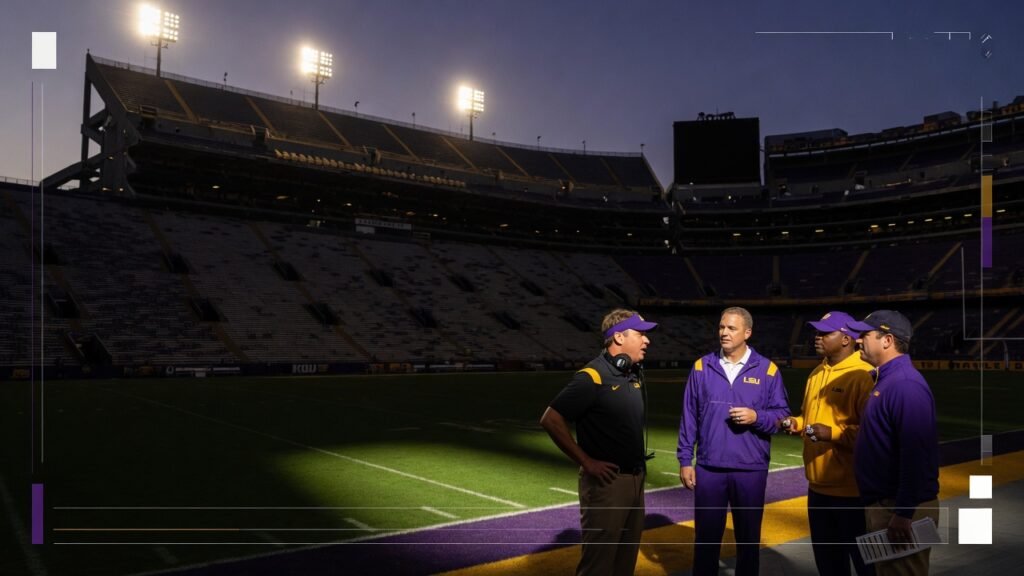
Lane Kiffin’s LSU is trying to roster former pros Dae’Quan Wright, Zxavian Harris, and Junior Tuihalamaka after a Baton Rouge judge handed more than 40 athletes a temporary restraining order that freezes NCAA eligibility enforcement and opens a fifth year the Class of 2022 never received under the new 5-for-5 model. The SEC answered with a blanket ban on anyone who signed a pro contract or landed on a pro roster. Presidents and chancellors then armed Greg Sankey with a half-season head-coach suspension, a fine equal to 50 percent of the sport’s operating budget, and stripped voting rights. The penalties vote went 15-0. LSU abstained.
Now the other 15 schools are whispering boycotts, forfeitures, a federal countersuit, and yes, expulsion. Expulsion remains “extremely, extremely unlikely,” per the reporting, which is conference-speak for “we said the quiet part out loud and now we look unhinged.”
The 15-0 Vote Was the Real Pressure Play
I keep coming back to the abstention. LSU did not fight the rule on the floor. It sat out the punishment package and let a Louisiana state court do the blocking. That is not defiance for its own sake. That is mechanism. The TRO already bars the NCAA from enforcing its eligibility rules against the covered athletes. Lawyers then folded Sankey and the SEC into the same order so the conference cannot lower the boom while the injunction holds. The SEC’s public line is pure process: “The order entered against the SEC and commissioner Sankey is a temporary restraining order, not a final ruling on the merits.” They will “defend the SEC’s rights as a voluntary association to fulfill its mission to its member institutions” at Thursday’s hearing.
Voluntary association is the entire ballgame. Conferences only work when members agree the bylaws bind them. The second a state judge freezes those bylaws for a subset of athletes and one school, the association stops looking voluntary and starts looking optional. That is why the other presidents are floating nuclear options instead of waiting for discovery. Competitive balance talk is the cover story. The actual fear is precedent. If LSU can force three former camp bodies onto its roster through a hometown TRO, every other school in the league starts shopping for its own friendly venue the next time the portal or NIL window closes sideways.
The College Football Playoff is reportedly studying a playoff ban for any school that uses a player still ineligible under NCAA rules. That threat carries more real weight than expulsion theater. A half-season Kiffin suspension and a 50 percent operating-budget fine would gut LSU’s season in real time. A CFP lockout ends the argument cold. The boycott chatter is leverage for the Thursday hearing, not a schedule anyone actually wants to live with in September.
Kiffin Is Buying Hours, Not Ideology
Kiffin’s Monday availability was pure delay. “All we’re waiting for is clarity this week from the SEC, which they can’t give final clarity until Thursday’s ruling,” he said. “We are waiting for final clearance and guidelines from the SEC. I have been in communication daily with the SEC to make sure we’re complying with the SEC rules.” He also said he would “absolutely” follow the SEC if the order flips. He checked his player leadership committee. They backed adding the talent if the court allows it. Roster deadlines sit against the Clemson opener. SEC bylaws choke off midstream additions after the first game. Every hour the TRO holds is another hour those three names stay on the depth chart while Sankey’s penalty menu stays locked in the drawer.
Sources told CBS that LSU reached out to multiple NFL roster players or their reps urging lawsuits against the NCAA. Kiffin has denied orchestrating the Louisiana filing. The venue choice still looks intentional. Baton Rouge is not neutral ground. The school that just hired the most aggressive roster-builder in the sport is testing whether conference solidarity survives contact with a state court order. I do not blame Kiffin for running the edge. The 5-for-5 rewrite already created two classes of athletes. The SEC’s response was to slam the door on the pro route while the legal system was still writing the exceptions. Someone was going to walk through the open side door. It happened to be the new coach in Baton Rouge with two of his old Ole Miss tight ends and tackles already in the building.
The deeper failure sits with the NCAA’s eligibility architecture. More than 60 lawsuits and 300-plus athletes chasing the extra year nationwide means the “five seasons in five years” change was never clean. The SEC tried to draw a bright line at professional contracts. A Louisiana judge drew a brighter one at the courthouse steps. Now the conference that just voted itself the harshest internal penalties in recent memory is discovering those penalties do not fire while the restraining order is live.
Thursday decides the near term. If the TRO hardens into a preliminary injunction, LSU keeps the players and the SEC keeps bleeding institutional credibility every week those names dress. If the order lifts, Kiffin has already said he will comply, the penalties snap into place for any future violation, and the three former pros become the most expensive footnotes of the Sankey era. Either path leaves the same residue: a power conference that needed to float expulsion to defend a roster rule its own member just routed through state court. The product on the field will survive. The idea that the SEC still fully controls who gets to play in it will not.