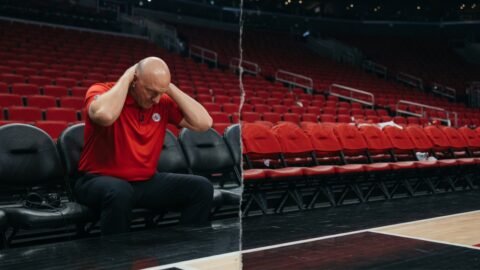
Steve Ballmer may skate the nuclear option in the Kawhi Leonard salary-cap probe, and I already know what every other owner will take from that. Not the fine. The map.
ESPN’s Ramona Shelburne reported that recent talks between the league and Ballmer’s lawyers have centered on a potential “failure to supervise” and the Clippers’ introductions of Leonard’s representatives to team sponsors, not a clean paper trail of the owner personally routing money to his star. Shelburne labeled direct cap circumvention the investigation’s “murder charge”—the most serious allegation and the hardest to prove. The NBA immediately pushed back through spokesman Mike Bass, saying the probe remains unfinished and that the ESPN account contained “numerous and significant inaccuracies.” Ballmer, Leonard, and the Clippers have denied any circumvention. That part I can live with. You don’t hang an owner on vibes.
What I can’t live with is the direction of travel. If the final landing is a soft finding that the building failed to police introductions while a $28 million Aspiration arrangement and other sponsor deals sat in plain view, the league will have written a how-to guide for the next guy with deeper pockets and better lawyers.
Distance Just Became a Competitive Advantage
Look at the receipts that are already public. Leonard’s Aspiration deal ran four years and $28 million. Ballmer invested roughly $60 million of his own money in the firm. The Clippers locked a $300 million sponsorship that made Aspiration a founding partner of the Intuit Dome. The introduction of Leonard to Aspiration executives reportedly came after both the team sponsorship and Leonard’s Clippers contract were already locked. The probe later expanded to Daktronics and other Clippers-linked companies, plus questions about unreimbursed expenses. Aspiration co-founder Joseph Sanberg is serving 14 years after pleading guilty to wire fraud that cost investors roughly $248 million; he cooperated with NBA investigators, and Ballmer described himself as a victim of Sanberg in a letter to the judge.
None of that, by itself, equals a signed second contract ordered from the owner’s desk. That is precisely why the “murder charge” framing matters. Under the CBA the league can hit a team with heavy fines, stripped draft picks, a voided contract, even an owner suspension. The Joe Smith Timberwolves case remains the template: picks gone, owner parked, deal ripped up. Those penalties only deter anyone if the evidentiary bar isn’t “prove the billionaire left written instructions.”
Draymond Green saw the incentive immediately. “If the punishments aren’t steep, everybody should do it,” he said while the Leonard allegations were circulating. He is not wrong. The wealthiest owners sit on commercial networks that smaller markets simply do not have. Connect the superstar to the sponsor. Let intermediaries handle the terms. Claim you never saw the final paperwork. Keep the on-court production. If “failure to supervise” becomes the ceiling, plausible deniability stops being a legal posture and starts being roster construction.
A Cap That Only Punishes the Clumsy
I am not asking Adam Silver to invent a smoking gun that investigators have not found. I am asking him not to turn incomplete proof into a permanent safe harbor. An owner who benefits from the arrangement while insisting he never understood it cannot walk away with a wrist slap and a press release. The league has already spent nearly a year on this. Silver wanted resolution before the 2026-27 season. A proposed Leonard trade to Toronto got frozen because the Raptors would inherit any sanctions. The entire association is watching the landing zone.
If direct circumvention cannot be proven, the NBA still has to draw bright lines on sponsor introductions, owner equity in those same companies, and what an “endorsement” actually requires a player to do. Then it has to attach real cost when those lines get ignored. A maximum team fine that looks like lunch money next to a fortune north of $130 billion does not qualify. Lost first-rounders do. Meaningful individual accountability does.
Otherwise the next front office will not need a secret side deal. It will need a buffer, a shrug, and a lawyer who can say the owner never gave the order. Competitive balance becomes a brochure line while the money finds another hallway. The investigation can still finish without a murder conviction. What it cannot do is hand the richest owners a blueprint that says introduce, step back, and call it unsupervised. That blueprint outlives any single fine.