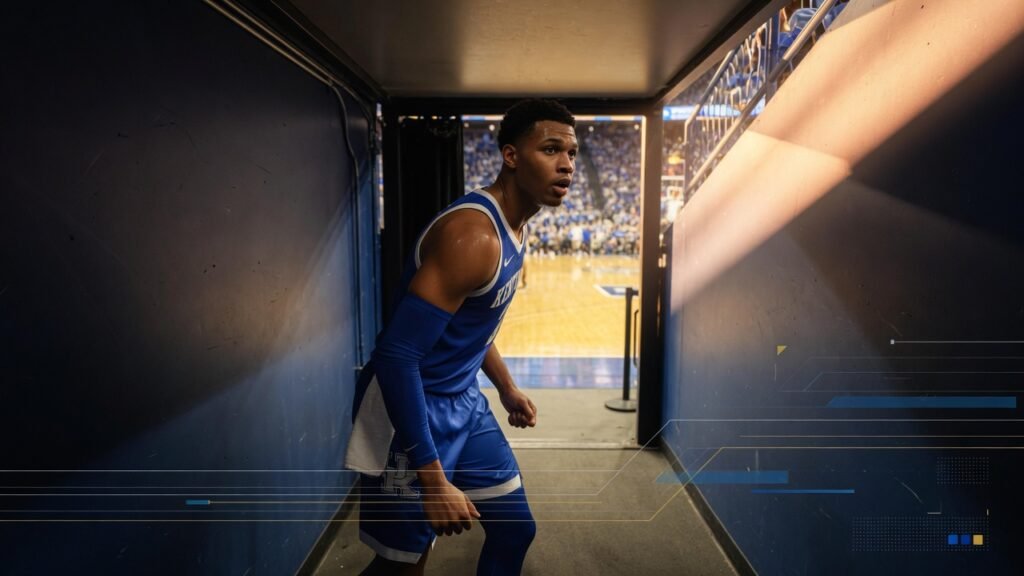
Mark Mitchell put up 18.3 points, 5.2 rebounds, and 3.6 assists a night for Missouri last season, shot 54.7 percent from the field, and became one of two Tigers ever to lead the team in all three categories in the same year. He dropped 32 on Kentucky in the SEC Tournament. Twenty-four hours after a Louisville judge handed him a temporary injunction for a fifth season, he was a Wildcat. Greg Sankey is trying to erase the second half of that sentence with a bylaw Mitchell could not have obeyed.
The SEC’s longstanding intraconference transfer rule lets an athlete move from one member school to another only inside the sport’s regular NCAA portal window right after the championship segment. For men’s basketball in 2026 that window ran April 7–21. Mitchell had finished his senior year at Mizzou with no realistic path to more college basketball. The NCAA’s five-for-five model, approved in late June, did not grandfather the 2022 high school class. He went undrafted, played Summer League with Denver, signed nothing, then joined the multi-plaintiff suit in Jefferson County Circuit Court.
Sankey Locked the Door After the Key Appeared
On August 11 Sankey sent a memo to the 16 SEC schools that left zero wiggle room: “SEC eligibility rules, including those relating to intraconference transfers, remain in effect until fully or individually waived or the rule is changed.” After presidents, chancellors, and ADs met this week, the conference reaffirmed the bylaw and layered on penalties that include a half-season head-coach suspension, a fine equal to 50 percent of the team’s annual budget, and loss of SEC voting privileges.
CBS Sports’ Matt Norlander put the threat in plain language. Mitchell “is believed to fall under the definition of prohibited intra-SEC transfer due to not transferring in the initial portal window.” Norlander added the chronology that matters: “Mitchell, who finished his senior year at Mizzou in the spring, did not enter the portal then because there was no expectation he would have the opportunity to transfer. He entered the portal last Friday with a do-not-contact tag and committed to UK less than 24 hours later.”
I keep coming back to the mechanism. The rule assumes a player possesses known eligibility during the championship window. Mitchell’s eligibility clock read zero until Judge Brian Edwards issued the TRO on August 21. He entered the portal within an hour. Kentucky’s counter-argument writes itself: you cannot transfer for a fifth year that does not exist yet. Enforcing the April calendar against an August court order is enforcing a door that was locked from the outside.
The TRO Already Answered the Window
Craig Pinkerton, the SEC’s communications director, clarified to the Lexington Herald-Leader that Summer League alone does not kill eligibility when the player was not an early entrant and never signed an NBA or G League contract of any type. That piece is clean. The intraconference piece is not. Attorney Ryan Downton, representing Mitchell and the other plaintiffs, has already flagged SEC enforcement steps as potential contempt of the existing court orders.
Kentucky fills its 15th and final roster spot with a two-time All-SEC forward 247Sports immediately ranked No. 6 in the national portal. Mark Pope gets a ready-made starter who just finished a 605-point season. The underlying lawsuit continues and the NCAA intends to fight, but the temporary injunction currently protects both the extra year and the transfer right. Sankey can crack down hard on schools that poach healthy, fully eligible players outside the window. Applying the same hammer to a plaintiff who had no legal portal access in April is a different animal.
I’d argue the conference is protecting competitive balance first. Late intraconference shopping is real poison when every roster is hunting the same portal fish. The bylaw exists for a reason. That reason still collapses when the NCAA’s own eligibility model leaves a McDonald’s All-American without a lawful path until a state judge intervenes four months later.
Mitchell stays a Kentucky player if the TRO holds and no individual waiver is forced. The SEC can posture, fine, and suspend coaches on the next clean violation. This one arrived with a court stamp already on it. A 6-foot-9 forward who averaged 18.3 points in the SEC just became the test case for whether a conference bylaw outranks a temporary injunction that already said he can transfer. The docket, not the memo, still controls the roster.