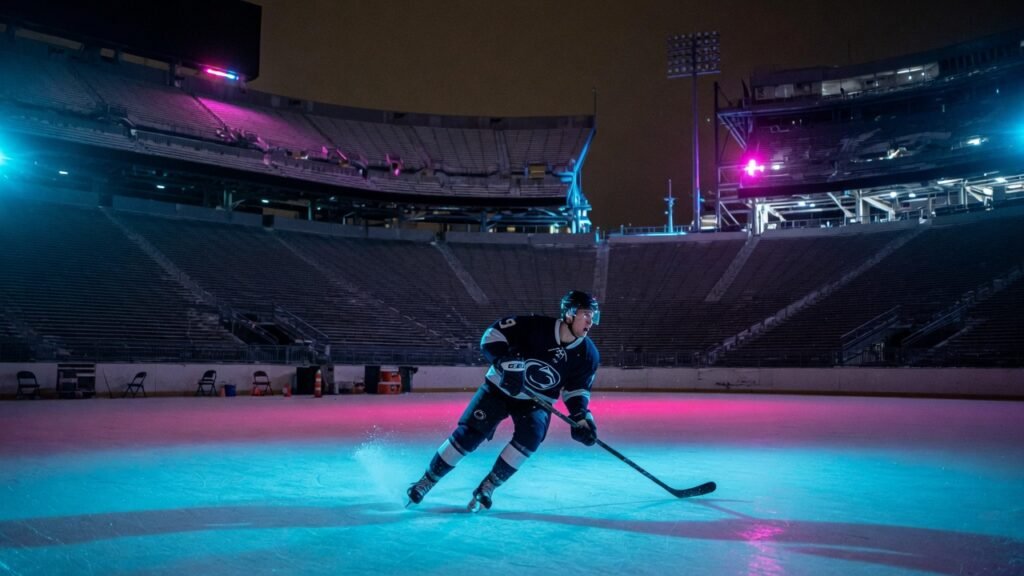
Gavin McKenna just went first overall to the Maple Leafs out of Penn State, and if you still think college hockey is some quaint scholarship hobby for kids who couldn’t cut it in the CHL, the 2026 draft just laughed in your face. Nineteen current or committed NCAA players in the first round. A record that vaporized the old mark of 11. Seven in the top 10. Penn State’s first No. 1 pick ever after he put up 51 points in 35 games as a second-team All-American. I sat there watching the board and felt the entire sport tilt.
This is not some gentle evolution. NIL money, the House settlement revenue share, and the CHL eligibility flip turned the NCAA into a mini-pro league with better weight rooms and outdoor games that draw nearly 75,000 at Beaver Stadium. McKenna jumped from the Medicine Hat Tigers to Happy Valley for a package in the ballpark of $700,000. That is record territory for the sport. Michigan State and others were throwing real cash too. The old amateur rules were a talent tax. Once those came off, the best 18-year-olds started treating campus like a one-year pro tryout with better development and a paycheck.
The Draft Board Became a Shopping List
Look at the top of that first round and tell me this still smells like college. Caleb Malhotra to Vancouver third overall, headed to Boston University. Daxon Rudolph to Buffalo fourth, Denver-bound and the highest pick in Pioneers history. Carson Carels and Chase Reid right behind them to Calgary and Seattle, North Dakota and Michigan State commits straight out of the WHL and OHL. Keaton Verhoeff ninth out of North Dakota already. Wyatt Cullen tenth to Nashville and Minnesota-bound. Then Tynan Lawrence, Oscar Hemming, Ilia Morozov. Incoming freshmen, rising sophomores, kids who would have stayed north of the border forever under the old rules.
Michigan State had five committed players taken in the first round, tying the single-draft school record. Boston College and Michigan keep their ridiculous multi-decade draft streaks alive. Over the last 10 drafts the NCAA has produced 88 first-rounders against 57 the previous 10. That is not noise. That is the market speaking. The CHL used to own the pipeline because it paid and played older, tougher hockey. Now the Big Ten and NCHC schools can match the money, offer 26 full scholarships instead of 18 equivalencies, and still sell the college experience. Kids noticed.
I used to roll my eyes at the “college hockey is rising” takes. The product was always good, but the talent ceiling felt capped. Not anymore. Porter Martone ripped 50 points as a Michigan State freshman after getting drafted sixth overall by the Flyers the year before and then signed. The pathway is real and short. Come for the NIL and the revenue share slice, dominate older competition for a year, get paid again by an NHL club. The soap opera part is how fast the traditional powers adapted while everyone else is still arguing about purity.
Western Michigan Just Exposed the Real Divide
Western Michigan won the 2025 national title with zero NIL dollars. Their coach said it flat. Then they came back as a one-seed the next year while starting to put some money in. That is the last pure win we are going to see for a while. Power conference schools and the Denvers and North Dakotas of the world are already pushing total player packages toward $500,000 to $1 million when you stack revenue share and NIL. Mid-majors and lower-resource programs are looking at $200,000-$300,000 as the new competitive floor just to stay in the conversation. Roster caps hit 26. The House deal let schools share up to roughly $20.5 million across all sports in year one. Hockey gets a slice, not the football-sized one, but enough to change the math.
I keep hearing the hand-wringing about competitive balance and the death of the student-athlete. Spare me. The student-athlete was always a convenient story while the NHL treated the NCAA as a secondary option. Now the best players can get paid on campus, develop against 22- and 23-year-olds, and still hit the draft stage as lottery picks. McKenna became the third NCAA guy taken first overall in six years. That used to be unthinkable. The betrayal narrative is cute until you remember the old system just funneled Canadian kids into junior leagues and left American college programs fighting over scraps.
The schools that hired hockey-specific NIL people and treated this like a real roster-building exercise are going to own the next decade. The ones still clinging to “we develop character” while offering half the money are going to watch their commits flip and their draft boards go quiet. Denver already has a guy in that role. Others will follow or get left behind. The 2026 first round was the loudest receipt yet.
College hockey did not get ruined. It got serious. The mini-pro label is accurate and I am here for it. Nineteen first-rounders does not happen by accident. McKenna at the top of the board in a Maple Leafs sweater after one year in the Big Ten is the new normal. The programs that treat it like a business will keep stacking lottery picks. Everyone else can keep the old stories.