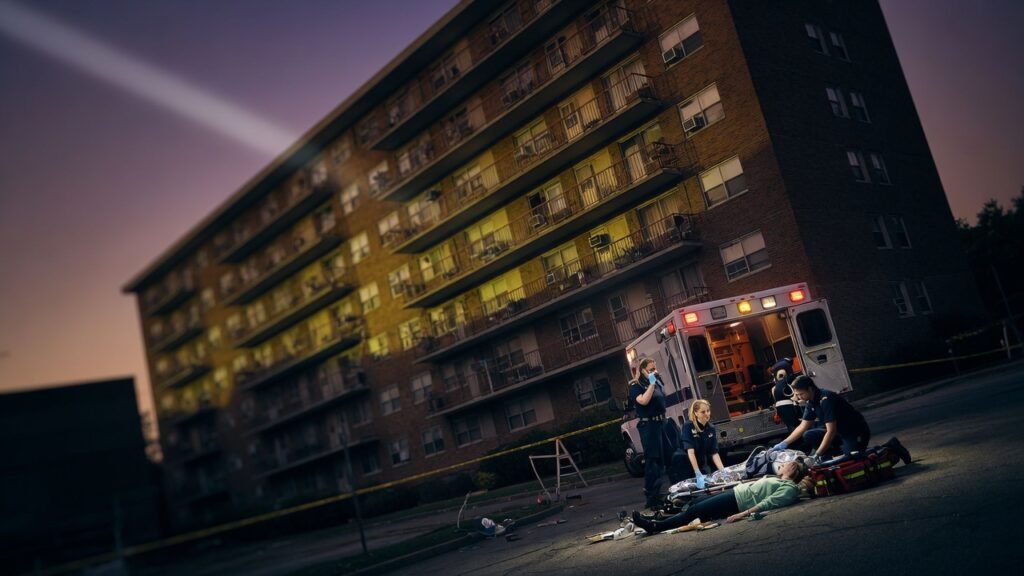
Hayden Panettiere was three days from thirty-seven when the 911 call hit at 1:51 p.m. in Greenville. By 2:32 she was gone. Dispatch audio talked overdose and cardiac arrest. Narcan sat on a mattress. First responders ran advanced cardiac life support and chest compressions anyway. The Greenville County coroner has not locked a cause yet, toxicology still out, no trauma at autopsy, no foul play. That is the official silence. The unofficial noise is already doing what it always does with a child star who told the truth out loud: turning a death into a morality play before the body is cold.
Look, I get it. You want the tidy version. She struggled, she recovered, she wrote the book, she was “coming back.” Bethany Joy Lenz said it out loud on Instagram, the raw version a lot of people were thinking: “I’m crushed… Everything seemed to be turning around. She was coming BACK to life, wasn’t she?” Stay with me here. That sentence is the whole problem with how we watch these people.
Recovery Was Never a Three-Act Structure
Hollywood, and the media machine that feeds on it, treats addiction like a prestige limited series. Act one: the spiral. Act two: the confession, the memoir, the carefully lit interview where the star owns her demons and the audience gets to feel enlightened for listening. Act three: the return. Applause. Soft focus. “Stunning and brave,” on a loop, until the next project needs a human-interest bump.
Panettiere did the hard part in public. Opioids. Alcohol. Postpartum depression after her daughter Kaya was born in 2014. She did not hide. In May 2026 she published *This Is Me: A Reckoning*. The title was not subtle. She was trying to close the loop herself, on the page, months before Greenville. Then her brother Jansen died in February 2023 at twenty-eight from an undiagnosed heart condition, and the family was already walking around with a hole in it. She flew into South Carolina that Saturday with the same on-again, off-again boyfriend who had admitted to abusing her. Sunday afternoon she was in cardiac arrest in a temporary place at Judson Mill Lofts.
The culture loves the reckoning. It is less interested in what happens on the Tuesday after the book tour ends, when nobody is clapping and the quiet gets loud again. Massive shock: telling the truth on camera does not install a force field. Openness is not naloxone. A memoir is not a sponsor who answers the phone at 3 a.m.
Her father, Skip Panettiere, put it without spin: “It is with profound sadness that we share the tragic passing of our beloved Hayden. She was an incredible light and a force of nature who brought immeasurable love and joy to all who knew her — and to the millions who watched her onscreen.” Force of nature is the right phrase. It is also the phrase people use when they cannot explain how someone that alive ends up gone that fast.
She Was Never Just the Girl Who Came Back From the Dead
If you only know the tabloid version, you missed the work. Claire Bennet on *Heroes* was not a cute sidekick with a cheerleading skirt. Panettiere played indestructibility as a curse, a teenager who healed from everything except the knowledge that she could not stay broken long enough to be normal. That is a brutal note for a young actress to hit week after week, and she hit it. On *Nashville* she took Juliette Barnes, a character designed as a country-pop weapon, and found the panic under the sequins. She could sing. She could go ugly. She could make a scene about ambition feel like a scene about survival.
Viola Davis, who worked with her, saw the same voltage: “What an amazing talent you were….so gifted… an old, wise soul with such a deep heart. I wish the world had more time with you because I had a burning curiosity about who you were becoming. I saw this beautiful Phoenix rising from the ashes. Your tests became your testimony, and your testimony became your legacy.”
That is not press-release grief. That is a serious actor admitting she wanted more reels, more years, more of whatever Panettiere was still becoming at thirty-six. Child stars who survive the machine long enough to get interesting almost never get the second act the industry pretends it is selling. They get surveillance. They get the “troubled” tag. They get a temporary loft in South Carolina and a Sunday afternoon that does not resolve.
Selma Blair’s comment under Panettiere’s last Instagram post stripped the poetry out: “I love you. Don’t be gone. Don’t be gone. Please. Please.” Then, later: “I’m dying. Please be here.” That is what the rest of us are dressing up with career montages and think pieces. Someone is gone. An eleven-year-old daughter is left holding the adult version of a story that never got a clean ending.
The Autopsy Cannot Measure What We Demanded of Her
Police said an acquaintance made the call. Two ambulances. Epinephrine on site. The Greenville County Coroner’s Office was clinical and correct: “The cause and manner of death remain pending further investigation and the completion of additional studies. This investigation remains active and ongoing.” Good. Let the science finish before the internet finishes her for them.
But you already know how this goes. If toxicology confirms what dispatch muttered into the radio, the cycle restarts. Think pieces about “the cost of fame.” Threads about enabling. A week of clips from *Heroes* and *Nashville* scored like a memorial reel, then silence until the next name. We will talk about “awareness” as if awareness were a treatment plan. We will not talk about how little infrastructure exists for people who got famous before they got a frontal lobe, who parent in public, who bury a brother at twenty-eight and still have to smile for a camera because the mortgage and the narrative both come due.
Now, you might be thinking this is just another sad celebrity overdose story and the lesson writes itself. It does not. The lesson is uglier. Panettiere did the things we claim we want. She named the addiction. She named the depression. She put a reckoning between hard covers. Contemporaries who knew her as a kid on *Guiding Light* and as an adult still thought the turnaround was real. The turnaround was not a plot point. It was a daily fight she lost on a mattress in Greenville three days shy of her birthday, with Narcan in the room and a daughter who will read about this for the rest of her life.
I walked through her body of work again after the news broke expecting nostalgia and got mad instead. Mad at the gap between the talent on screen and the thin net underneath it. Mad that “force of nature” keeps becoming past tense for people who told us, in plain English, that they were not fine. She brought joy to millions who watched her. The millions watched. Watching was never the same as catching her.
The coroner will finish the report. The industry will issue statements and move on to the next premiere. What does not move on is the pattern: we mint kids into product, applaud them when they bleed on the page, and act stunned when the page is not enough. Hayden Panettiere was not a cautionary tale. She was an actress who could hold a frame and a note and a contradiction. She deserved more time to become whoever Viola Davis was still curious about. She got thirty-six years, a Sunday in August, and a culture that confuses confession with care. That is not a mystery box. That is the ending we keep writing for them, then pretending we cannot see the script.