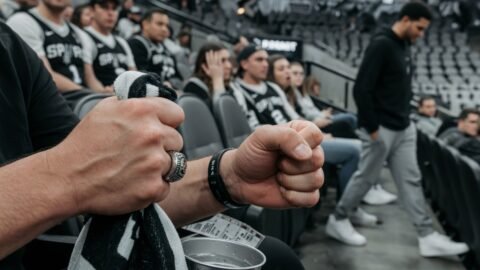
Russell Westbrook posted the line on Wednesday and then walked away from the NBA on his own terms. “Sometimes you don’t even know when you’ve already watched the end. You had to be there. And now it’s over.” He was 37, coming off a Kings season in which he started 58 games and still averaged 15.2 points, 6.7 assists and 5.4 rebounds. Sacramento and Washington had interest. He chose the exit over a reduced role. I keep coming back to that choice, because it is the purest Russ decision of a career built on refusing to shrink.
Across 18 seasons and seven franchises he averaged 20.9 points, 6.9 rebounds and 8.0 assists. He finishes fifth all-time in assists with 10,351 and sits 14th on the scoring list with 27,176 points. He owns the regular-season triple-double record at 209. Those are not soft counting stats. They are the residue of a point guard who attacked the glass harder than anyone in the modern era and forced defenses to account for a lead ball-handler who rebounded like a four.
Peak Russ Broke the Positional Model
The 2016-17 season still looks absurd on paper. Westbrook averaged 31.6 points, 10.7 rebounds and 10.4 assists. He dropped an NBA-record 42 triple-doubles and won MVP as the first player since Oscar Robertson in 1962 to average a triple-double for a full season. He did the full-season triple-double four times total. Nick Wright put it cleanly: “Peak Russ, I think, was a better player than he is remembered for being by some of the smart numbers.” I agree. The efficiency critiques always undersold the mechanism. Westbrook created advantages in transition and on the offensive glass that no single box-score rate fully priced. Defenses had to send help to the rim against a guard. That is gravity. That is scheme disruption.
He spent 11 seasons with the Thunder after being drafted No. 4 by the Seattle SuperSonics in 2008. He remains Oklahoma City’s career leader in scoring, assists, rebounds and steals. The 2012 Finals run, the near-misses, the Durant departure, the Paul George and Carmelo experiments. Westbrook stayed when the franchise felt most vulnerable and kept them relevant. Chris Broussard called him “an athletic marvel, a spectacle.” That was the nightly product. Full energy, full effort, no gear between park and sixth.
The Carousel Never Rewrote the Résumé
The last seven seasons took him through Houston, Washington, the Lakers, the Clippers, Denver and Sacramento. Roles shrank. The minutes and usage bent toward spacing and lower-turnover half-court creation. Westbrook’s career free-throw percentage sat at 77.1 and his three-point mark at 30.8. The shot profile never became pretty. But the production held longer than the narrative allowed. In his final season he became the career leader in rebounds from the point guard position and joined LeBron James as the only two players with 25,000 points and 10,000 assists.
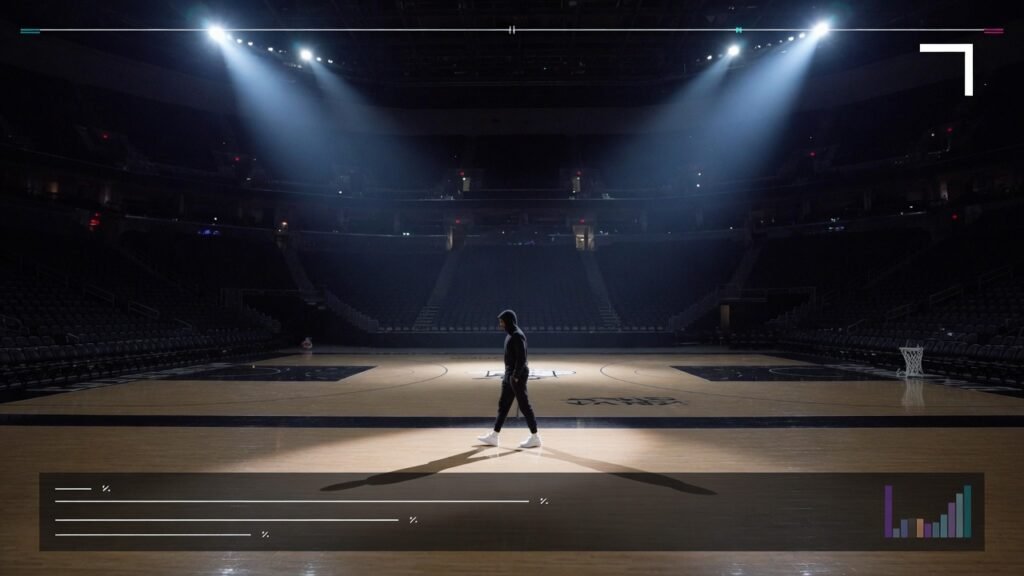
Adrian Wojnarowski wrote what a lot of people covering him felt: “What an honor to have had a front row seat to such a historic career. An incredible competitor, teammate and philanthropist. Congratulations Russ!” Shams Charania listed the hardware without fluff: NBA top 75, 2017 MVP, nine-time All-Star, nine-time All-NBA, Olympic gold, all-time triple-doubles. The retirement video was narrated by Michael B. Jordan. Over footage of a room under construction, Jordan says, “This wing isn’t finished,” then “Neither is he.” Westbrook did not speak in the video. He did not need to. The caption did the work.
He Refused the Half Version
I keep landing on the reduced-role question. The Kings were turning the keys toward rookie point guard Darius Acuff. Westbrook could have taken the money and the minutes off the bench. He walked. That tracks with everything about how he played. You do not average a triple-double four times by accepting a complementary identity. You do not stack 209 of them by letting someone else set the temperature. Trae Young posted the simple version: “The game gonna miss you Brodie.” The game will miss the volume engine that made GMs recalculate what a lead guard’s counting line could look like.
Westbrook’s career was never going to end in a tidy Finals parade. One Finals appearance, 2012, a loss to Miami. The late stops were about survival inside a league that had compressed the market for high-usage veterans. He still left with the triple-double record, the fifth-place assists mark, and a body of work that forced the efficiency conversation to confront volume as a real winning input when the surrounding talent was right. He had to be there. Now it’s over. I watched enough of it to know the end was never the point. The force was.