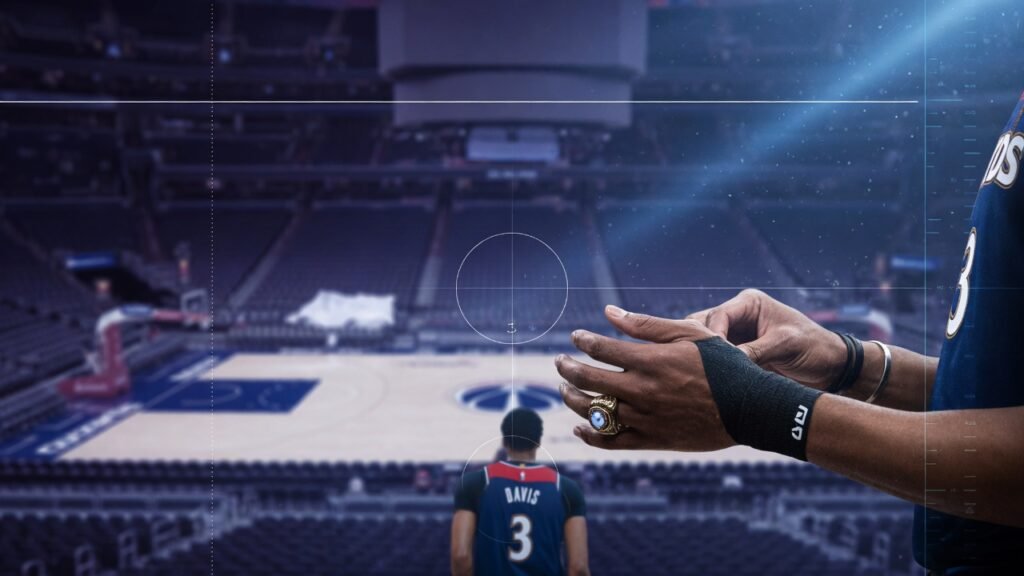
Anthony Davis and the Washington Wizards just parked a franchise-altering extension until the season starts, and anyone calling that a snag is reading the wrong document. This is the first disciplined financial decision the Wizards have made with a star in years.
The report is clean: talks are on hold. Both sides will revisit once the games count. That is not a breakdown. That is two parties admitting they do not yet have the information required to price the next several years of a veteran superstar big man who just changed addresses.
I have watched enough max-level extensions get rushed in July and regretted by Christmas to know the pattern. Teams prepay for reputation. Players lock in before the new system exposes anything. The Wizards and Davis just refused that trade. Good.
Waiting Is the Only Honest Valuation
An extension signed in the dark prices the player Davis was somewhere else. A season of tape prices the player he is in this scheme, on this roster, with these spacing and defensive responsibilities. Those are not the same asset.
Davis has always been a walking two-way gravity machine when healthy. The question the Wizards cannot answer from summer workouts is simple: how often is he available, and how does his defensive coverages mesh with whatever shell they are actually running? You do not solve that in a hotel ballroom with agents. You solve it in November and December when the minutes stack up and the load management decisions get real.
From the team side, this is pure CBA mechanics. Commit early and you eat the full freight regardless of what the body or the fit delivers. Wait, and you let the market reveal itself. If Davis looks like an All-NBA anchor in a Wizards jersey, the number climbs and both sides still get a deal done with clearer eyes. If the availability questions linger or the offensive usage never quite clicks, Washington retains the right to adjust the offer instead of being handcuffed to a July fantasy.
I keep coming back to the leverage split. Davis is the veteran star here. He does not need the money tomorrow. By agreeing to table it, he is telling the building he wants to be paid for what he produces in their colors, not for the highlight package that got him there. That is rare. Most players in his tier push for the early signature precisely because the tape can only hurt them.
The Cap Sheet Is the Real Opponent
This was never just about Davis liking the city or the coach. It is about a franchise that has spent a decade confusing star acquisition with star construction. An early extension would have frozen the books around one outcome before the supporting cast, the coaching adjustments, or the actual win curve had a chance to speak.
Delaying lets the Wizards see whether Davis elevates the young pieces or simply shares a floor with them. It lets them measure the drop-off on nights he sits. It lets them test whether opposing offenses still have to account for him the same way when the help principles are different. Those are not vibes. Those are the inputs that separate a smart max from a dead-weight max.
The looming financial decision the reports keep circling is exactly this: once you extend a player of Davis’s tier, the rest of the roster construction bends around that number for years. Bird rights, cap holds, the ability to add a second or third piece via trade, the tax apron implications if they ever climb that high. All of it gets harder the moment the ink dries. Parking the talks until the season is the Wizards admitting they finally understand the difference between acquiring talent and committing capital.
I do not need a press conference quote to see the posture. Behavior is the quote. Both sides looked at the calendar, looked at the unknowns, and chose information over ceremony.
What the Season Actually Decides
By February the picture hardens. Either Davis is healthy enough and impactful enough that the extension becomes a formality at a number both sides can defend, or the Wizards gain the clearest possible read on whether this partnership is a foundation or a bridge. That binary is worth more than any July handshake.
The contrarian read is the correct one: this pause is not instability. It is the absence of the usual panic that has defined Washington’s star dealings. They did not overpay to announce relevance. They did not let the player’s camp force a premature number. They bought themselves months of evidence.
Davis gets the same benefit. He can put a full body of work on film in a new system and walk into those talks with proof instead of projection. For a veteran whose value has always swung on availability as much as dominance, that is protection.
I will take a franchise that waits for the data over one that spends to end the conversation every single time. The Wizards just did the former. The season will tell them whether they have a cornerstone or an expensive lesson. Either answer beats guessing.