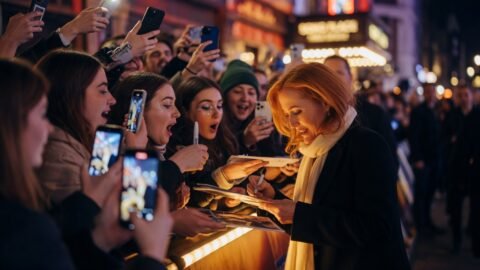
Gilmore Girls is coming back to HBO Max, a full decade after the Netflix revival, and the only honest reaction is a sharp inhale followed by a very specific kind of hope. Not the vague streaming nostalgia that greets every half-forgotten procedural. The kind reserved for a show that still sounds like nothing else on television.
Warner’s platform just claimed one of the cleanest mother-daughter stories ever put on screen, and the timing is not subtle. Ten years after *A Year in the Life* gave us four movies, a polarizing last line, and a temporary reunion with Stars Hollow, the property is moving back under the roof that always owned it. That alone should tell you this is not a random rights grab. Someone inside the building decided the coffee, the banter, and the generational freefall still have unfinished business.
Nostalgia Is Cheap. This Show Never Was.
Most revivals arrive because an algorithm smelled residual search traffic. Gilmore Girls survives for a different reason: the writing still humiliates half the dialogue currently airing in prestige slots. Amy Sherman-Palladino built a town that talked faster than the audience could process and somehow made the velocity feel like love instead of showing off. Lorelai and Rory were not a brand. They were a dual engine. One generation sprinting away from the life she was handed, the other quietly sprinting toward it, both of them funny enough to make the damage look like charm until it wasn’t.
That is the part the industry keeps misunderstanding. You cannot franchise the cadence. You can only protect it or dilute it. The 2016 Netflix run proved the cast chemistry had not expired. It also proved that giving the story a hard stop is harder than giving it another season of pop-culture name drops. The final four words became their own cottage industry of argument, which is exactly what happens when a show trains its audience to care about every syllable.
Bringing it to Max is the correct industrial move. The series always lived inside the Warner ecosystem. Netflix rented the revival. Max can own the next chapter without the platform dissonance of watching Stars Hollow on a service that had nothing to do with building it. In a market drowning in IP karaoke, that continuity actually matters.
The Streaming Wars Finally Picked the Right Ghost
Look at the rest of the board this week. Peacock is doubling down on its biggest hit. Netflix is locking in another season of a teen drama that knows exactly what it is. Brandon Sanderson is re-releasing work because his readers will show up with credit cards and patience. Everyone is mining the catalog. The difference is that Gilmore Girls still has a live nerve. People do not just rewatch it. They quote it at weddings, name pets after townies, and treat the Independence Inn like a real place that might take reservations if you ask nicely.
That cultural residue is rarer than executives admit. Plenty of early-2000s hits got the soft reboot treatment and immediately revealed they were only ever a haircut and a soundtrack. Gilmore Girls was structure. The walk-and-talks were not decoration. They were the thesis: life is too short and too loud to speak in complete, careful sentences when the person across from you already knows the ending of your thought. When the show was firing, it made every other network comedy feel like it was typing with oven mitts on.
The risk is obvious. A new release can chase the aesthetic without earning the rhythm. It can turn Luke’s Diner into a set dressing museum. It can sand the class tension off the Elder Gilmores until Emily and Richard become cozy holiday ornaments instead of the loving pressure system they always were. Edge is required here. The original series worked because it let its characters be selfish, brilliant, and wrong in the same scene. Any return that sandblasts that complexity into comfort viewing will deserve the pile-on.
I am still in. Not because I need another trip to Stars Hollow on principle, but because the alternative is letting one of the great American television voices sit in storage while lesser shows get infinite seasons. The mother-daughter template Gilmore Girls perfected keeps getting copied by series that understand the marketing and miss the bloodwork. Someone has to keep the original standard visible.
What “Returning” Actually Has to Mean
A new release only works if it treats the audience like adults who already survived the first ending and the revival’s contested coda. That means no reset button that pretends the intervening years did not happen. It means letting Rory be a full person instead of a permanent prodigy in stasis. It means letting Lorelai’s choices land with consequences instead of another witty escape hatch. The show always thrived when it allowed its leads to fail upward and then sit with the bill.
Franchise ranking time, because this lane demands it: Gilmore Girls sits in the top tier of series that earned a second life. Above the pure cash-in revivals, below the rare ones that actually sharpened the original myth. The Netflix chapter was a B-plus reunion special with an A-level cast. Whatever Max is building now has to clear that bar or it will feel like a victory lap nobody asked for. The good news is the bones are still elite. The town, the speech patterns, the generational mirror. Those do not expire when the platform changes.
There is also a quieter cultural reason this lands now. We are living through a stretch of television that confuses trauma plots with depth and irony with personality. Gilmore Girls, at its best, did the opposite. It used speed and jokes as the delivery system for real ache: the fear of becoming your parents, the terror of not becoming them, the way money and education can both save and isolate you. That combination is why people still press play on episode one when their own lives get too quiet. The show is comfort without being empty calories.
I will not pretend every episode was sacred text. Mid-series stretches sagged. Side characters sometimes became catchphrase machines. The revival’s handling of certain arcs left bruises. Fair is fair. None of that erases the ceiling this series could hit when the writing locked in. When it sang, it made network television feel like it had a pulse and a library card.
So yes. Mark it down. Gilmore Girls is moving, officially, into a new release on HBO Max ten years after the last major swing. The smart money is cautious optimism with the volume turned up. Protect the dialogue. Respect the damage. Do not turn Stars Hollow into a theme park. Do that, and this becomes more than another catalog flex. It becomes proof that some stories still know how to talk.
VERDICT: MARK THE CALENDAR — 8/10 for the move itself, because the property still has something real to say if they let it speak at full speed.