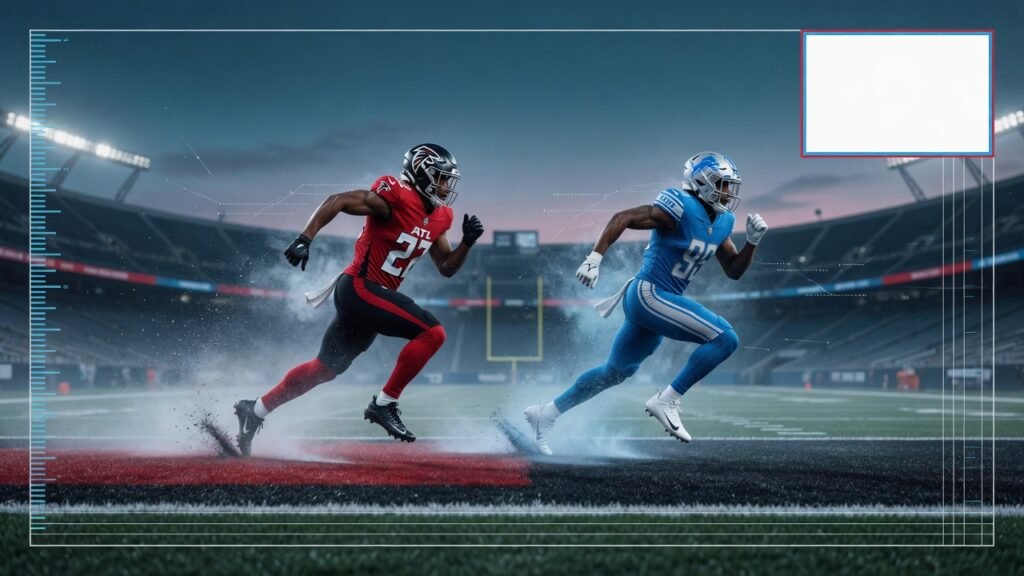
Bijan Robinson and Jahmyr Gibbs did not just hold in. They compared notes. That is the detail that resets how every front office has to price the running back position from here on out, and if you treat it like locker-room gossip you are already behind the market.
Two of the league’s most explosive young backs spent the summer applying the same pressure at the same time. Reporting around the hold-ins made clear they talked contracts while they did it. Then Atlanta blinked first. Sources told Adam Schefter the Falcons and two-time Pro Bowl selection Bijan Robinson reached agreement on a three-year extension worth up to $75 million that now makes him the highest-paid running back. The number is loud. The coordination is louder.
I do not care about the drama of who skipped what voluntary session. I care about the mechanism. When two high-leverage backs in the same draft class start sharing information on guarantees, structure, and timing, the old isolation strategy dies. Teams used to keep these negotiations in separate rooms. That room just got a shared spreadsheet.
Atlanta Paid Because Isolation Stopped Working
The Falcons did not invent a new RB valuation model out of generosity. They faced a player who knew what the other side of the market was hearing. Robinson’s deal lands as a three-year, up-to-$75-million extension and immediately becomes the reference point everyone else will cite. That is how markets move: not by press conference rhetoric, but by a comparable that cannot be dismissed as an outlier.
Look at the structure implication. Short-term, high-AAV extensions for backs have become the rational play for both sides. Careers at the position compress fast. A three-year window locks in peak production years without the team eating a fifth-year decline. For the player, it converts hold-in leverage into cash before the next knee or ankle changes the math. Robinson’s deal is not charity. It is the logical endpoint of two young backs refusing to negotiate in the dark.
Buffalo already looked ahead of this curve, and the headlines around Robinson’s extension make that plain. The Bills got in front of the RB market explosion. Everyone else is now reacting to a number that only just reset the top of the market. When the top of the market jumps, every arbitration and every “we’ll revisit it next spring” stall loses force. The comps got rewritten in real time.
Holmes Has to Answer a Different Question Now
Detroit is next in line, and Lions GM Brad Holmes has already had to address Jahmyr Gibbs’ contract hold-in publicly. That is not a coincidence. Gibbs and Robinson talking during the pressure window means Detroit cannot pretend this is a one-off Falcon problem. The same information set is in both buildings. The same leverage math applies.
I keep coming back to the positional reality. Running backs generate explosive EPA and force defensive shells to account for both gap and perimeter threats, yet the traditional market treated them as replaceable. Hold-ins only work when the production is non-negotiable and the alternative is a clear drop-off. Both of these backs clear that bar. When they also coordinate on timing and terms, the team’s usual playbook (wait, franchise tag later, point to the short career average) gets less oxygen.
Jonathan Taylor’s name is already in the next-wave conversation for a reason. Once one deal resets the ceiling, the second and third deals do not negotiate against last year’s market. They negotiate against the new floor. That is the cascading effect. Robinson’s extension does not just pay Bijan. It arms every agent with a fresh number and a fresh story about two backs who refused to stay silent with each other.
The scheme layer matters here too. Modern offenses that live in wide-zone, RPO, and condensed-split packages put unique stress on the back who can win as a runner and as a receiver. Both Robinson and Gibbs fit that archetype. Paying them is not nostalgia for a feature back from 2005. It is buying the mismatch piece that makes the rest of the call sheet harder to defend. Front offices that still price the position like a pure between-the-tackles grinder are using a dead model.
I am not here to cheer for hold-ins as a lifestyle. I am here to read what the behavior produced. Two elite young backs talked money while applying pressure. One of them just walked away with a three-year deal worth up to $75 million and the top slot at the position. The other is still in the conversation, and his GM has already been forced to speak to it. That sequence is the story.
The running back market did not gradually inflate. It got a jolt from shared information and simultaneous leverage. Every team still sitting on a young back with production will now have to decide whether isolation is even possible anymore. From where I sit, it is not. The notes already got compared. The number already landed. The next contracts will price off this one whether the rest of the league likes it or not.