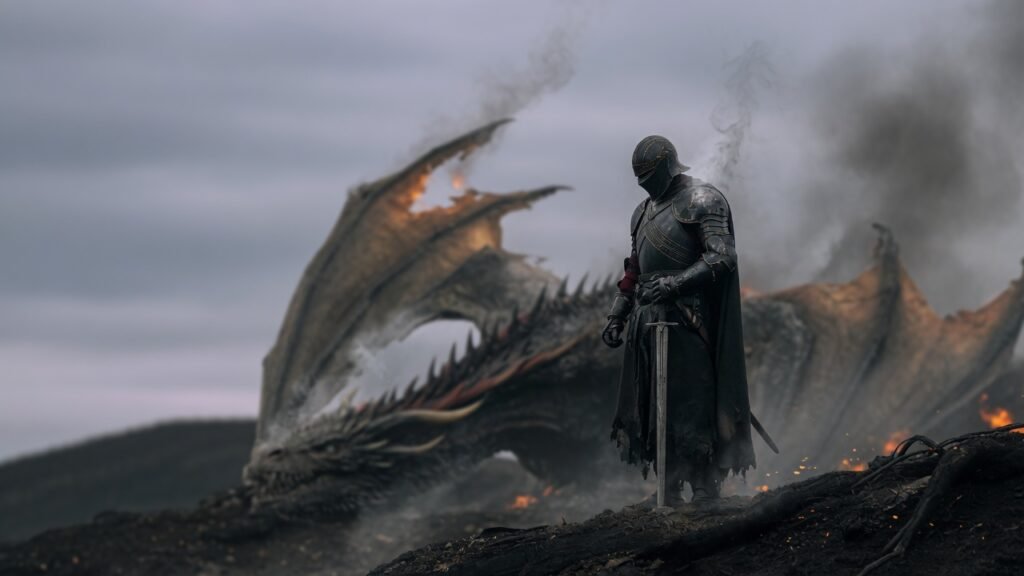
House of the Dragon just dropped four dragons into a single sky and half the audience cheered while the other half called it a cartoon. Episode 7 of Season 3, “The Dragon in Winter,” is the penultimate hour, and it refuses to be polite about it. This is the episode that finally treats the Dance of the Dragons like the ugly civil war it always promised to be, and the split in the reactions is the most honest thing about the whole night.
Spoiler-free first: if you have been waiting for the show to stop whispering and start swinging, this one delivers blood, fire, and irreversible choices. The spectacle is loud. The character turns are sharper than some want to admit. Pacing stumbles in places and a few decisions land with a thud, but the hour leaves the board rearranged in ways that matter. It is peak chaos television, not filler. Watch it.
The Vale Fight Was Built to Feel Ugly on Purpose
SPOILER TERRITORY from here. The multi-dragon sequence in the Vale is the flashpoint. Rhaena on Sheepstealer gets jumped by Caraxes, Syrax, and Seasmoke. Teeth, claws, gobbets of flesh. Fans on one side are calling it the best dragon fight the franchise has staged. The other side is calling the CGI a vomit-inducing Pokémon battle and complaining that Sheepstealer looked diminished.
Both camps are half right. The sequence is chaotic because the politics are chaotic. Rhaenyra and Daemon do not arrive as clean heroes saving a lost sister. They arrive as a power that has already lost too much and will not lose more. Daemon lets the wounded Sheepstealer crawl away instead of finishing the kill. That choice is character, not soft writing. He has spent seasons learning what happens when you burn every bridge. Letting the wild dragon live is the closest thing this man gets to mercy, and it still costs him with Rhaenyra when she learns he covered for Rhaena’s earlier involvement.
The visual language is messy because four dragons in close combat should look like a bar fight with wings. Clean, majestic aerial ballet belongs to earlier seasons when the realm still pretended it could avoid total war. This is the cost phase. The same episode gives us Helaena’s visions of the Dragonpit mob and a cold wind that feels like the Long Night leaking backward through time. When she tells Rhaenyra, “You now have many dragons. Are you yourself not altered?” and Rhaenyra snaps “No!”, the show is telling you the real damage is already internal. The CGI can be uneven. The thematic hit is not.
Aegon’s Sunfyre Moment Is the Season’s Purest High
While the Vale sequence divides people, Aegon’s road scene unites them for a reason. Cornered with Tyland Lannister, staring down Rhaenyra’s hunters, the broken king who once seemed finished stands his ground. Then Sunfyre, the dragon everyone wrote off after Rook’s Rest, rises. Aegon says the name and the word: “Sunfyre.” “Dracarys!” The gold dragon burns the attackers and Aegon revels. It is the cleanest emotional payoff of the season.
This is why the franchise still works when it remembers its core engine. Dragons are not special effects. They are extensions of the people who ride them. Aegon has been a punchline, a corpse-in-waiting, a political problem. Giving him back his living golden weapon in that exact moment restores the danger that made the Greens viable. It also sets the table for everything still coming. The episode does not linger on speeches. It just lets the fire do the talking.
Harrenhal runs colder and stranger. Alys Rivers wearing Alicent’s face for Aemond is pure gothic rot. The real Alicent arrives on an assassination errand, Aemond kills her escort on instinct, and the dinner that follows is pure discomfort. Alicent poisons him with nightshade. He collapses at Alys’s feet and she simply says “Idiot.” Alicent’s line earlier, “I have failed you, Aemond,” lands like a confession that has been years in the making. The Oedipal mess and the impersonation will freak some viewers out. Good. This family was never going to resolve its issues with a quiet talk.
Ulf’s Turn Is the Quiet Knife That Cuts Deepest
The closing move may matter more than the sky battles. Ormund Hightower has Corlys’s finger as a calling card and sits down with Ulf the White. The flattery is surgical. “It is obvious Rhaenyra and her ilk regard you only as a tool to be used and reprimanded, whereas I understand who you really are.” Ulf reminds him of the earlier promise of Honeyholt. Ormund upgrades the offer to Driftmark itself: “They will laugh at you no more, when they see you as you are.” Ulf’s answer is pure hunger: “No… They will burn.”
That is how sides flip in a real civil war. Not grand ideology. Status, resentment, and a better title. The Blacks treated the dragonseeds as disposable muscle. The Greens just offered one of them a seat at the high table. The Black army is already marching on Tumbleton with Criston Cole’s head as a banner. The board is set for something uglier than anything we have seen yet.
The episode sits at 8.5 on IMDb from early voters and a far colder 2.75 from at least one major critic outlet. That gap is the story. Spectacle lovers got the dragon war they were sold. Character purists are angry about Rhaenyra’s harshness with Helaena, the speed of certain turns, and the sheer volume of plot movement in sixty-three minutes. Both reactions are earned. The show is no longer protecting anyone’s favorite. It is burning the realm down in real time.
Inside the larger Game of Thrones project, this is the strongest single hour of House of the Dragon since the Season 1 finale’s coronation chaos, and it outranks most of Season 2’s careful positioning. It is not perfect. Some CGI frames will age badly. A couple of character beats feel rushed. But the hour understands that a dance of dragons is supposed to feel expensive, personal, and slightly out of control. The fans arguing tonight are doing exactly what the material demands. They are picking sides.
WATCH. 8/10. The dragons finally stopped posing and started costing people everything, and the argument is the point.