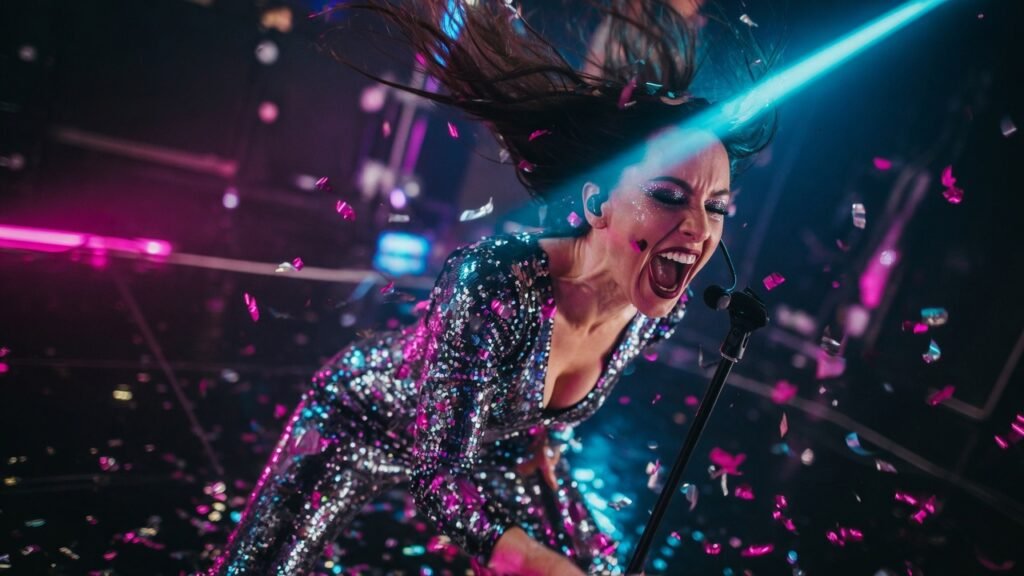
Ariana Grande promised us unfiltered rage. She delivered a 36-minute album that scored a 64 on Metacritic and split the room like a custody hearing.
That is not a failure of talent. It is a failure of contract. When you spend the pre-release cycle telling the world you finally stopped being polite, the finished product has to sound like it bit somebody. *petal* mostly nips. Then it apologizes in the mix.
In a May Instagram clip she framed the whole project with real heat: “It’s a little feral, as well, yeah, it’s definitely from a place that I have been, maybe, like, too shy or polite to tap into before, and this kinda just feels like, ‘fuck it.’” Days before release she doubled down to Apple Music: “I wrote from a place that I don’t usually, which was like an unfiltered rage that I think we all feel sometimes. I usually am too shy to tap into that. This time, I didn’t filter as much as I usually do. I usually do a lot of rewrites and make things a little kinder. This time, I didn’t.”
Stay with me here. That is a hell of a thesis statement. The problem is the album keeps rewriting itself in the booth.
She Announced a Knife Fight and Showed Up With Perfect Nails
Look, I get it. Pop stars have spent a decade selling “vulnerability” the way soda companies sell mountain spring water. Grande actually tried to change the product. All twelve tracks carry her lyrics. Ilya Salmanzadeh executive-produced with her; Max Martin still touched three songs. The lead single, “hate that i made you love me,” debuted at No. 1 on the Hot 100 for her tenth career chart-topper and opened like it meant the threat. First-day global Spotify numbers for the full album hit 62.19 million. The title track alone did 7.82 million. The commercial apparatus worked.
The writing and the sound design are having a quieter argument. Pitchfork sat at 6.5. Rolling Stone and The Telegraph handed out four stars. The Guardian landed on three. The Independent went scorched earth at two. The positive camp heard the anger and the experiment. The mixed camp kept using the same family of words: restrained, listless, production burying the vocal, urgency missing in action. Zero outright pans on the Metacritic sample, which somehow makes it worse. Nobody hated it. Half of them just could not find the animal she advertised.
That is the screenplay problem. You cannot open your second act by having the protagonist declare she is done being nice and then spend the next half hour watching her make tasteful choices. *eternal sunshine* already proved Grande can do melancholy with precision. *petal* was supposed to be the part where the precision cracks. Instead you get flashes—“oh well,” “freak,” the live Montreal debut of the title track that actually felt like a live wire—surrounded by arrangements that sand the edges so the streams stay smooth. Rage with a safety net is just branding.
Now, you might be thinking the critics are doing the usual pop-girl tax, docking points because she is famous and the gossip industrial complex still treats her personal life like public inventory. Fair suspicion. She has eaten more unearned narrative than most. But the reviews that ding the record are not moralizing about Ethan Slater or Ricky Alvarez or Wicked press tours. They are talking about dynamics and pacing. When the production keeps the vocal in a soft focus haze while the lyrics try to snarl, the snarl loses. That is craft, not culture war.
The Streams Do Not Care About Your Thesis
Here is the part that should terrify every A&R person still clinging to the myth that critical consensus moves units: the album is already working where it counts. Twelve tracks, all charting on the global Spotify daily list out of the gate. The fan army did not wait for permission. They never do. Grande’s core audience has been trained by a decade of whiplash press to treat the music as the only clean signal. They heard “fuck it” and hit play. The 64 Metacritic is a dinner-party number. The 62 million first-day streams are the actual weather.
Still. Massive shock that promising feral and landing polished creates a credibility tax that compounds. Every future interview will get the same question with a sharper edge. You said you stopped filtering. Show us the take where you actually left the blood on the tape. The comparison class is not other pop girls doing soft launches. It is the records that meant the threat—early Fiona, mid-period Robyn, the moments when the voice cracked on purpose and nobody fixed it in post. Grande has the instrument and the pen. What she still seems allergic to is letting a song be ugly for more than eight bars.
The timing makes the gap louder. She is mid-Eternal Sunshine Tour, folding new material into a set built for a different emotional weather system. Then comes *Focker-in-Law* in November and the West End *Sunday in the Park with George* in 2027. The acting lane rewards control. The album cycle she just launched sold the opposite. You can do both careers. You cannot do both theses in the same press week without one of them looking like costume jewelry.
I walked into *petal* ready to believe the pitch. A shorter runtime, full lyric ownership, the explicit rejection of the kinder rewrite. That is the correct instinct. The execution still sounds like someone in the room loved the idea of anger more than the sound of it. When the Independent hears a two-star record and Rolling Stone hears a four, the split is not random noise. It is the sound of an album that keeps almost saying the thing it promised on Instagram.
Grande is too skilled for this to be her ceiling. The “fuck it” version of her is still the most interesting artist in the building. She just has to stop letting the building win. Grow through the concrete or admit the concrete is load-bearing. Anything in between is just another pretty bouquet that wilts under fluorescent light.