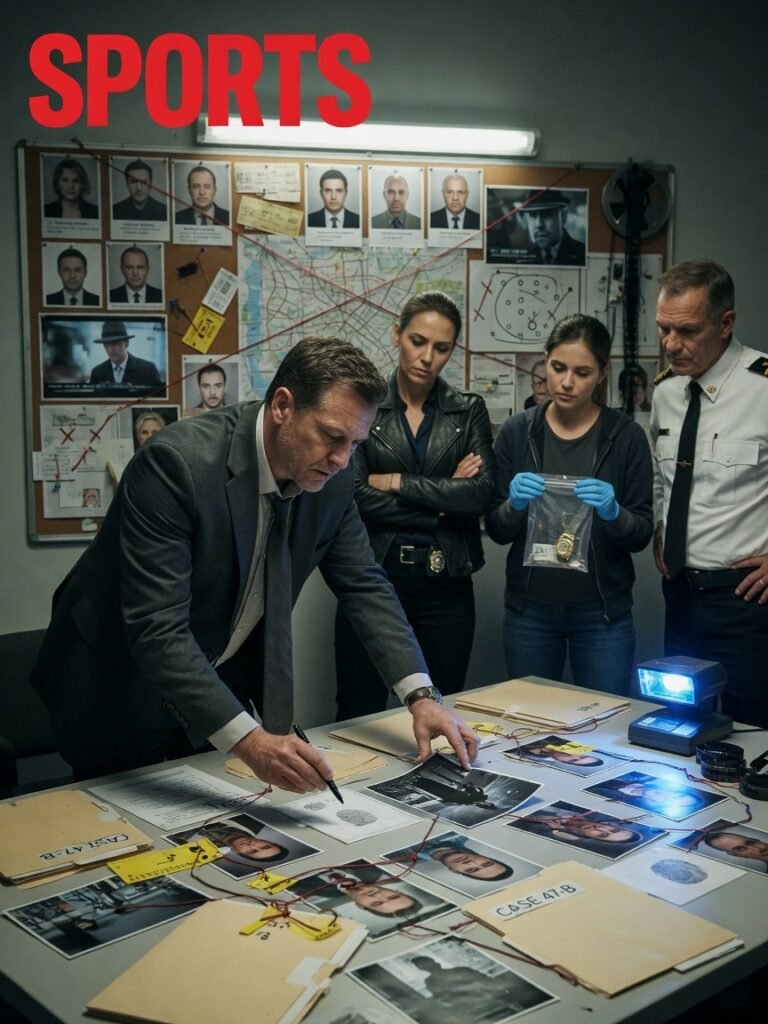
There’s a specific kind of electricity that hums through a packed theater when a mystery is truly firing on all cylinders, an almost primal collective gasp when the final piece of the puzzle clicks into place. It’s not just about the “whodunit,” or the “howdunit,” or even the “whydunit.” No, the true genius of a perfect cinematic mystery lies in its construction, a labyrinth of breadcrumbs, red herrings, and psychological chess moves that keeps you leaning forward, breath held, until the credits roll. It’s an intellectual seduction, a masterclass in misdirection and revelation, and frankly, far too many films these days mistake a cheap jump scare or an unearned twist for genuine suspense. But when it’s done right? It’s unforgettable.
The art of the perfect mystery isn’t just about the ending; it’s about the journey. It’s about a narrative so meticulously woven that every seemingly insignificant detail, every fleeting glance, every stray comment, suddenly snaps into horrifying or brilliant focus on a second viewing. These aren’t just thrillers; they’re intricate clockworks, designed to challenge your perception and reward your attention. They don’t just tell a story; they invite you to *solve* it alongside their characters, often leading you down tantalizingly wrong paths before revealing the true, often darker, destination.
What defines a “perfect” mystery? For me, it boils down to three core tenets: Impeccable Pacing, Organic Misdirection, and a Thematically Resonant Resolution. Pacing ensures the tension never slackens, that every scene contributes to the escalating stakes. Organic Misdirection means the red herrings aren’t cheap tricks, but logical, character-driven possibilities that make sense within the world. And a Thematically Resonant Resolution isn’t just about catching the killer; it’s about what the reveal *says* about human nature, society, or the characters themselves. It leaves you pondering long after the lights come up.
The RyGuy Sports team has been buzzing about what makes a great crime thriller, and while the listed films are strong contenders, the conversation around “perfect mysteries” demands a deeper, more brutal dissection. Let’s talk about the ones that truly earn their place on that untouchable pedestal.
**A Masterclass in Bleakness: *Prisoners* (2013)**
Denis Villeneuve’s *Prisoners* isn’t just a psychological thriller; it’s a gut-punch of a mystery that dares you to look away. From the moment two young girls vanish, the film plunges into a moral abyss, forcing both its characters and its audience to confront the terrifying question: how far would you go to protect your own? The primary source rightly highlights the two-pronged investigation – Hugh Jackman’s Keller Dover descending into vengeful barbarism, and Jake Gyllenhaal’s Detective Loki pursuing a more traditional, albeit increasingly desperate, path.
What makes *Prisoners* a perfect mystery is its relentless commitment to atmosphere and ambiguity. Every frame is saturated with a cold, gray dread. Villeneuve, a master of slow-burn tension, uses the Pennsylvania winter landscape not just as a backdrop, but as a psychological mirror. The labyrinthine plot, filled with false leads and unsettling discoveries (those snake boxes!), isn’t just a clever puzzle; it’s a descent into the darkest corners of the human psyche. Hugh Jackman delivers a raw, primal performance, embodying a father pushed to the absolute edge. He’s “every man, pushed to the absolute extreme,” as Jackman himself described Keller Dover in a 2013 Collider interview, and that relatability, however horrifying, anchors the film’s moral ambiguity. Meanwhile, Gyllenhaal’s Loki, with his nervous tics and haunted eyes, is a detective burdened by the weight of unspoken trauma, meticulously piecing together fragments while battling his own demons. The mystery isn’t just *who* took the girls, but *what price* will be paid by everyone involved. It’s a film that asks uncomfortable questions about justice, vengeance, and the thin line between savior and monster, and it doesn’t offer easy answers.
**The Original Voyeur: *Rear Window* (1954)**
Alfred Hitchcock, the undisputed master of suspense, crafted *Rear Window* not just as a mystery, but as a profound exploration of voyeurism itself. The primary source nails the “contained, one-location approach,” which is central to its genius. James Stewart’s L.B. Jeffries, a photographer confined to his apartment with a broken leg, becomes our proxy, his binoculars our eyes into the lives of his neighbors. We become complicit in his, and by extension, *our* own, prying.
Hitchcock’s brilliance here is in building suspense through anticipation, not graphic violence. As the director famously told François Truffaut, “There is no terror in the bang, only in the anticipation of it.” *Rear Window* is 110 minutes of pure, exquisite anticipation. The mystery of Lars Thorwald’s potential murder of his wife unfolds incrementally, through Jeffries’ observations, often without a single line of dialogue directly addressing the crime. The subtle changes in Thorwald’s apartment, the sudden disappearance of his wife, the trunk, the knife – each detail is a clue meticulously placed, building a case in Jeffries’ (and our) mind. The brilliance is that Jeffries is physically helpless, amplifying the tension as he and his allies (the iconic Grace Kelly as Lisa Fremont, and Thelma Ritter as Stella) are forced to escalate their investigation from afar. The contained setting amplifies the claustrophobia, making the final confrontation terrifyingly immediate. It’s a testament to Hitchcock’s craft that a film about watching people can be so utterly gripping.
**The Modern Whodunit Reimagined: *Knives Out* (2019)**
Rian Johnson’s *Knives Out* is a breath of fresh air in a genre often bogged down by its own conventions. The primary source accurately praises its “ingenious spin on the whodunit,” and that’s precisely its strength. Johnson doesn’t just embrace the Agatha Christie formula; he dissects it, reconstructs it, and then blows it up with gleeful abandon. The film is a masterclass in subverting expectations, giving you a “solution” early on, only to reveal that you were looking at the wrong puzzle entirely.
Daniel Craig’s Benoit Blanc, the Southern-fried detective, is a flamboyant delight, a character who “has a real steel underneath,” as Craig noted in a 2019 Variety interview. He’s the perfect guide through the labyrinthine Thrombey family, each member a caricature of entitlement and greed, each with a motive for the death of patriarch Harlan Thrombey. The film’s genius lies in centering the narrative not on Blanc’s investigation, but on Marta Cabrera (Ana de Armas), Harlan’s nurse, who literally cannot lie without vomiting. This narrative device is not just clever; it’s a brilliant way to force the audience to question every interaction, every spoken word, every perceived truth. Johnson crafts a mystery that is both deeply complex and utterly charming, filled with sharp dialogue, intricate staging, and a playful spirit that belies its razor-sharp plotting. It’s a film that demands a second viewing to appreciate how flawlessly every piece of misdirection was laid.
**Beyond the Basics: More Perfect Mysteries**
While *Prisoners*, *Rear Window*, and *Knives Out* are exemplary, the pantheon of perfect mysteries extends further, each film offering a unique approach to the art of the reveal:
**The Unreliable Narrator’s Gambit: *The Usual Suspects* (1995)**
Bryan Singer’s *The Usual Suspects* isn’t just a movie with a twist; it’s a movie *built* on the twist, a cinematic magic trick where the magician reveals how the trick was done right in front of your eyes, and you still didn’t see it coming. The mystery here is less about the crime itself and more about the identity of the mythical Keyser Söze. Verbal Kint’s (Kevin Spacey) interrogation is the narrative engine, his halting, detailed testimony painting a picture of events that, in retrospect, were always a fabrication. The film’s perfection lies in its audacity, its meticulous planting of clues within Kint’s fabricated story, and the sheer satisfaction of the final, shattering reveal. It redefined what a twist ending could be, proving that a truly perfect mystery can be an elaborate lie.
**Noir’s Bleak Heart: *Chinatown* (1974)**
Roman Polanski’s *Chinatown* is the gold standard of neo-noir, a mystery steeped in corruption, betrayal, and the crushing weight of systemic evil. Jack Nicholson’s Jake Gittes, a private investigator, stumbles into a case of adultery that quickly unravels into a sprawling conspiracy involving water rights, incest, and the soul of Los Angeles itself. The mystery isn’t just *who* committed the crimes, but the insidious nature of power and how it poisons everything it touches. The film’s perfection lies in its unflinching portrayal of a world where justice is a myth, and the good guys rarely win. The famous line, “Forget it, Jake, it’s Chinatown,” isn’t just a closing remark; it’s a thematic declaration that some mysteries are too vast, too dark, and too deeply entrenched to ever be truly solved or overcome. The resolution is horrifyingly logical, and utterly devastating.
**The Procedural Obsession: *Zodiac* (2007)**
David Fincher’s *Zodiac* is a different beast entirely. Unlike most mysteries that provide a neat resolution, *Zodiac* is about the maddening, real-life pursuit of an elusive serial killer. The perfection here is in the film’s commitment to the procedural, its meticulous recreation of the investigation, and its portrayal of the all-consuming obsession of those who chased the Zodiac. The mystery isn’t definitively “solved” in the traditional sense, mirroring the real-world case. Instead, the film explores the human cost of that unresolved mystery, the way it distorts lives and consumes souls. Fincher’s signature precision, from the period-accurate details to the chilling recreations of the crimes, makes the audience feel the investigators’ frustration, their tantalizing proximity to the truth, and the ultimate, heartbreaking ambiguity. It’s a perfect mystery because it embraces the messy, unsatisfying reality of an unsolved case, making the journey of the hunt itself the compelling narrative.
**The Nihilistic Reveal: *Seven* (1995)**
Another Fincher masterpiece, *Seven*, crafts a mystery so dark and disturbing that it lingers long after viewing. The hunt for John Doe, a serial killer enacting the Seven Deadly Sins, is a horrifying descent into the darkest corners of humanity. The perfection of its mystery lies not just in the “who” (which is revealed halfway through), but in the “what” and the “why.” The true mystery isn’t solving the murders, but understanding Doe’s twisted philosophy and predicting his final, devastating act. The film masterfully uses its bleak, rain-soaked aesthetic to amplify the sense of dread. And then, the ending. “What’s in the box?” This line, and its subsequent reveal, is one of the most iconic and gut-wrenching twists in cinematic history. It’s perfect because it doesn’t just resolve the plot; it shatters the protagonists and leaves the audience reeling, cementing the film’s nihilistic themes with an unforgettable, brutal punch. It’s a mystery where the *solution* is a form of exquisite torture.
**The Cultural Resonances**
Why do these kinds of mysteries resonate so deeply now? In an age of instant information, deepfakes, and constant digital surveillance, the idea of an unknowable truth, a meticulously hidden secret, becomes even more captivating. These films tap into our primal need for order, for answers, but also our fascination with the dark underbelly of human nature. They challenge our perceptions, force us to engage critically, and remind us that sometimes, the most terrifying truths are the ones we least expect. They are antidotes to passive consumption, demanding intellectual investment.
These films stand as towering achievements in their genre, each perfecting a different facet of the mystery. From the psychological torment of *Prisoners* to the intellectual gamesmanship of *Knives Out*, the classic suspense of *Rear Window*, the shocking deceit of *The Usual Suspects*, the grim realism of *Chinatown* and *Zodiac*, and the utterly devastating conclusion of *Seven*, they represent the absolute pinnacle of mystery storytelling. They are not just good movies; they are meticulously crafted puzzles designed to thrill, provoke, and ultimately, haunt.
**SPOILER TERRITORY (For *Prisoners* and *Knives Out* only)**
*Prisoners*: The true genius here is the ending. The whistle. After Keller Dover is left for dead in the pit, the faint sound of his distress call, heard by Loki, is a masterful stroke of ambiguity. It gives hope without a clear resolution, leaving the audience to agonize over whether he’s rescued. It’s a perfect encapsulation of the film’s bleakness, suggesting that even if he’s found, the psychological scars will remain. The revelation that Holly Jones was the true culprit, operating under the guise of a grieving relative, subverts expectations entirely, turning a simple abduction case into a multi-generational web of child abuse and religious fanaticism. The final shot of Loki, hearing the whistle, is a quiet, devastating triumph.
*Knives Out*: The “twist” that Marta accidentally switched the medications and inadvertently caused Harlan’s death, only for it to be revealed that Harlan had already given himself a non-lethal dose, is brilliant. But the ultimate reveal that Ransom (Chris Evans) orchestrated everything, from switching the meds back to burning down the clinic, is where the puzzle truly snaps. It’s a perfect example of a villain overplaying their hand, and Marta’s inability to lie ironically becomes her greatest weapon. The final shot of Marta, in Harlan’s armchair, sipping from the “My House, My Rules, My Coffee” mug, is a triumphant, thematic capstone.
**VERDICT:** WATCH
Score: 10/10
These films are essential viewing for anyone who loves a story that genuinely respects their intelligence and dares to challenge their perceptions.