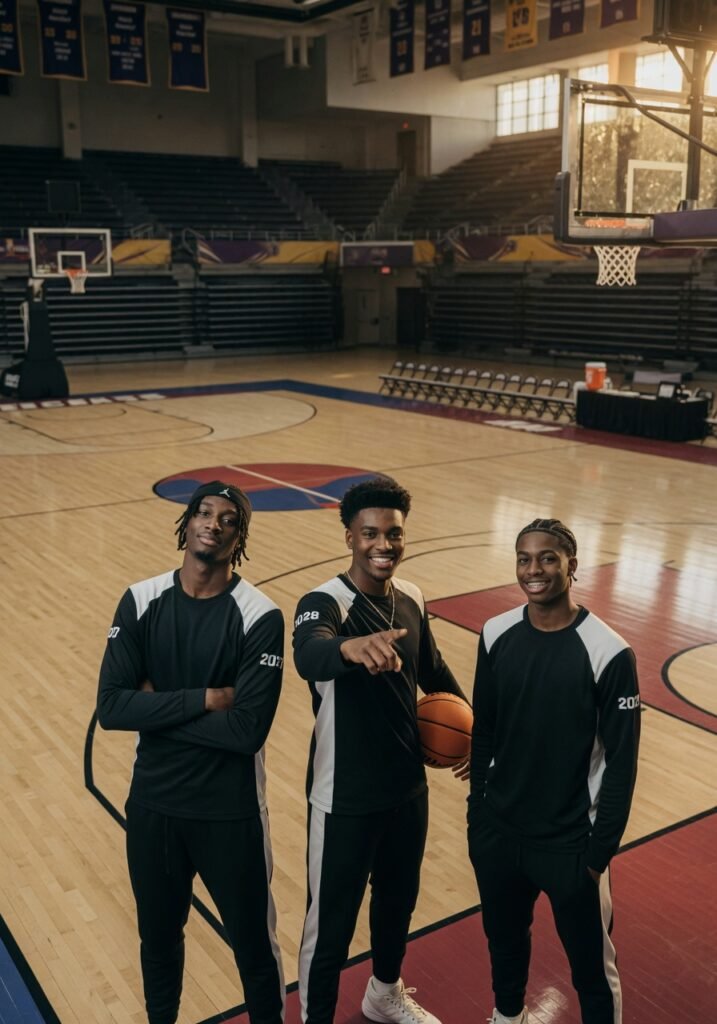
I was sitting at the kitchen table last night after the kids finally crashed, the house quiet except for the low hum of the fridge and my laptop screen still glowing with the latest box scores from the Jayhawks title run and that Aaron Judge walk-off, and I couldn’t shake the feeling that this stretch of columns has turned into another one of those redemption arcs that lingers longer than anyone expected. My last few pieces landed clean on the Jayhawks flattening West Virginia and the North Carolina baseball surge, and now here we are again, staring at the spring campaign for the classes of 2027 through 2029. The rankings just dropped, and the top name in the earliest group is already making me rethink everything I thought I knew about how these cycles usually shake out.
Marcus Spears Jr. sits at No. 1 in the SC Next 100 for 2027, a 6-foot-10 power forward out of Dynamic Prep in Texas whose rebounding, rim protection, and defensive versatility have separated him from the pack. The numbers jump off the page: 20 points, 9.7 rebounds, and 1.5 blocks per game across two 17U EYBL sessions this spring. Only Cameron Boozer and Cooper Flagg have hit those marks in multiple sessions since 2019. That kind of production at this age tells me Spears isn’t just tall—he’s wired differently. He protects the paint, crashes the boards with a motor that doesn’t quit, and already averages two blocks a night. If he sharpens the offensive side even a little, the gap between him and everyone else widens fast.
I keep coming back to the offers list—Tennessee, Michigan, Arizona, Texas, North Carolina, Kentucky, Miami, LSU, Arkansas, USC. That’s not a list you compile by accident. Programs that win with length and switchability are circling early because they see the same thing I do: a kid who can guard multiple positions, alter shots at the rim, and still rebound out of his area. It reminds me of how certain front offices used to chase two-way wings before the league realized those players were the real difference-makers. Spears already moves like someone who belongs in that conversation.
Then there’s the challengers, and this is where it gets interesting. Beckham Black, the 6-3 point guard from Southeastern Prep in Florida, sits at No. 2 and plays with that fearless joy that makes you lean forward on every possession. His playmaking and basketball IQ let him stay one step ahead, and he’s added scoring punch this spring according to the efficiency metrics. Black’s swagger is real—he wants the ball in his hands when the defense loads up. To unseat Spears he’ll need to prove he can carry a winning team night after night while defenses throw their best at him. I’m not ready to bet against that combination yet, but the physical tools gap is obvious right now.
Demarcus Henry at No. 3 is the one who keeps me up at night. The 6-8 small forward from AZ Compass Prep checks every modern-forward box: he can shoot from deep one night, post up the next, and still lead in passing, rebounding, and defense when the game calls for it. He helped push his team to third in the SC Next top 25 high school rankings, and the data shows he was the only player in the second EYBL session to crack the top 10 in scoring, steals, and blocks. That blend of productivity and positional versatility is rare this early. If Henry starts stringing together consistent dominant nights while Spears has any growing pains, the top spot flips overnight.
Adan Diggs at No. 5 already has the signature move—a stepback midrange jumper going left—that coaches will scheme around for years. His offer sheet includes Kansas, which tells me the Jayhawks see a shooter who can stretch defenses and create off the dribble. I’ve watched enough spring film to know that move alone forces rotations and opens driving lanes for teammates. If Diggs keeps adding layers to his game, he’s the classic riser who turns these early rankings into a footnote by senior year.
The thing about these 2027 kids is how quickly the rest of the class can close the gap. Rankings shift with every circuit, every high school season, every reclassification rumor. Spears has the early lead because his two-way impact shows up in the box score and the eye test, but one stretch where Black orchestrates a tournament run or Henry posts a 25-and-10 with five steals will reset the conversation. I’ve seen it happen before—guys who look untouchable in April look ordinary by July when the competition adjusts.
What fascinates me most is how these profiles line up with where college basketball is headed. Spears gives you the switchable big who can guard the perimeter and protect the rim at the same time. Black is the modern point guard who scores when needed but doesn’t force the issue. Henry is the ultimate connector forward. Programs that land two of these three will have the kind of roster flexibility that wins conference titles and makes deep tournament runs. The ones that miss will be stuck playing catch-up with transfers again.
I keep thinking about how early the 2028 and 2029 classes are being tracked now. The SC Next 60 and SC Next 25 are brand new, and the names will move more than anyone expects. Still, the fact that we’re already assigning tiers tells you how much the evaluation process has accelerated. Kids are getting offers before they finish middle school in some cases, and the data pipelines are sophisticated enough to separate real impact from flash. That pressure will only intensify for Spears and the rest of the 2027 group.
My gut says Spears holds the top spot through the summer if he keeps blocking shots and rebounding like he has on the EYBL. But Black’s decision-making and Henry’s all-around numbers give them real paths to overtake him. Diggs is the dark horse who could climb three spots by the time high school starts. None of this is settled, and that’s the part I love—watching the tape, checking the metrics, and seeing who actually delivers when the lights are brightest.
This recruiting cycle is going to shape the sport for the next decade. The teams that identify and develop these kids correctly will be the ones hoisting trophies. Everyone else will be left explaining why their system didn’t fit the new reality. I’m already clearing my schedule for the next EYBL sessions because I need to see how these four respond when the defenses get more physical and the stakes climb. Spears is the name on top right now, but the margin is thin and the challengers are hungry. That’s exactly how I like it.