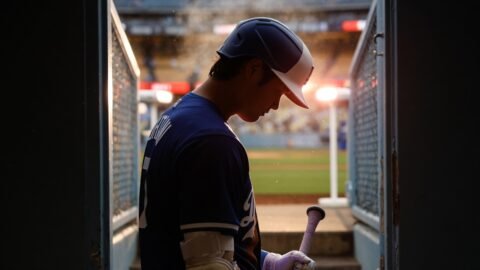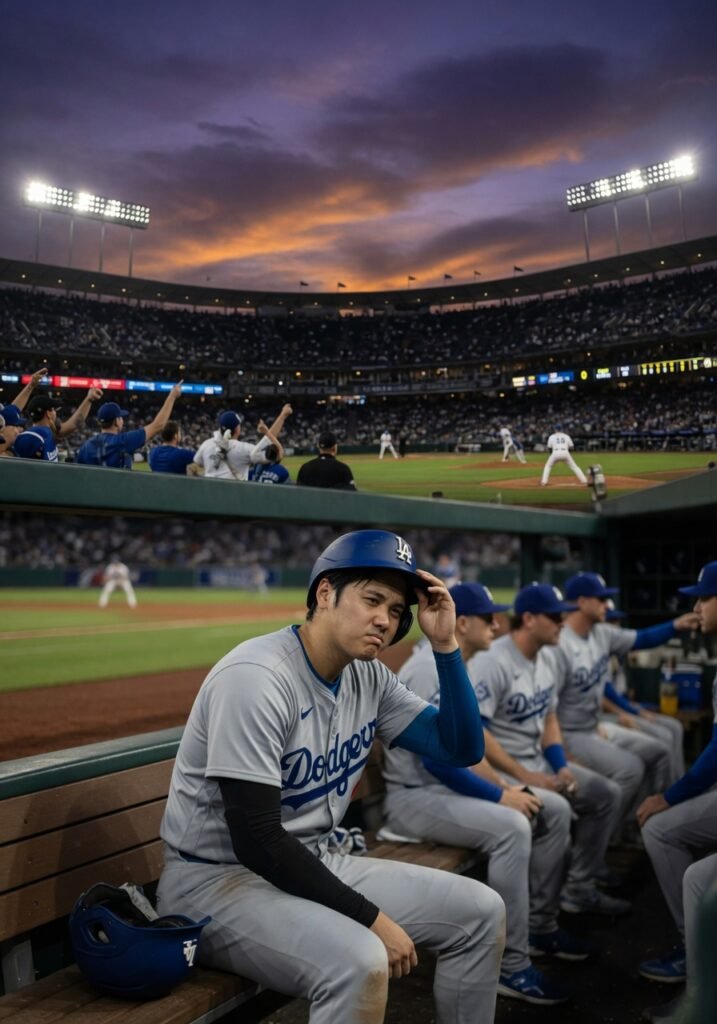
Shohei Ohtani walked off the mound after six no-hit innings against the Rockies on Wednesday and immediately zeroed in on the four walks and one hit-by-pitch that kept the outing from feeling complete. I watched the same game and came away thinking his reaction tracks exactly with what I wrote last month when I laid out early Cy Young and MVP rankings. The numbers already place him in rare air, yet the man himself treats every start like unfinished business.
Ohtani opened the scoring with a 424-foot leadoff homer, his third such blast as a pitcher in the past calendar year. He then limited Colorado to one run on zero hits through six innings while throwing just 56.6 percent strikes. That strike rate was his second-lowest of the season, and the previous low came seven days earlier against San Diego when he again finished scoreless but voiced frustration over missing his feel. The pattern is consistent: dominant results paired with an internal audit that refuses to accept the box score at face value.
Dave Roberts compared the standard directly to Clayton Kershaw when asked whether he had ever managed someone with such unreasonable expectations. Roberts pointed to the retired ace who wore No. 22 and said the two are very similar in how they process outings. The parallel holds up when you look at the early-season ledger. Ohtani’s 0.82 ERA through nine starts is the lowest for any Dodgers starter at this point in a season since Fernando Valenzuela in 1981. He is also just the third pitcher since 1920 to allow five or fewer earned runs across at least 55 innings in his first nine appearances, joining Jacob deGrom in 2021 and Al Benton in 1945. Those benchmarks already separate him from the current National League pack that includes Cristopher Sanchez, Jacob Misiorowski, Chase Burns, and Chris Sale.
The dissatisfaction stems from the same source Ohtani named after the game. “I know I say the same thing a lot, but it’s just the feel,” he said through an interpreter. “When something’s off offensively, defensively, I could tell, and I just really couldn’t find it.” That admission matters because it reveals how he evaluates success. The no-hit bid survived until the eighth when Tanner Scott surrendered the only hit of the night, but Ohtani’s four walks and one hit-by-pitch still produced the Rockies’ lone run via a pair of fielder’s-choice groundouts. He views those free baserunners as avoidable inefficiencies rather than acceptable trade-offs for missing barrels.
I said in the earlier Cy Young column that Ohtani’s workload management this season already exceeds his prior per-162 averages. The 2026 spring-training goals he outlined looked ambitious on paper, yet the early returns show him logging starter-level innings while posting results above his career baselines. The 13-7 record and 3.00 ERA line he carried into this year now sits inside a tighter window where command must sharpen if the Dodgers want to keep the bullpen fresh for October. Wednesday’s 56.6 percent strike rate illustrates the current gap. When Ohtani misses the zone, he does so in ways that avoid hard contact, but the cumulative effect still shortens his outings and forces extra relievers into the mix.
The offensive side of the ledger adds another layer. Ohtani has posted a .383/.508/.723 slash line over his past 13 games after shaking an earlier slump. No pitcher before him had ever hit a leadoff home run; he has now done it three times, including Game 4 of last year’s NLCS. That production forces opposing managers into uncomfortable lineup decisions. A pitcher who can also lead off and change run environments in a single at-bat alters how the rest of the order is constructed. The Dodgers have leaned into this duality, and the results show in their five-game winning streak that includes the Rockies series.
Roberts’ Kershaw reference carries extra weight because both pitchers set internal bars that external accolades rarely satisfy. Kershaw’s career included multiple Cy Young awards and an MVP, yet he routinely described starts in terms of pitch execution rather than final line. Ohtani is following the same script while adding the two-way element that no modern pitcher has sustained at this level. The historical precedent for a player carrying both an elite ERA and meaningful offensive production stretches back to Babe Ruth’s Red Sox days, but the game’s structure has changed. Ohtani is attempting it inside a 162-game schedule with modern pitch-tracking data and defensive shifts that punish even small command lapses.
The Cy Young race itself remains fluid. Ohtani’s ERA leads the field by a wide margin, yet the competition is producing strong underlying numbers of their own. Sanchez, Misiorowski, Burns, and Sale each post strikeout rates and expected metrics that keep them in the conversation. Ohtani’s edge comes from the combination of volume and the offensive multiplier. If the Dodgers continue to win at their current pace, voters will have to weigh how much the dual role influences the overall evaluation. Ohtani has already signaled he is not measuring himself against that external debate. He is measuring against the feel he could not locate on Wednesday.
The four walks and one hit-by-pitch that bothered him most are the clearest indicators of where the next adjustment must occur. Ohtani has shown he can limit damage even when the strike zone is not fully cooperating. The next step is raising the zone rate without surrendering the movement that keeps contact weak. If he finds that balance, the already historic early-season numbers could push into territory that forces a re-examination of what a two-way starter can accomplish over a full season. The dissatisfaction is not a flaw in the performance. It is the mechanism that keeps the performance from plateauing.