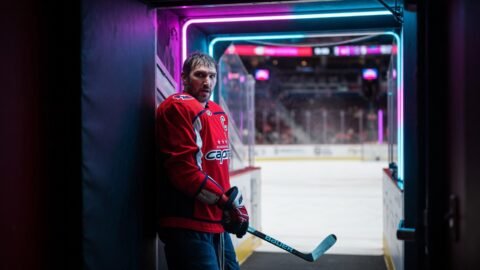
The NHL just spent two minutes of a preseason power play reminding Trevor Zegras that individuality has an equipment code. At 9:51 of the second period Thursday, with the Flyers already rolling toward a 2-0 win over Boston, Zegras took a minor for improperly wearing equipment because his jersey started the shift tucked into his pants. First call of its kind in 13 years. First signal that the league means it this time.
Zegras did not invent the tuck. Wayne Gretzky made it a silhouette. A generation of skill forwards copied the look because it felt cleaner through traffic and kept the sweater from ballooning on the rush. The rulebook never cared for aesthetics. Rule 9.5 is blunt: all protective equipment except gloves, headgear, neck protection, and goalie pads must sit under the uniform. Rule 12.1 turns the fashion foul into process. Warning first. Minor next. Misconduct if you keep testing it. The jersey can ride up mid-shift. It cannot start that way.
Zegras owned the sequence without spin. “My jersey was tucked in at the start of my shift. So after a warning, they said that’s an automatic penalty,” he said. “I started the game with it tucked, which is obviously how I usually play.” Later he added the bench detail: it must have slipped back in, he forgot, and the whistle came. Travis Konecny tried to intercede with the officials. None of it mattered. The mechanism had already locked in.
The 2013 Warning Shot Never Stuck
The last real crackdown landed in 2013-14. Scouting The Refs tracked Alexander Semin in preseason and Evgeni Malkin in a regular-season game that November. The league framed it the same way then: safety, uniformity, equipment integrity. Players heard a different message. Alex Ovechkin called the enforcement “kind of stupid” and said it squeezed the individuality out of the product. Enforcement faded. The tuck quietly returned because skill players liked how it felt and the league stopped burning minutes on fabric.
That is the comparative frame that matters. When the NHL leans on equipment rules, the pattern is temporary theater followed by quiet regression. Visor height, neck guards, helmets in warmups, and now jersey starts all got the same memo a few weeks ago. Teams were told. Tocchet confirmed it. “They told us – in all fairness – two, three weeks ago. I didn’t even think about it.” He still had to yank Matvei Michkov’s jersey down on the bench. Process is one thing. Habit is another.
Zegras is not a fringe case. He just put up a career-high 26 goals and 67 points in 81 games, second on the Flyers, then added six playoff points. He signed a four-year extension at a $9.125 million AAV. That is a top-line skill contract built on edge, deception, and the kind of free-flowing game that made the tucked silhouette popular in the first place. Taking two minutes off that player for a fabric start is a real trade-off, even in September. Boston failed to convert. A regular-season version against a hungrier unit will not be free.
Tie-Downs Are the Only Exit Ramp
Tocchet’s fix is mechanical and final. “He’s just gotta put his tie down. That’ll keep the jersey down. He obviously can’t [tuck] it anymore. When the regular season starts, we can’t have a penalty like that.” The fabric loop that anchors sweater to pants ends the conversation. No more Gretzky silhouette. No more “that’s how I usually play.” The days of the tuck, Tocchet said, do not work anymore.
I buy the enforcement logic on paper. Consistency on neck guards and visor coverage reduces avoidable injury noise. The jersey start is the outlier. It does not change impact physics or sightlines. It changes presentation. The league is willing to burn a minor to erase a look that survived a decade of soft enforcement. That choice has a cost curve. Every skill forward who grew up tucking now has a new pre-shift checklist. Every coach has another item on the bench walk-around. Every official has another pre-whistle scan. One missed tie-down in October becomes a 5-on-4 that decides a night.
The Flyers already absorbed the first bill. They won 2-0 and the power play died quietly. The regular season will not be that generous. Zegras will either adapt the tie-down or keep donating ice. The league already telegraphed the preference. Style is optional. The two-minute minor is not.