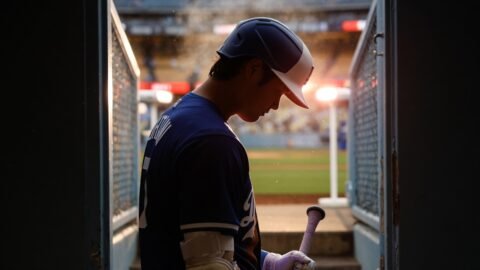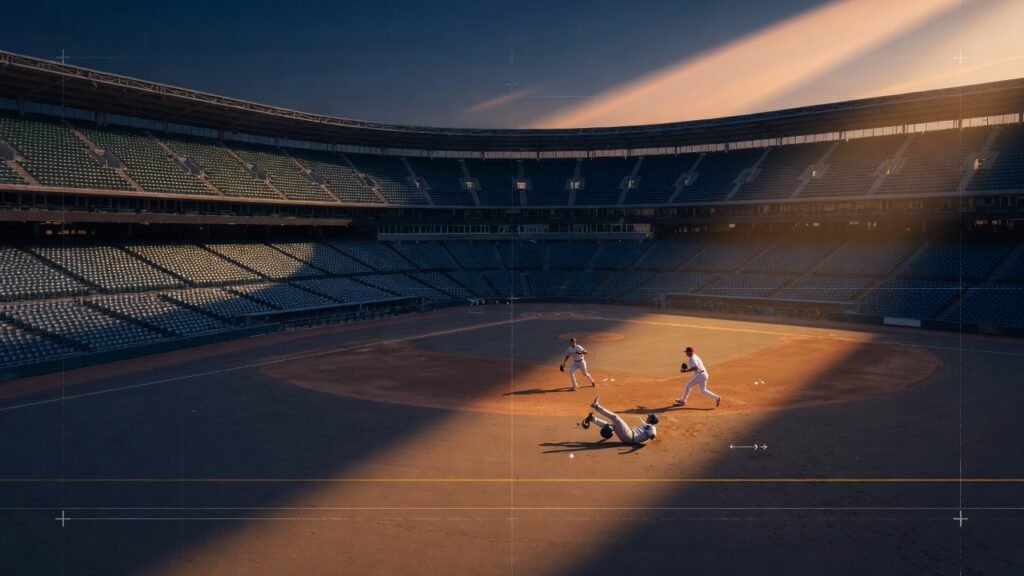
The Phillies had the tying run 90 feet away and the go-ahead run standing on second with one out in the ninth, and J.T. Realmuto turned it into a game-ending double play by running the wrong direction.
I watched the sequence three times. Alec Bohm singles. Justin Crawford pinch-runs. Edmundo Sosa strikes out. Realmuto doubles to left, Crawford to third. Brandon Marsh dribblers a spinning squibber toward Max Muncy at third. Contact play. Crawford breaks, gets hung up. Muncy to catcher Dalton Rushing. Rushing flips to Mookie Betts. Crawford tagged near third for the second out. Realmuto, already standing on third base, retreats toward second. Betts throws a dart to Tommy Edman. Tag. Ballgame. Dodgers 2, Phillies 1. The 5-2-6-4 double play that should never exist in a major-league ninth inning.
Realmuto owned it immediately. “Just a bad baserunning play, really,” he said. “Once Craw gets in the rundown and I’m on third base, there’s no reason for me to go back to second. Just a lack of judgment. You can’t make two outs on that play. I’ve just to stay in scoring position.” He went further: “I thought Crawford could get out of the rundown for some reason. The chances of that are so small, you just can’t take that chance there of making two outs on one play.”
That is the entire case. No scheme failure. No missed sign. A veteran catcher who has caught playoff baseball standing on third base with the tying run in a rundown, and he chooses second.
The Rundown Was Already Won
Don Mattingly, running the club on an interim basis, sounded as baffled as the rest of us. “I don’t know what JT was thinking there, honestly, because he got to third.” Mattingly’s preferred outcome on the contact play was simple: keep Crawford alive long enough for Marsh to reach second and leave runners on the corners with two outs. Same leverage, one more out to work with. Instead the Phillies made two outs on one ball.
The Dodgers side of it was pure fundamentals and experience. Muncy fielded a wet, spinning ball without rushing. “He didn’t take off right away. So I knew I didn’t have to rush myself,” Muncy said. “Made sure to field it… After that, just executed the rundown.” Tanner Scott, who closed it out for his 15th save, saw Realmuto reverse course and screamed. “When I saw J.T. going back, I think that’s like the first time I’ve yelled on the field. I was like, ‘Mookie, two!’” Dave Roberts called it exactly what it was: “It’s just fundamentals… fortunately J.T. made an uncharacteristic baserunning mistake, and fortunately Mookie threw a dart to second base.”
I keep coming back to the percentages. With one out and runners on second and third, the run expectancy is massive. The trail runner’s job is to stay in scoring position no matter what happens to the lead runner. Realmuto knew it the second the tag was applied. He said so. The Phillies rank as a top-four baserunning club by the advanced metrics, which only sharpens the sting. This was not a team flaw. It was one decision.
Wheeler Did Everything Except Win
Zack Wheeler deserved better. First start after declining the All-Star nod, and he carved through seven innings: two earned on five hits, nine strikeouts, zero walks. Season ERA sits at 2.16. The only damage was Muncy’s two-run shot in the fourth that scored Andy Pages and put Los Angeles up 2-0. The Phillies had scratched one across in the first on Bohm’s two-out single that scored Bryce Harper. That was the entire offense against Justin Wrobleski and the Dodgers bullpen until the ninth collapsed under its own feet.
Rain delayed the start 80 minutes and then spit on the field from the third inning on. Wet ball, wet grass, 40,077 still in the building. None of that explains a runner already safe at third retreating into a tag.
Realmuto connected the dots himself to the larger pattern. “There’s a lot of talent on both of our teams, so you’re going to see a lot of times the games are going to be won by the little things. And they’ve just been able to make less mistakes than we have really in our series, and going back to last postseason.” That is the quiet part out loud. The Dodgers sit at 64-38. The Phillies are 56-46. The talent gap is real but not decisive in a one-run game. Execution is. Last October and now this July series, Los Angeles keeps winning the 90-foot decisions.
Crawford took his share: “It was kind of just one of those things that can’t happen, and I just got to make a better decision next time.” Fair. But the second out was optional. Realmuto made it mandatory.
I do not traffic in narrative curses or vibes. I traffic in what the baserunner is supposed to do when the lead man is already dead to rights. Stay put. Force them to make another pitch. Give the next hitter a chance with the tying run still 90 feet away. Realmuto has caught enough baseball to know the math cold. On Tuesday night in the drizzle at Citizens Bank, the math lost to a guess that Crawford might magically escape. He did not. The Dodgers did not miss. And a Wheeler gem became another loss filed under the same heading Realmuto named himself: the little things.