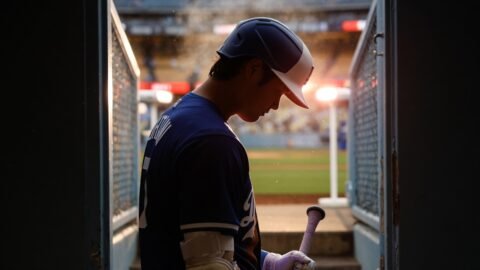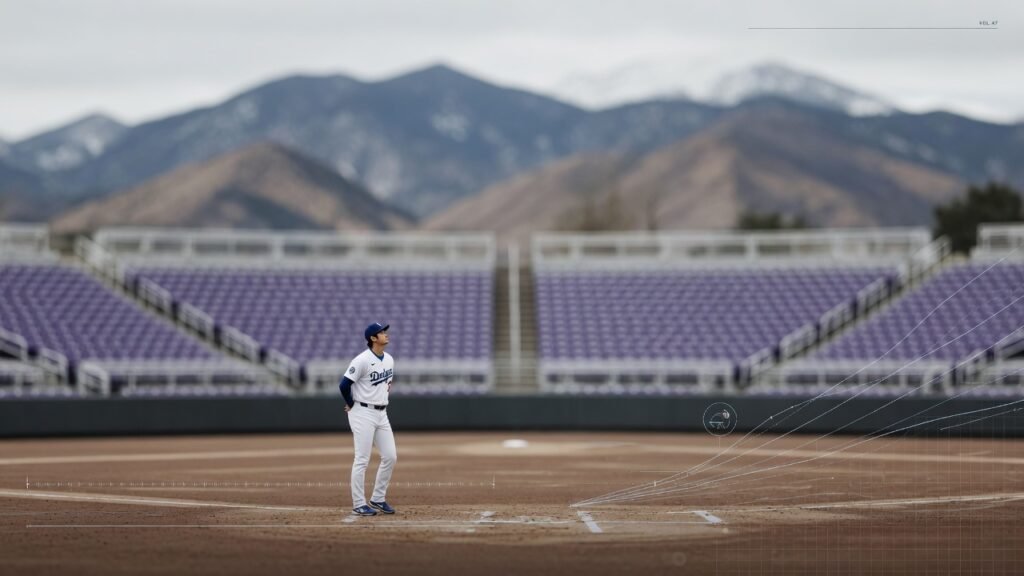
The 452-foot ball that Kyle Hurt snagged in the Coors Field bullpen on Monday was not a souvenir. It was a receipt. Twenty-four hours later Shohei Ohtani hit his 30th homer of the season, finished a 35-pitch bullpen with his full mix, and turned the National League MVP conversation into something simpler than the betting boards want to admit.
I watched the sequence and kept coming back to the same number set. Ohtani is sitting on a .294 average, .390 on-base, .948 OPS, 30 home runs, 80 RBIs, and 82 runs as a designated hitter. On the mound he still owns an 8-2 record, 1.79 ERA, 0.95 WHIP, and 95 strikeouts across 85.2 innings in 14 starts. He has not thrown a big-league pitch since July 3 because of left knee inflammation. That split is the entire argument.
Dave Roberts put it cleanly after the four-hit, two-homer night in Denver: “Shohei has been fine, given his talent. Tonight he was exceptional. His pitch selection, his direction to the big part of the field that we talk about a lot [was good]. When he does that, there is nobody better on the planet.” The second of those homers traveled 452 feet. The next night’s 30th went 448 feet at 106 mph exit velocity off a 77 mph curve. That is not volume chasing. That is elite contact quality sustained while the pitching arm is still in carefully staged rehab.
The Bullpen Is the Real Lever
Ohtani long-tossed 120 feet on Monday and threw 35 pitches Tuesday. He had already thrown roughly the same number on August 15, his first session since late July. Roberts’ next-step language is direct: “I could see the next step being him pitching live.” No firm September timetable exists, but the path is clear—another bullpen or two, live hitters, then short outings or opener work if the knee holds.
Ohtani himself framed the caution without drama. “It felt good the next day, and I should be throwing another one if I feel good tomorrow,” he said through interpreter Will Ireton. “The hope [is to return soon], and that’s why we’ve been pretty careful during the rehab process. The ideal outcome is to make sure I come back as soon as possible.” That is process language from a player who already banked Cy Young-caliber production before the knee flared. Every healthy bullpen pitch increases the chance he adds October innings that no other MVP candidate can touch.
The Coors numbers only sharpen the picture. After the 30th homer he sat on a 22-game hit streak at the park with 10 homers and 26 RBIs inside it. Earlier in the streak he was batting .413. He is not surviving thin air. He is punishing it while staying contact-oriented. “I’m just trying to feel good at the plate and making sure I’m not too tense, and making sure that I’m contact-oriented,” he said. “Those are the things that I really focus on.” Trial and error, hard-hit balls turning into damage. The mechanism is repeatable.
PCA’s WAR Lead Does Not Close the Uniqueness Gap
Pete Crow-Armstrong has a legitimate case. He reached 30 homers in the same window, plays premium defense in center, and has posted higher bWAR and fWAR figures in some mid-August snapshots—roughly the 7.5-to-8.0 range against Ohtani’s 6.4-to-6.7 while Ohtani has been limited to DH duty. Betting markets have flipped between them, with Crow-Armstrong listed as short as -155 at points and Ohtani as the favorite at others. Pure positional value favors the Cubs outfielder right now.
I am not buying the framing. Crow-Armstrong’s excellence is real and valuable. It is also replaceable in kind. Ohtani’s already-accumulated pitching line is not. No other player in the league can walk into September with a sub-2.00 ERA sample, a 30-homer DH season, and a live arm that could still log postseason innings. Historical two-way peaks do not offer a clean parallel because the workload split and the timing of the knee issue are unique to this year. The closest modern comps still leave Ohtani alone in the combination of rate production and unfinished pitching upside.
The Dodgers sit in first in the NL West. Blake Snell’s six strong innings on Monday and Max Muncy’s 461-foot blast were real contributions. None of it changes the hierarchy inside the clubhouse or the league. When Ohtani drives the ball to the big part of the field and then walks to the bullpen the next afternoon, the rest of the National League is measuring itself against a different scale.
The MVP ballot is not a pure WAR spreadsheet this year. It is a question of who moved the sport’s ceiling while still adding value on the days he only hits. Ohtani just reminded everyone what that looks like in two nights at altitude. The next bullpen, and whatever follows it, will decide how loud the reminder gets in October.