College basketball practice starts this week and multiple Top 25 programs still need a court order to figure out who belongs in the gym. The NCAA thought a clean five-for-five eligibility window would end the waiver circus. What it actually delivered is a multi-state legal free-for-all that has turned roster construction into a jurisdiction lottery.
The Division I Cabinet went unanimous in late June on the new age-based model: five seasons inside a five-year clock that starts at full-time enrollment or the year after an athlete turns 19. Traditional redshirts and most hardship waivers got the axe. The class of 2022 got carved out of any retroactive relief. That exclusion lit the fuse. More than 30 state lawsuits and multiple federal cases followed, and every stay, injunction, and temporary restraining order since has bounced the same names on and off projected lineups like a broken portal.
I know the reply already forming. “Rules are rules, they had four years.” Cool story. Tell it to the coaches who spent July recruiting under a Colorado class-wide order that the Tenth Circuit later stayed. Tell it to the fans refreshing depth charts while judges in Ohio, Kentucky, Louisiana, and California keep flipping the script.
LSU Is Building a Contender on Four Confirmed Bodies
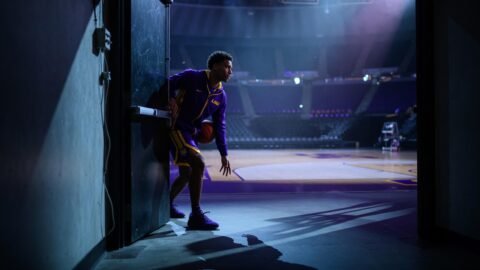
LSU has publicly listed only four fully locked-in players while the rest of the projected rotation sits in some combination of state-court protection, SEC professional bans, and Eligibility Center review. RJ Luis Jr., the 2025 Big East Player of the Year who went undrafted, signed multiple two-way NBA deals with limited regular-season run, and committed to Baton Rouge, picked up a Louisiana injunction that immediately collided with the conference’s new hard line on prior pros. Donovan Dent and Skyy Clark arrived from UCLA into the same fog. International additions face even tighter May guidance on what counts as actual and necessary expenses.
This is not a depth-chart headache. This is a program trying to practice while half its talent pool is still arguing about whether a two-way contract or a EuroLeague paycheck permanently burns the eligibility bridge. The SEC voted 16-0 to ban those return paths and attached real teeth: possible half-season head-coach suspensions, fines up to half a team’s annual operating budget, loss of voting privileges. LSU’s lawyers are already amending complaints to bring the conference into the fight. That is how absurd the calendar has become. Practice tips off mid-September and the conference office and the courthouse are still writing the depth chart.
St. John’s is living the same nightmare with its own cluster of fifth-year hopefuls and international pieces. Gonzaga, Texas Tech, BYU, Iowa State, Texas A&M, Arizona—same movie, different docket. Mark Mitchell wins a Kentucky ruling, then the transfer timing itself draws SEC side-eye. Every program that treated the summer free-agent window as real is now holding scholarships and practice jerseys for guys whose status can change with the next stay.
The Courts Became the New Transfer Portal
The Colorado injunction in late July briefly opened the floodgates. Coaches with open spots went shopping. Then the stays arrived in late August and the window slammed. Some players kept practicing under individual TROs in California, Kentucky, Texas, and a few other pockets. Others woke up ineligible again overnight. The NCAA is winning the appellate rounds and still losing the daily PR war because the outcomes refuse to be uniform. One judge clears a guy. Another conference bans the category he belongs to. A third hearing gets set for early October while exhibitions are already on the schedule.
Traditional media will dress this up as “complexity in the modern eligibility landscape” and invite three former GMs to nod along. Spare me. This is the predictable result of trying to slam a bright-line rule on a generation that already knows how to forum-shop. The class of 2022 did not invent litigation. They just treated the exclusion like every other roster decision—find the friendly jurisdiction and file. Power conferences finally drew a harder line on returning professionals than the NCAA ever managed, and even that is now being litigated in real time.
I am done pretending preseason rankings mean anything while this is unresolved. A Top 25 that still has key rotation pieces practicing under temporary orders is a fiction. Bracketologists drawing first-round matchups in September are doing fan fiction. The real standings live in the case captions.
Lawyers Are the Only Undefeated Team Left
The five-for-five rule was sold as simplification. It produced the opposite: more lawsuits, conference-level bans stacked on top of NCAA fights, and high-major programs entering official practice with ghost rosters. Some of these fifth-year and international cases will clear. Some will die in the next round of stays. A few will drag into November and turn early non-conference games into eligibility roulette.
The programs that built carefully around four-year players and portal certainty look smart right now. The ones that loaded up on limbo talent are discovering that a favorable preliminary injunction is not the same thing as a jersey. LSU’s four confirmed bodies are the loudest single data point in the sport this month. Everything else is still waiting on a clerk to file the next order.
Your preseason top ten is already outdated. The next injunction decides whether it survives October.