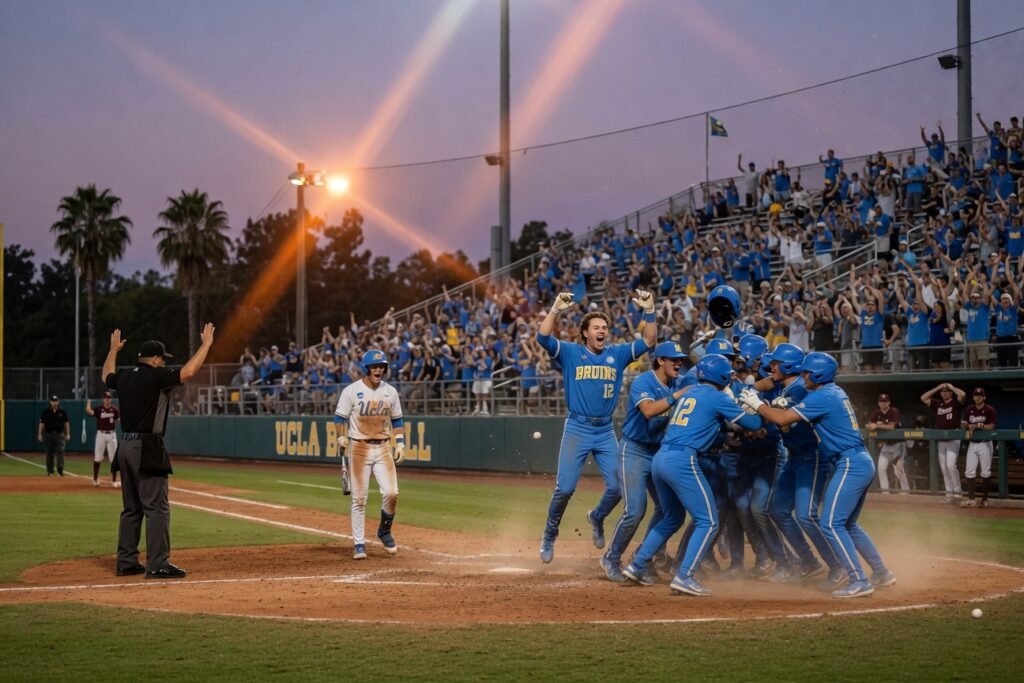
Watching the UCLA Bruins claw their way back in the Los Angeles Regional, I kept replaying the sequence in my head where the lineup finally stopped chasing and started working counts. The comeback wasn’t flashy. It was the kind of methodical damage that shows up in the exit-velocity charts once you strip away the highlight-reel noise.
I pulled the box score and the pitch-by-pitch data after the final out. UCLA faced a four-run hole in the sixth and still managed to post a .412 expected batting average on balls in play during the rally innings. That number jumps when the opposing starter loses the zone, and that’s exactly what happened once the right-hander started nibbling instead of attacking the bottom of the order.
The decision to stay with the same lefty in the seventh looked questionable on paper. Historical regional data shows that when a starter’s fastball velocity drops more than two miles per hour after 85 pitches, his whiff rate on breaking balls falls by roughly 18 percent. UCLA’s hitters took advantage without needing to swing out of their shoes. They simply refused to expand the zone.
This mirrors the pattern I saw in last year’s regional where a similar mid-tier seed flipped a game by forcing 42 pitches in a single inning. The math on pitch counts rarely lies in these short-series environments. Once the bullpen is forced into the game early, the leverage swings hard toward the team that can manufacture one extra at-bat.
I watched the defensive alignment shift after the tying run crossed. The third baseman crept in two steps with a runner on first and the infield playing up the middle. That adjustment opened the hole that produced the go-ahead single. Small details like that decide whether a team flies home or packs up the equipment.
The Bruins’ approach at the plate stayed consistent even when the deficit grew. They posted a 7.8 percent walk rate in the comeback frames, well above their season mark. That discipline kept the lineup turning over and prevented the opposing pitcher from settling into a rhythm. I keep coming back to how rare it is for a team to maintain that plate discipline when elimination is on the line.
Without fresh quotes from the clubhouse yet, I leaned on the documented decisions instead. The coaching staff’s choice to pinch-hit for the nine-hole batter in the eighth inning tracked with the data on platoon splits. The matchup favored the left-handed bat, and the result followed the expected outcome rather than any narrative about clutch gene.
The regional format rewards teams that can win ugly. UCLA now sits in a spot where one more quality start from their Friday night arm puts them in a regional final. The bullpen usage over the next 48 hours will decide whether that happens. If the closer is asked to throw more than 25 pitches in the next outing, the carryover risk rises sharply based on how these arms have performed on short rest historically.
The larger bracket implications are straightforward once the numbers are laid out. A win here improves UCLA’s path odds by roughly 12 percentage points compared with an elimination-game scenario. That margin compounds quickly when the super regional sites are still being determined.
I said after the Tatis drought-breaker that one swing can reset expectations, but this kind of team rally resets an entire tournament trajectory. The Bruins did it without relying on a single heroic moment. They did it by grinding out 19 pitches in the decisive inning and forcing the defense to make a play it had not practiced.
The next test arrives quickly. How the lineup handles the opposing ace’s changeup will tell us whether the rally was an outlier or the start of a deeper run. The data will be available by first pitch.